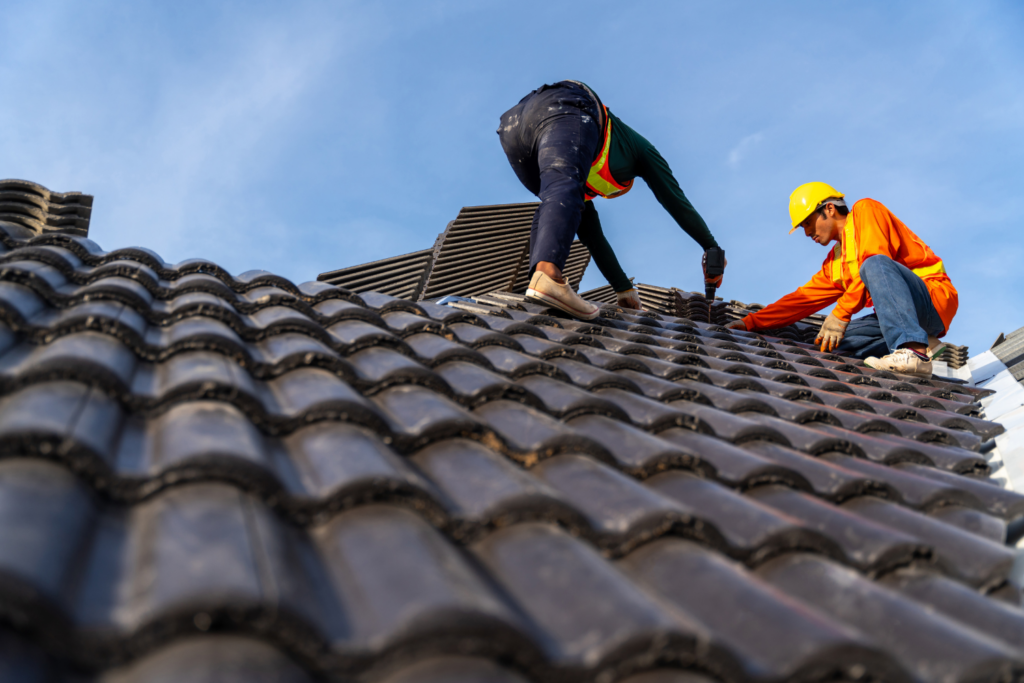
Roofers can work in light rain for limited tasks like emergency tarping, inspections, and minor repairs, but standard shingle installation and adhesive-based work must stop, since wet surfaces create serious fall hazards and sealants fail to bond properly in wet conditions. Heavy rain, thunderstorms, and high winds are absolute stop-work conditions under safety guidelines from organizations like OSHA and the UK’s Health and Safety Executive.
Why Rain Stops Most Roofing Work
Roofing surfaces become extremely slippery when wet, and falls already account for over a third of all construction fatalities, making rain one of the biggest safety multipliers on a job site. Beyond safety, trapped moisture beneath new materials can cause long-term wood rot in the decking, and adhesive strips on shingles and underlayment require dry conditions to seal and cure correctly. The UK’s Health and Safety Executive advises against working on roofs in rainy, icy, or windy conditions specifically because the risk of slips and falls increases so sharply.
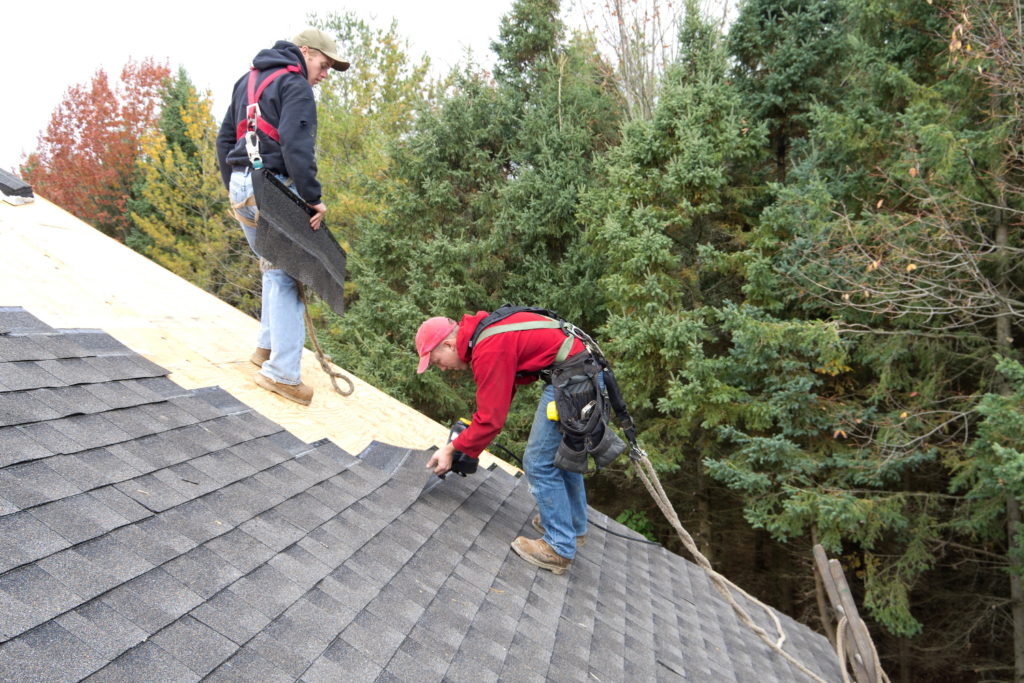
What Roofers Can Still Do in Wet Weather
Not all rain halts every task, and experienced crews distinguish between conditions that are merely inconvenient and those that are genuinely dangerous.
Weather Conditions and Work Status
| Condition | Can Work? | Why |
|---|---|---|
| Light drizzle | Sometimes | Non-adhesive tasks only, with non-slip footwear and fall protection |
| Moderate rain | No | Slip risk and adhesive failure make installation unsafe |
| Heavy rain | No | Extreme fall risk; materials cannot bond |
| Thunderstorm | Never | Life-threatening lightning exposure |
| High winds (25+ mph) | No | Falls and blown debris hazards |
What Happens If It Rains Mid-Installation
If rain starts during a job, the crew’s first move is to tarp any exposed roof decking to prevent water intrusion, then pause work entirely until surfaces dry. Once conditions clear, roofers inspect the affected area for water damage before resuming installation, since underlayment and decking that absorbed moisture can compromise the new roof’s lifespan. This is one of the reasons scheduling with an experienced professional roofing team matters, since proper weather protocols protect both the crew and your property.
Does Rain Void a Roofing Warranty?
Installing roofing materials in unsuitable wet conditions can affect manufacturer warranties, since most sealants and adhesive shingles are only rated to perform when applied within specified moisture and temperature ranges. This is why checking that your contractor is properly licensed and insured matters just as much as checking their weather policy, since reputable roofers follow manufacturer guidelines to keep your warranty valid. If you’re unsure whether wet-weather work has affected an existing roof, a professional roof inspection can catch issues early before they become costly repairs.
Frequently Asked Questions
Can shingles be installed in light rain?
No, standard asphalt shingles need dry surfaces to bond correctly, and installing them in any rain, even light drizzle, risks improper sealing and reduced lifespan.
Is it safe for roofers to work after rain has stopped?
Only once the roof surface has fully dried, since residual moisture on shingles, felt, or decking still creates slip hazards and prevents adhesives from curing properly.
Can emergency roof repairs happen during a storm?
Only tarping and temporary leak containment are done during active storms, and only when lightning is absent and rainfall is light enough for safe footing.
Does working in rain void a roof warranty?
It can, since most manufacturers specify installation conditions, and installing outside those parameters may void material warranties even if the visible workmanship looks fine.
Get a Professional Assessment Before the Next Storm
If your roof has been exposed to recent wet weather or you’re planning a repair or replacement, JW Roofing Solutions can carry out a thorough inspection and advise on the safest, most durable approach for your property. Contact JW Roofing Solutions for a free, no-obligation estimate from a team with over 40 years of combined roofing experience.