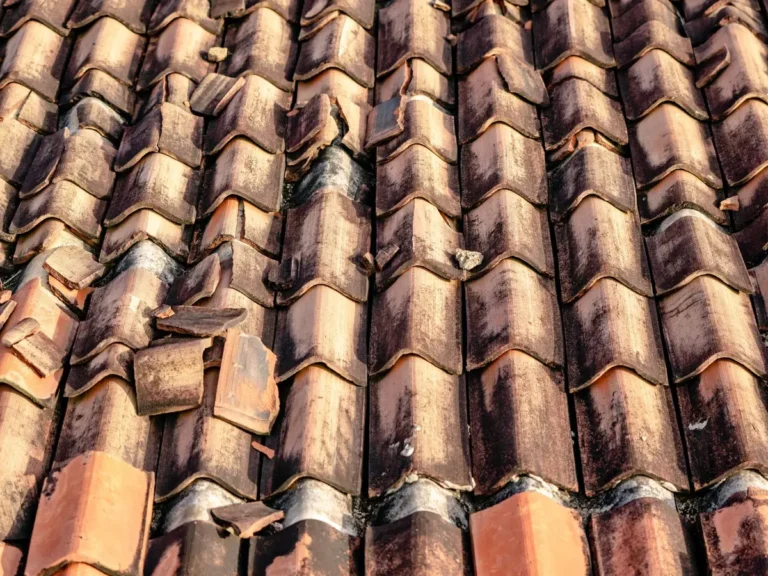


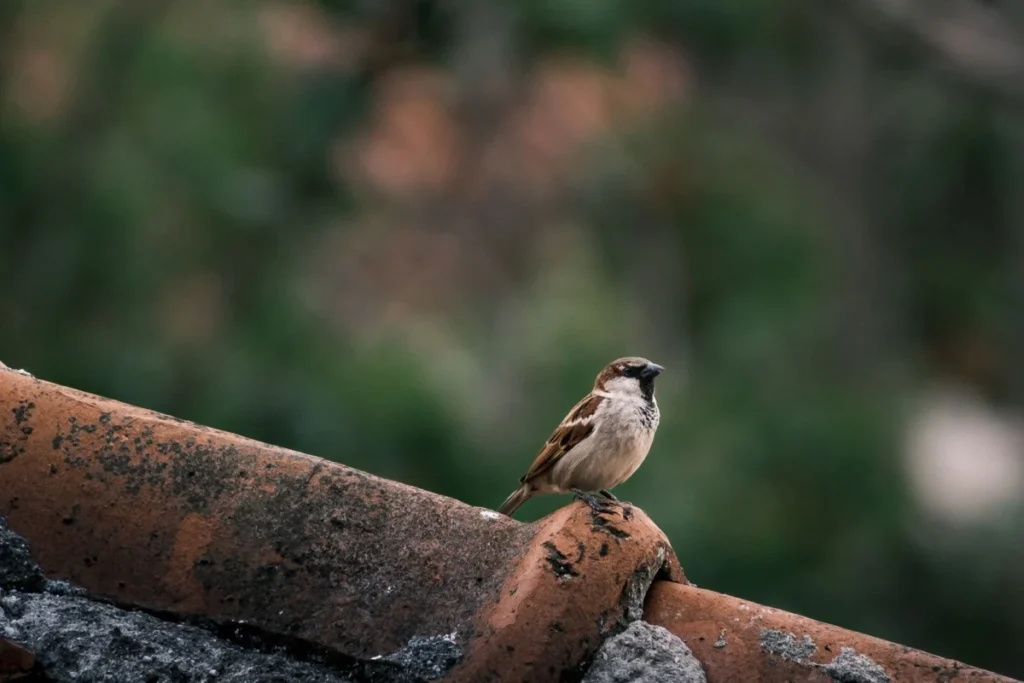
To stop birds getting under roof tiles, wait until any nest is empty (the main nesting season runs from March to September), then close the gap they are using. That usually means an eaves comb filler or eaves guard at the gutter line, replacing missing or slipped tiles, and repairing cracked verge mortar.
Key facts
- It is an offence to intentionally take, damage or destroy the nest of any wild bird while it is in use or being built, under section 1 of the Wildlife and Countryside Act 1981.
- The government says you could face an unlimited fine and up to 6 months in prison for each offence.
- House sparrows and starlings are the birds most likely to nest in a roof, and they normally get in through the gap between the roof tiles and the gutter (RSPB).
- The RSPB advises waiting until the winter months before blocking access. Pigeons are the exception: they can nest all year round.
- Bats and their roosts are protected even when the bats are not there. If you have bats, you must not shut them out, so get advice from the National Bat Helpline first.
Late autumn and winter are the right time to act, which makes now a good moment to plan the work. This guide explains the law in plain English, the month-by-month timing, where birds get in on a typical London roof, and which fix suits which roof. If you would like someone to check your roof and close the gaps properly, our roof maintenance service covers inspections and the repairs that follow.
Is It Illegal to Stop Birds Nesting in Your Roof?
No, blocking access is legal, but only when no nest is in use or being built. The law protects active nests, eggs and chicks, not the gap in your roof.
Under section 1 of the Wildlife and Countryside Act 1981, it is an offence to intentionally kill, injure or take a wild bird, to take, damage or destroy the nest of any wild bird while it is in use or being built, or to take or destroy its eggs. A small number of species listed in Schedule ZA1 have their nests protected even when not in use. In practice, the RSPB says you must allow the chicks to leave the nest before taking any action to remove a nest or block the entrance to it. Sealing an entry hole with chicks inside would trap them, which is exactly what the law is there to prevent.
The government’s guidance on wild birds and the law recommends avoiding harm by timing work outside the breeding season and using methods that deter birds without harming them. If you find a nest part-way through building work and the work cannot wait, the RSPB advises contacting Natural England for advice.
Check for bats as well. The RSPB notes that bats roost under roof tiles or lead flashings, in gaps in mortar and behind fascias and soffits, and that their roosts are protected even when empty. The Bat Conservation Trust confirms that all 18 UK bat species are protected. If you suspect bats, call the National Bat Helpline before anyone closes a gap; the government lists repairing or replacing a roof among the works it can advise on.
When Is the Best Time to Stop Birds Getting Under Roof Tiles?
Between October and February, once you are sure the roof is empty. The RSPB puts the main nesting season at March to September, but warns that some birds start early in January or February and some breed late into September, so always check first.
| Months | What roof-nesting birds are doing | What you can do |
|---|---|---|
| October to December | Outside the main nesting season | Best window. Confirm there is no activity, then fit guards and carry out repairs |
| January to February | Mostly quiet, but some birds start nesting early | Finish the work. Watch the entry points for a few days before sealing |
| March to May | Main season begins. House sparrows lay first clutches from late March to July; starlings lay from early April to late May (BTO) | Do not block or disturb active nests. Note where birds go in so the gap can be fixed later |
| June to August | House sparrows often raise 2 to 3 broods a year (BTO), so one nest can stay busy all summer | Leave active nests alone. Book the work for autumn |
| September | End of the main season; some late broods | Watch for activity stopping before any work starts |
| Any month | Feral pigeons can nest all year round (RSPB) | Check carefully for eggs or young before closing any gap |
Both house sparrows and starlings are on the UK Red List of birds of conservation concern, and the BTO notes England’s house sparrow population fell by around 70% between 1977 and 2016. The RSPB asks homeowners who can share their roof to do so, or to put up a nest box nearby when they close a gap. A nest box on a wall that does not matter to you is a kind way to move birds out of a place that does.
Where Do Birds Get Under Roof Tiles?
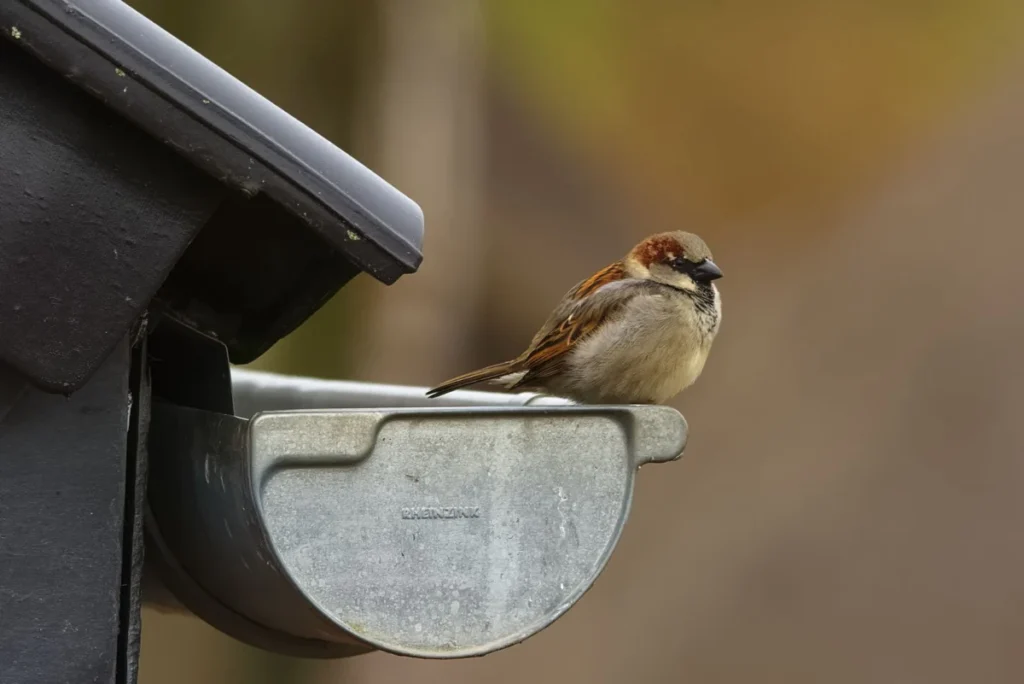
Mostly at the eaves, just above the gutter. On a tiled or slate roof, look at these five places first:
- The gap between the bottom tiles and the gutter. This is the usual way in for house sparrows and starlings, according to the RSPB. Profiled (wavy) concrete and clay tiles leave a hollow under each curve at the eaves that birds can squeeze through.
- Torn felt and rotten soffits. The RSPB says swifts usually enter where overhanging roofing felt is torn or soffit boarding has rotted. Our guide to roofing felt at the gutter explains why old felt at the eaves breaks down.
- The verge. Roundhay Roofing notes that a common entry route is at the side of the roof where mortar meets tile, because the mortar cracks and falls away over time.
- Missing, slipped or broken tiles and slates. Any hole big enough for a bird is big enough for rain. See our guide to slipped slate repair.
- Gaps around ridges, flashings and fascias. These are also favourite spots for bats, so check before sealing.
Signs you have birds in the roof include birds flying in and out of the same point at the eaves in spring, nest material poking out under the bottom row of tiles, droppings on the wall or path below, and scratching or chirping in the loft. The RSPB notes that starlings can often be heard walking around inside the roof.
How Do You Stop Birds Getting Under Roof Tiles? Step by Step
Find the gap, make sure nothing is using it, then close it with a product that keeps the roof ventilated. In order:
- Watch the roof for a few days. Note where birds go in and out. In October to February there should be no activity; if there is, wait.
- Rule out bats. Look for small droppings that crumble to dust, and call the National Bat Helpline if you are unsure.
- Find every entry point, not just the obvious one. Check the eaves, verges, ridge and any missing or slipped tiles. Photos from the ground or a drone survey help.
- Remove old nest material once the nest is empty, so it does not block ventilation or attract birds back.
- Fit the right eaves product for your roof covering (see the table below): a comb filler for profiled tiles, an eaves guard or felt support tray where the underlay has sagged or rotted.
- Repair the roof itself: replace missing or slipped tiles and slates, repoint or replace failed verge and ridge mortar, and renew rotten fascia or soffit boards.
- Keep the airflow. Never stuff gaps with foam or mortar where the roof is meant to breathe; eaves combs and trays are designed to let air in while keeping birds out.
- Offer an alternative. Put up a nest box away from the roof so the birds have somewhere to go next spring.
Eaves Comb vs Eaves Guard vs Dry Verge: Which Do You Need?
It depends on where the birds get in and what your roof is covered with. An eaves comb fills gaps under profiled tiles; an eaves guard closes and supports the eaves on any slate or tile roof; verge repairs deal with the gable edges.
| Option | What it does | Best for | Watch out for | Product price guide |
|---|---|---|---|---|
| Eaves comb filler (bird comb) | A plastic strip nailed to the top of the fascia, with flexible fingers that fill the gaps under the tiles while allowing airflow into the batten cavity (Klober) | Profiled concrete and clay tiles | Manufacturers such as Cromar say to fit it before the tiles are laid, so on an existing roof the bottom course may need lifting | From £0.76 per 1m length (plastic) to £9.58 per 975mm (galvanised steel) |
| Eaves guard or felt support tray | A rigid tray over the fascia that supports the underlay and stops it sagging into the gutter; some versions include a 10mm continuous vent | All slates and tiles, especially where old felt at the eaves has rotted | Needs the bottom course lifted and the underlay dressed onto it | Around £3.94 per tray (Roofing Superstore) |
| 3-in-1 over-fascia system | Combines a ventilation strip, underlay support tray and comb filler that keeps out birds, bats and insects (Cromar) | Re-roofing with profiled tiles | Installed before tiling, so best done as part of a re-roof | Priced per job |
| Verge repair or dry verge | Replaces cracked verge mortar that birds get behind | Gable ends with crumbling mortar | Bats may use mortar gaps, so check first | Priced per job |
| Replacing tiles or slates | Closes holes left by missing, slipped or broken tiles | Any roof with visible gaps | Match the existing tiles or slates | Checkatrade: £90 to £120 per m² for concrete tiles, £150 to £220 per m² for natural slate |
| Bird spikes | Stop birds landing on ridges, parapets and ledges (Dakea) | Pigeons perching on the roof | Do not close a gap under the tiles | Varies by length |
| Sound or decoy deterrents | Scare birds away | A supplement only | Dakea notes birds can get used to them over time | Varies |
Product prices are retail prices for the parts only, checked in October 2026, and do not include fitting, scaffolding or access equipment.
Birds getting into your roof? JW Roofing Solutions can inspect your roof this autumn, find every gap birds and rain are getting through, and tell you honestly whether a small repair will do. Call +44 7467 800002 or request a free, no-obligation quote.
What About Pigeons on the Roof?
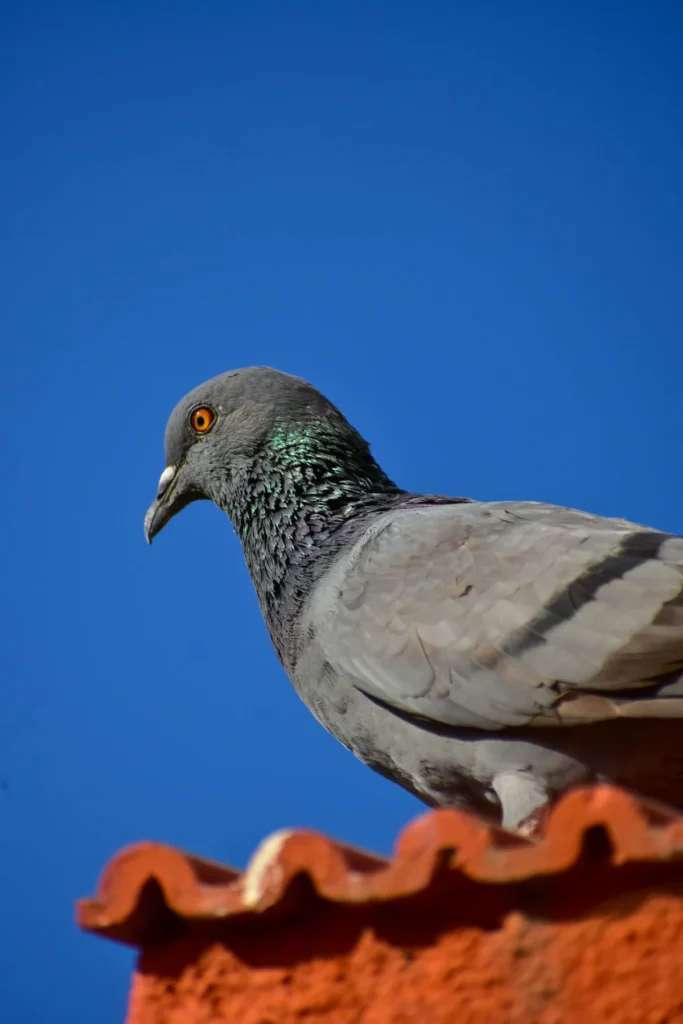
Pigeons are a different problem. They are too big to fit through a small eaves gap, but the RSPB notes they may move in where roof damage has created large holes, and they can nest at any time of year. That means you still need to check for eggs or young before closing a hole, even in winter.
Where pigeons are perching rather than nesting, spikes on the ridge or parapet stop them landing. They will not close a gap under the tiles, so if pigeons are getting inside, the fix is a roof repair, not a deterrent.
How to Stop Birds Nesting in Soffits and Fascias
Soffits and fascias are the boards under and along the edge of the roof. Birds get in where they have rotted, split or pulled away, or where the felt that should run over the fascia into the gutter has torn. The RSPB says swifts usually enter where overhanging roofing felt is torn or where soffit boarding has become rotten, and that house sparrows and starlings normally get into the roof space through the gap between the roof tiles and the gutter.
- Check first. Watch the eaves for a few mornings and make sure no nest is in use. Bats also roost behind fascias and soffits, and the RSPB is clear that you must not shut bats out by any means.
- Wait for winter. The RSPB advises blocking access only in the winter months, when birds are not nesting. Pigeons are the exception and can nest all year.
- Repair the boards. Replace rotten or split soffit and fascia sections so there is no hole to get through.
- Close the gap at the eaves. An eaves guard covers the small gap between the roof overhang and the wall (Roofing Superstore), and an eaves comb filler blocks the gaps under profiled tiles at the gutter line while still letting air through (Dakea).
- Fix torn felt at the eaves. If torn felt is the way in, new felt over a rigid eaves support tray closes it and carries water into the gutter. Our guide on whether roofing felt should go into the gutter explains how it is done.
Whatever goes in, keep the roof ventilated. Dakea points out that airflow at the eaves is essential, which is why comb fillers are designed to stop birds but not air. Blocking ventilation can lead to condensation on the roofing felt in the loft.
Do Birds Nesting in Your Roof Cause Damage?
They can. Dakea lists displaced or lifted tiles, blocked ventilation, blocked drainage and water getting in, and says acidic droppings slowly wear down roof surfaces. Roofing Superstore calls a missing tile an invitation for birds and bats to move in, and notes that droppings often end up on porches, paths and conservatories.
One nest is rarely an emergency, but nesting material under the bottom row of tiles and in the gutter can stop water draining away, so clear it once the birds have gone. If your gutters spill over in heavy rain, see why gutters overflow, and for lifted or broken tiles our roof tile replacement cost guide gives 2026 prices.
What About House Martins Under the Eaves?
House martins build mud nests on the outside wall, high up under the eaves, and do not usually enter the roof space, according to the RSPB. Do not disturb the nest. If droppings over a door or window are the problem, the RSPB suggests a shelf about 250mm wide fixed about two metres below the nest, on key-hole brackets so it can be taken down for cleaning.
Can You Stop Birds Getting Under Roof Tiles Yourself?
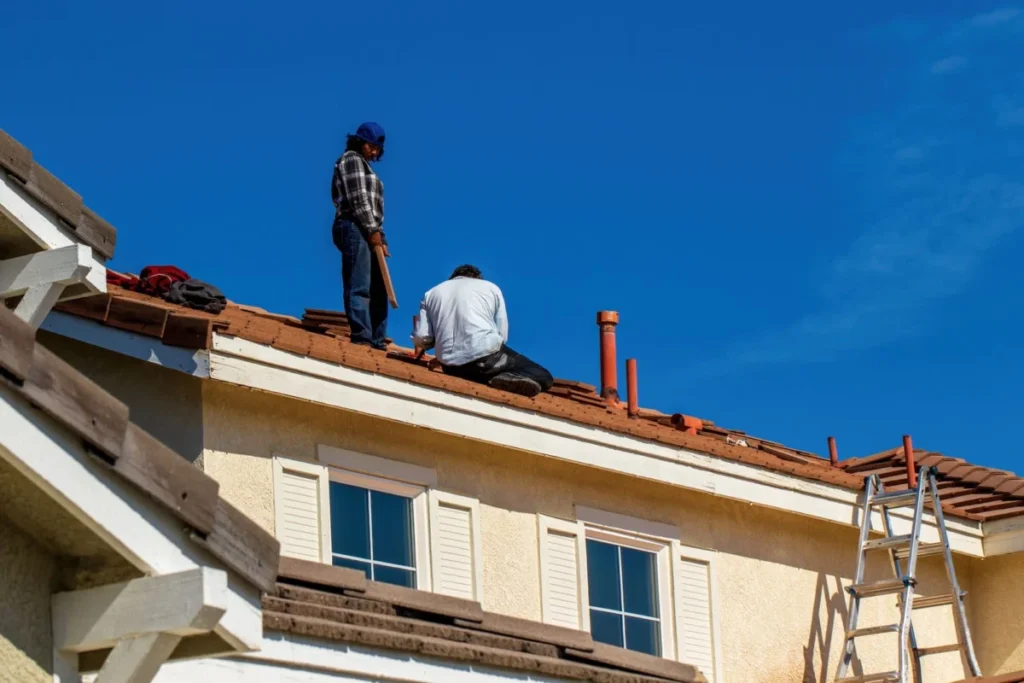
Sometimes. On a single-storey extension or a bungalow, where you can safely reach the eaves from a footed ladder, nailing a comb filler along the fascia under profiled tiles is a manageable job, and the parts are cheap.
A roofer is the better choice if:
- the eaves are on the first or second floor, which needs proper access equipment; our guide to working on a roof without scaffolding explains the rules
- the bottom course of tiles or slates needs lifting to fit a tray or comb
- the felt at the eaves has rotted, or the fascia and soffit boards are soft
- there are missing tiles, failed verge mortar or a leak as well as birds
- you think bats might be present
For budgeting, Checkatrade puts roofer day rates at £280 to £360 per day and scaffolding at around £625 per week, with all figures excluding VAT. If the fascias and soffits are rotten, Checkatrade’s 2026 guide puts replacement at £115 to £185 per linear metre, or around £85 per linear metre to cap old timber with uPVC. London prices tend to sit towards the top of most ranges. These are published averages, not our prices; we price each job after seeing the roof.
What We Would Do on a SouthWest London Terrace
Many Victorian and Edwardian terraces in SouthWest London have slate main roofs and tiled or slated back additions. Comb fillers are made to fill the hollows under profiled tiles (Principal Building Products describes them as fitting directly below profiled roof tiles), so on a slate roof the gap is more often torn or rotten felt at the eaves, a gap behind the gutter, a missing slate or crumbling verge mortar.
On a roof like that, we would trace exactly where the birds are getting in, then fix the cause: renew the felt at the eaves with a support tray, refix or replace slates, and repair the verge or ridge. On a profiled-tile roof in good condition, an eaves comb along the fascia is often all it needs. If the roof is near the end of its life, the cheapest long-term answer is to build the eaves protection into a re-roof. Our guide to roof tile replacement costs will help you compare.
Gaps that let birds in are easy to miss from the ground. A roof inspection picks them up along with slipped tiles, damaged felt and blocked gutters in one visit.
Frequently Asked Questions
How do I stop birds nesting in my soffits?
Wait until no nest is in use, ideally in winter, and check for bats first. Then replace rotten or split soffit and fascia boards, fit an eaves guard or comb filler at the gutter line, and renew any torn felt at the eaves. Keep the roof ventilated.
Do birds nesting in a roof cause damage?
They can lift or displace tiles, block ventilation and drainage, and let water in, and their acidic droppings wear roof surfaces over time (Dakea). Clear nesting material from the gutter and eaves once the birds have left.
Is it illegal to stop birds nesting in my roof?
Blocking access is legal as long as no nest is in use or being built. Under the Wildlife and Countryside Act 1981 it is an offence to intentionally take, damage or destroy an active nest, and the government says each offence can bring an unlimited fine and up to 6 months in prison. Wait until the chicks have left before you close any gap.
When can I block birds from getting under my roof tiles?
The safest window is October to February, once you have checked the roof is empty. The RSPB puts the main nesting season at March to September, but some birds start early or finish late, and pigeons can nest all year.
Do eaves combs work on slate roofs?
Eaves comb fillers are designed to fill the hollows under profiled tiles, so they are rarely the answer on a slate roof. On slate, birds usually get in through rotten felt at the eaves, a gap behind the gutter, a missing slate or failed verge mortar, and those need repairing instead.
Will an eaves comb stop my roof ventilating?
No. Manufacturers such as Klober design eaves comb fillers to let air into the batten cavity while keeping birds and vermin out. Never block eaves gaps with foam or mortar, because the roof space still needs airflow.
How much does it cost to bird-proof a roof?
The parts are cheap, from under £1 per metre for a plastic comb filler, but most of the cost is access and labour. Checkatrade puts roofer day rates at £280 to £360 and scaffolding at around £625 per week, excluding VAT, so the total depends on how high the eaves are and what repairs are needed.
What should I do if there are bats in my roof?
Do not block them out. Bats and their roosts are protected even when the bats are away, so contact the National Bat Helpline, run by the Bat Conservation Trust, for free advice before any roof work.
Can I remove an empty bird nest from my roof?
Yes, once the chicks have left and the nest is no longer in use, you can remove it and block the entrance, as the RSPB advises. A few rare species listed in Schedule ZA1 of the Act have nests protected even when not in use, but these are not the birds usually found under house roofs.
Bird-Proofing Your Roof in SouthWest London
JW Roofing Solutions inspects and repairs roofs across SouthWest London. We will find where birds and water are getting in, replace missing or slipped tiles and slates, repair verges, ridges and rotten felt at the eaves, and give you a clear, written quote with no obligation. Call +44 7467 800002, get in touch online or read more about our roof maintenance and roof repair services.
We work across London from our base in Balham (SW12), and our core areas each have a local page: roofers in Clapham, roofers in Streatham, roofers in Tooting and roofers in Wandsworth.
Need help with your roof? JW Roofing Solutions provides roof inspections, maintenance and repairs in SouthWest London. Get a free, no-obligation quote.