

Slate roof repair in the UK usually costs £60 to £120 to replace or refix one slipped or cracked slate, and £150 to £350 for five to ten slates, according to MyBuilder (updated October 2026). The roofer cuts the old nails, slides the slate back and holds it with a copper or lead tingle or a stainless steel hook.
That is the routine end of the job. The harder question is whether one slipped slate is a one-off or the first sign that the nails across the whole roof are failing. This guide covers what each type of slate repair costs, how a slipped slate is actually fixed, how to spot nail sickness, what conservation rules mean for London period houses, and the point at which re-slating becomes better value than repeated repairs.
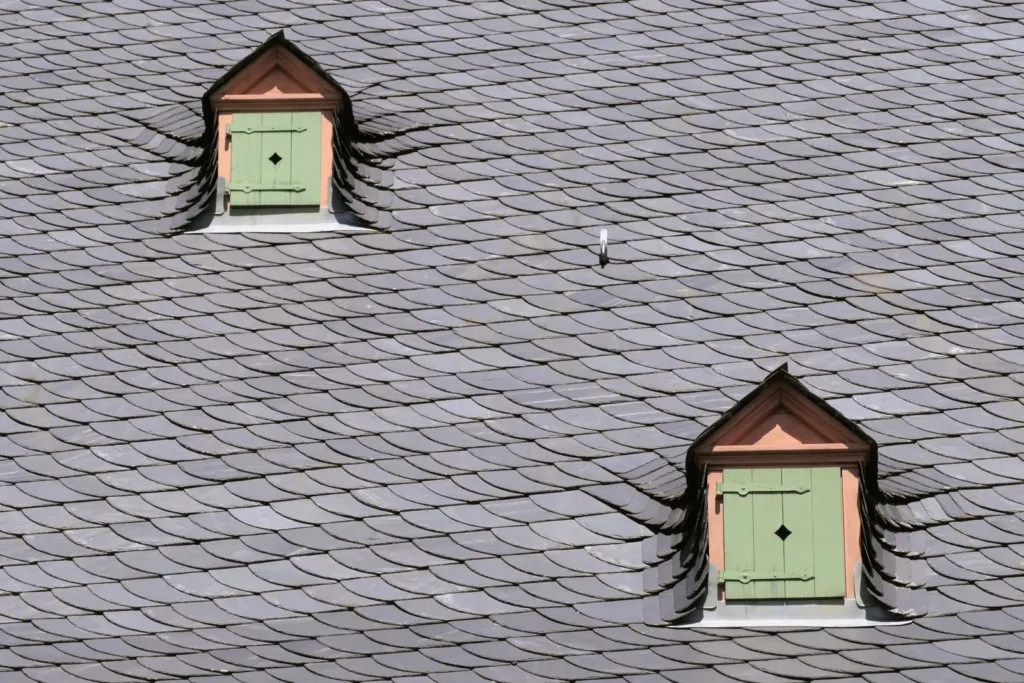
How Much Does Slate Roof Repair Cost in the UK?
Most small slate roof repairs cost between £60 and £400 before access, depending on how many slates are involved and whether the ridge or lead also needs work. The table below brings together UK guide prices from three 2026 cost guides. These are published national averages, not JW Roofing Solutions prices, and London jobs tend to sit at the upper end.
| Slate repair job | UK guide price | Source |
|---|---|---|
| Refix or replace a single slipped slate | £60 to £120 | MyBuilder, Oct 2026 |
| Fix 3 slipped slates | £150 to £220 | MyJobQuote, Oct 2026 |
| Replace 5 slates | £225 to £260 | MyJobQuote, Oct 2026 |
| Replace 5 to 10 slates | £150 to £350 | MyBuilder, Oct 2026 |
| Replace about six cracked Welsh slates | Around £200 | FixMyRoof, May 2026 |
| Minor leak repair | £150 to £400 | MyJobQuote, Oct 2026 |
| Repoint ridge or hip tiles | £200 to £400 | MyBuilder, Oct 2026 |
| Re-bed or replace ridge tiles | £300 to £600 | MyBuilder, Oct 2026 |
| Replace lead flashing | £200 to £500 | MyBuilder, Oct 2026 |
| Natural slate repair to a small area (up to 3 m², excluding VAT and access) | £150 to £220 per m² | Checkatrade, Jun 2026 |
| Re-slate one slope (partial re-roof) | £2,500 to £8,000 | FixMyRoof, May 2026 |
| Full roof inspection | £100 to £200 | MyBuilder, Oct 2026 |
A cracked slate costs about the same to replace as a slipped one, because the method is identical. The price difference comes from matching: a reclaimed Welsh slate of the right size and thickness costs more than a new imported one. For ridge work in more detail, see our guide to repointing ridge tiles, and for chimney and abutment leaks, our guide to lead flashing repair.
Scaffolding and access costs
Access is often the biggest variable on a small slate repair. A single slipped slate that can be reached safely with a roof ladder costs far less than the same repair on the rear slope of a three-storey terrace that needs a scaffold.
| Access item | UK guide price | Source |
|---|---|---|
| Scaffold hire | £200 to £300 per week | MyBuilder, Oct 2026 |
| Scaffolding for a slate roof job, if not in the quote | £600 to £1,500 | MyJobQuote, Oct 2026 |
| Two-storey scaffold for a whole-roof job | £700 to £1,500 | BestBuilders, Jul 2026 |
| Strip-out and disposal of an old roof | £400 to £600 | MyBuilder, Oct 2026 |
If a scaffold has to go up anyway, it is usually worth having the ridge, flashings and gutters checked at the same visit rather than paying for access twice. Our guide to working on a roof without scaffolding explains when a roof ladder is acceptable and when it is not.
How Much Does It Cost to Re-Slate a Roof?
A full re-slate typically costs £100 to £180 per m² installed, or £5,000 to £18,000 for a whole house in Spanish slate, according to MyBuilder (October 2026). Those per m² figures exclude scaffolding, strip-out and structural repairs.
| Slate type | Installed cost per m² (UK guide price) |
|---|---|
| Welsh slate | £140 to £180 |
| Reclaimed slate | £110 to £150 |
| Spanish slate | £100 to £130 |
| Brazilian slate | £95 to £125 |
| Chinese slate | £80 to £110 |
| Synthetic (fibre-cement) | £70 to £100 |
| House type (full re-slate) | UK guide price, Spanish slate |
|---|---|
| Terraced house | £5,000 to £8,000 |
| Semi-detached house | £7,000 to £12,000 |
| Detached house | £10,000 to £18,000 |
| Bungalow | £5,500 to £9,000 |
| London semi, about 90 m², including scaffold and leadwork | £13,000 to £17,500 |
BestBuilders puts London about 20% above the UK average for a re-slate. For the wider picture, including tiled roofs, read our roof replacement cost guide or see our re-roofing service.
Can a Slate Roof Be Repaired?
Yes. A slate roof can almost always be repaired, and Historic England (checked November 2026) says slates can last longer than any other roof covering before needing repair. The slate itself is rarely the weak point. The usual faults are:
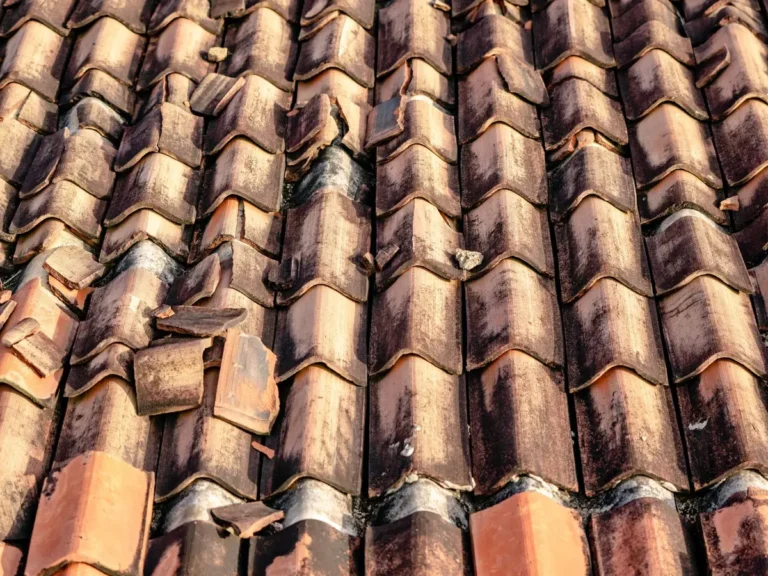
- Slipped slates, where the nail has rusted through and the slate has slid down the roof.
- Cracked or broken slates, often from foot traffic, impact or frost acting on a weak slate.
- Missing slates, usually blown off after slipping first.
- Loose ridge, where the mortar under the ridge has cracked and washed out.
- Failed lead at chimneys, valleys and abutments, which MyBuilder names as the most frequent source of leaks on slate roofs.
- Delaminating slates, where poor quality slate flakes into layers.
The first five are standard repairs. Widespread delamination, or slipping across every slope, is when the conversation turns to re-slating. If your roof is tiled rather than slated, our guides to roof tile replacement cost and cracked roof tiles cover the differences.
Why Do Slates Slip? Nail Sickness Explained
Slates slip mainly because the nails holding them corrode, a problem known as nail sickness. Historic England describes it as the nail heads decaying while weather movement enlarges the nail holes, until the slates start to slip. The SPAB (checked November 2026) makes the same point: fixings and battens usually deteriorate before the slates do.
On older roofs the original nails were often iron. Cadw (checked November 2026), the Welsh Government’s historic environment service, names rusting iron nails as a common cause of slipped slates and advises copper or stainless steel nails when a roof is re-slated. Other causes include:
- Wind lifting slates at verges, ridges and exposed slopes, especially after storms
- Rotten or split battens that no longer grip a nail
- Thin nails that cut through the slate, or slate that has softened around the nail hole
- Foot traffic from aerial, satellite or chimney work
Nail sickness rarely hits a whole roof at once. The useful clue is the pattern: one slipped slate after a gale is usually a one-off, while several slipped slates spread across a slope, plus old tingles from earlier repairs, point to fixings failing roof-wide.
How Is a Slipped Slate Repaired? Tingle, Slate Hook or Nail
A slipped slate is repaired by removing it, fixing a holder to the batten underneath and sliding the slate back in, because the course above covers the original nail holes and the slate cannot be renailed in place. The steps are:
- The roofer slides a slate ripper under the slate, hooks the old nails and cuts or pulls them out.
- The slipped or broken slate is drawn down and out without lifting its neighbours.
- The batten and underlay behind the gap are checked. Soft timber or rotten felt changes the job.
- A tingle or hook is fixed, the original slate or a matched replacement is slid up into line, and the fixing is secured.
Tingles
A tingle is a narrow strip of copper, lead or galvanised steel. Cadw describes it as about 25mm wide, nailed to the batten through the joint between the slates of the course below, with its lower end bent tightly up over the tail of the replacement slate. Historic England lists lead, copper or zinc tingles as useful for refixing the odd slate. The IHBC (checked November 2026) calls tingles an acceptable temporary repair, which is why a roof dotted with them is worth a closer look.
Slate hooks
A slate hook is a stainless steel wire clip driven into the batten, with a curved end that holds the tail of the slate. The Clay & Slate technical bulletin says hooks should be grade 316 stainless steel, crimped between 25 and 30 degrees of pitch, and not used below 25 degrees. The ISS natural slate technical guide (2025) sets out the same limits with reference to BS 5534. Hooks are neat on roofs originally hook-fixed, but the SPAB’s East Midlands guidance notes hook fixing is not traditional on old roofs, so on a Victorian roof a tingle often suits better.
Nails
Nails can only be used where a patch of slates has been stripped back to the batten. The SPAB explains that when a patch is refixed, most slates can go back with nails and only the last one or two need a tingle. The ISS guide specifies copper or aluminium slate nails with a 3.35mm shank and 10mm head under BS 5534.
Matching matters as much as the fixing. The IHBC advises matching size, colour, thickness and texture, and choosing a slightly lighter slate if an exact match cannot be found, since darker replacements stay noticeable for years. It also suggests keeping a few spare matching slates in the loft for future repairs.
Signs You Need a Slate Roof Repair
Most slate faults can be spotted from the street, a back window or the loft. The IHBC suggests running your eye along each course from ridge to eaves, and checking the roof space in wet weather. Look for:
- A slate sitting lower than its neighbours, showing a strip of felt or batten
- Pieces of slate in the gutter, on a lower roof or on the path
- Gaps where a slate is missing altogether
- Rows of lead or copper tingles from earlier repairs
- Cracked mortar or loose ridge tiles
- Damp patches on a top-floor ceiling or wet timber in the loft after rain
- Slates flaking or crumbling at the edges
A single slipped slate may not leak at once, because the slates below overlap the gap. It still lets driven rain reach the battens, and if your ceiling only marks in storms, our guide to a roof leaking in heavy rain explains why.
What to Do If Roof Slates Fall Off the Roof
If a slate falls, keep people away from the area below, because more loose slates may follow in the next gust. Then:
- Keep any whole or large pieces. They show the size and type of slate, and an intact one can often go back on.
- Take photos from the ground of where the slate came from.
- Check the loft below that spot for water and put a bucket or tray under any drip.
- Do not climb onto the roof, particularly in wind or rain.
- Book a roofer. If water is coming through, read our guide to emergency roof repair.
Whether a roofer can safely go up straight away depends on the weather. Our article on whether roofers can work in the wind covers the limits.
Can You Repair Roof Slates Yourself?
Replacing a slate is simple on paper, but it means working on a pitched roof, and the HSE (checked November 2026) says all roof work is highly dangerous even if the job only takes a few minutes. The HSE lists slates and tiles among surfaces that are likely to be fragile, and says sloping roofs need scaffolding at the edges, with secured ladders and proper roof ladders acceptable only for short tasks measured in minutes.
There are practical reasons to leave it to a roofer too. Without a slate ripper and a roof ladder that spreads your weight, it is easy to crack two or three more slates while fixing one. A ground-floor bay roof you can reach safely is a different proposition from the main roof of a two-storey terrace. Our guide to working on a roof without scaffolding explains what safe access looks like, and our guide on how to hire a roofer covers what to check before you book someone.
Avoid quick fixes such as sticking a slate back with sealant, or sprayed foam under the roof. The IHBC and the SPAB both advise against bitumen-coated fabrics and spray-on coatings because they hide leaks, stop slates being reused and can trap damp in the timbers.
Slate Roof Repair or Re-Slating: When Is It Time?
Re-slating is usually better value once around a fifth of the slates need attention. The IHBC gives a general rule that if more than about 20 to 25% of slates are damaged or missing, a full strip and re-slate is likely to be needed. The SPAB suggests considering re-slating when repairs stop being cost effective, typically after one fifth of the slates have been renewed.
Repair still makes sense when:
- Slipped or cracked slates are few and grouped in one area
- The battens and felt behind them are sound
- The leak traces to one point, such as a flashing or valley
Re-slating is worth pricing when:
- Slates are slipping on several slopes, the classic sign of nail sickness
- The roof is already covered in tingles
- Battens are soft or the underfelt crumbles when a slate is lifted
- Each repair needs a fresh scaffold, so access costs keep repeating
Re-slating does not have to mean new slate. Historic England notes that with care a high percentage of the covering can often be reused, topped up with new slates. Larger jobs can also bring in the Building Regulations: the SPAB’s slating guidance (2018) notes that Part L generally expects roof insulation to be added when 25% or more of a roof is repaired or replaced. Our article on the 25% rule in roofing walks through the decision.
How Long Does a Slate Roof Last in the UK?
A well-installed natural slate roof lasts 80 to 100 years or more, according to MyBuilder (October 2026). It gives Welsh slate a documented life of over a century, Spanish slate 75 to 100 years, and synthetic or fibre-cement slate 30 to 50 years. MyBuilder adds that poorly fixed slate can fail within a decade whatever its quality.
That is why so many Victorian roofs in London still carry their original slate while the nails underneath have given up. The slate often has decades left. The fixings, battens and felt are what wear out, and a re-slate that reuses sound slate with new copper nails can give the roof another long life. If you are not sure what state yours is in, our guide to roof inspection costs explains what a survey covers.
Slate Roof Repairs on London Victorian and Edwardian Houses
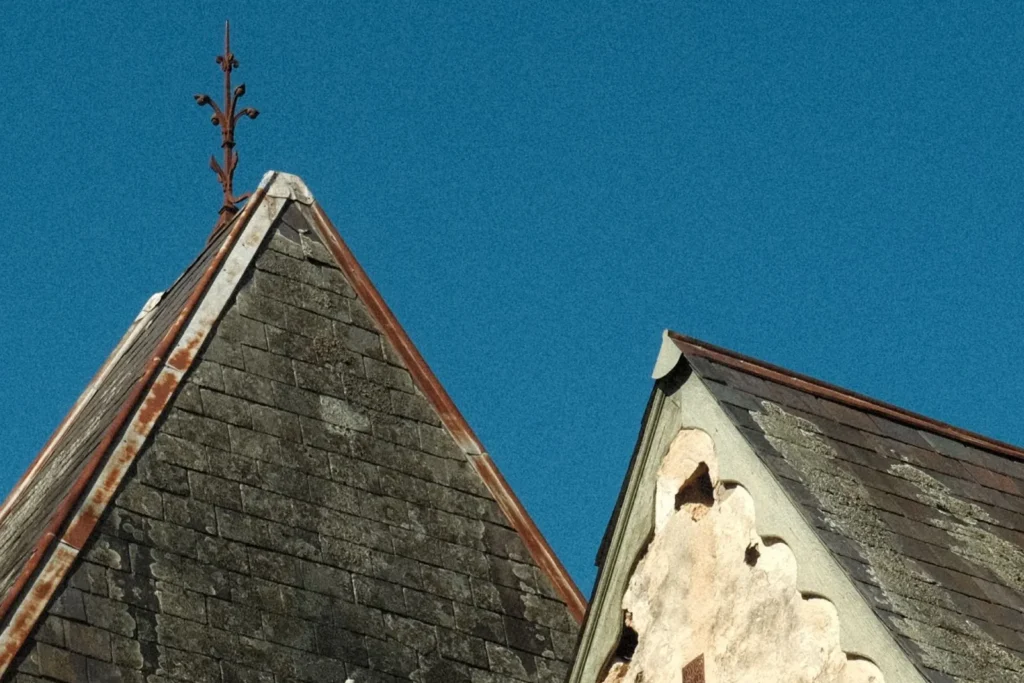
Natural slate is the typical roof on Victorian and Edwardian terraces across Balham, Clapham, Wandsworth, Streatham and Tooting, and these roofs bring their own repair issues. Rear slopes behind parapets, valley (butterfly) roofs, shared chimney stacks and closely packed terraces make access and matching the main challenges rather than the slate repair itself.
Welsh vs Spanish slate
Many original London roofs are Welsh slate, which is smooth, dark blue-grey to purple, and the most expensive to replace at £140 to £180 per m² installed. Spanish slate is the most widely installed alternative at £100 to £130 per m², both per MyBuilder (October 2026). For a repair, the replacement has to match the existing slate. The IHBC notes texture matters as much as colour, so a riven slate dropped into a smooth Welsh roof will stand out. Reclaimed Welsh slate of the same size is often the closest match for small repairs.
Conservation areas and Article 4 directions
Like-for-like slate repairs rarely need planning permission, but changing the roof material can. Wandsworth Council lists eight conservation areas with Article 4 directions, including the Heaver Estate in Balham (page updated October 2025) and the Totterdown Fields Estate in Tooting (October 2025). In both, changes to house roofs, including re-roofing in a different material, need planning permission. Lambeth also has Article 4 directions in several conservation areas, listed on its Article 4 page.
In practice, if your house is in one of these areas, plan on natural slate that matches the existing roof, and check with the council before swapping to fibre-cement or concrete tiles. Wandsworth’s conservation area FAQ also points out that flats do not have the same permitted development rights as houses.
What Should a Slate Roof Repair Quote Include?
A good slate repair quote says exactly which slates are being fixed, how, and what access is included. Two quotes with the same total can cover very different work, as MyBuilder points out. Check for:
- Scope: the number and location of slates, and whether ridge, flashing or valley work is included
- Fixing method: tingle, hook or nails, and the metal used (copper, lead or stainless steel)
- Slate match: new or reclaimed, type and size, and how closely it matches
- Access: roof ladder or scaffold, and whether scaffold hire is in the price
- Batten and felt check: what happens and what it costs if rot is found when the slate comes out
- Photos: before and after pictures, including the slopes you cannot see from the street
- VAT and waste: whether both are included
- Honest advice: whether the roofer thinks the repair will last or whether nail sickness is spreading
Be wary of anyone who goes straight to a full re-slate without looking at the underside of the roof, or who quotes for coating the slates. FixMyRoof makes the same point: a good roofer tells you which level of work your roof actually needs.
Frequently Asked Questions
How much does it cost to fix a slipped slate?
MyBuilder's October 2026 guide puts refixing or replacing a single slipped slate at £60 to £120, and five to ten slates at £150 to £350. MyJobQuote quotes £150 to £220 to fix three slipped slates. Scaffolding, if the slate cannot be reached safely with a roof ladder, is extra.
Can a slipped slate be nailed back in place?
Not usually, because the course of slates above covers the original nail holes. The roofer removes the slate with a slate ripper and holds it back in place with a copper or lead tingle or a stainless steel slate hook. Nails are only used where a patch of slates has been stripped back to the batten.
What is nail sickness on a slate roof?
Nail sickness is the corrosion of the nails that hold slates to the battens, which lets slates slip even though the slate itself is sound. Historic England says it does not mean the whole roof needs replacing, and odd slates can be refixed with tingles. When slates slip across several slopes, re-slating with copper nails is usually the better long-term fix.
How many slipped slates mean a roof needs re-slating?
The IHBC suggests a full strip and re-slate is likely when more than about 20 to 25% of slates are damaged or missing. The SPAB puts the point at roughly one fifth of the slates having been renewed. A roof covered in tingles from earlier repairs is another strong sign.
Is a slipped slate an emergency?
One slipped slate is not usually an emergency, because the slates below overlap the gap. It should still be fixed soon, as driven rain can reach the battens and a loose slate can fall in high winds. Keep people clear of the area below if a slate looks ready to drop.
How much does it cost to re-slate a terraced house?
MyBuilder's October 2026 guide puts a full re-slate of a terraced house at £5,000 to £8,000 in Spanish slate, adding about 20 to 30% for Welsh slate. These figures exclude scaffolding and strip-out, which MyBuilder prices at £200 to £300 per week and £400 to £600. BestBuilders estimates London prices at about 20% above the UK average.
Do I need planning permission to replace slates in a conservation area?
Like-for-like slate repairs rarely need permission, but changing the roof material can. In Wandsworth's Article 4 areas, including the Heaver Estate in Balham and Totterdown Fields in Tooting, re-roofing in a different material needs planning permission. Check with your council before switching from natural slate to fibre-cement or concrete.
What is the difference between a tingle and a slate hook?
A tingle is a narrow strip of copper, lead or galvanised steel nailed to the batten and bent up over the tail of the slate. A slate hook is a stainless steel wire clip driven into the batten that grips the slate's tail. Hooks should not be used on roofs pitched below 25 degrees, and on old Victorian roofs a tingle usually suits better.
How long does a slate roof last?
MyBuilder says a well-installed natural slate roof lasts 80 to 100 years or more, with Welsh slate often lasting over a century and Spanish slate 75 to 100 years. Synthetic slates last around 30 to 50 years. On old roofs the nails and battens usually fail long before the slate does.
Slate Roof Repairs in SouthWest London
JW Roofing Solutions repairs slipped, cracked and missing slates, ridges and flashings on period houses from our base in Balham (SW12). We work across Balham, Clapham, Wandsworth, Streatham and Tooting, and we will tell you plainly whether a repair will hold or whether re-slating is the better spend. We are fully insured.
Call 07467 800002 or request a free quote online. You can also read more about our roof repairs service.
Need help with your roof? JW Roofing Solutions provides slate roof repairs in SouthWest London. Get a free, no-obligation quote.