


A sagging roof is a ridge or roof slope that has dipped below a straight line because the timbers underneath have bent, moved or decayed. An old dip that has not changed for years is often stable. A sag that is new, getting worse, or comes with cracks or leaks needs checking by a roofer or structural engineer.
Key facts:
- Most old roofs have moved a little during their life. Derbyshire County Council’s conservation guidance says this bending usually happened early in the roof’s life and is no cause for alarm unless the timber is cracked or decayed.
- The usual causes are a heavier covering than the roof was built for, cut or removed loft timbers, rot from long-term leaks, and roof spread (the rafters pushing the walls outwards).
- Natural slate in the common 500 x 250mm size weighs about 35 kg/m², while Marley’s Modern concrete tile weighs 50 kg/m² at a 75mm headlap, roughly 40 per cent more.
- Re-covering a roof with a material that is 15 per cent or more heavier needs Building Regulations approval.
- Typical 2026 UK costs run from £350 to £900 for a small, local fix to £1,500 to £4,500 for rafter or purlin strengthening.
This guide explains how to tell harmless old settlement from a warning sign, what makes a roof sag, how to check yours safely, who to call first, and what the fix usually involves. If you would like someone to look at it for you, our roof repairs team covers SouthWest London.
Is a Sagging Roof Dangerous?
Most sagging roofs are not about to collapse, because the sag usually builds up slowly and the timbers settle into a new position. What matters is whether it is stable or still moving, and whether the timbers are sound.
East Hampshire District Council’s guide for historic homes is blunt: any sag or spread indicates a failure of the roof structure and professional advice should be sought. Northern Ireland’s Department for Communities adds that where there is significant sign of movement, an engineer experienced in old structures should be involved. In practice, this table is a good first guide:
| What you notice | Usually historic and stable | Warning sign: get it checked soon |
|---|---|---|
| Dip in the ridge line | Gentle, even curve that matches old photos and neighbouring houses | New dip, or one that looks worse than a few months ago |
| Hollows in the roof slope | Slight, even undulation across an old slate or tile roof | A sharp dip over one or two rafters, often with damp below |
| Top-floor ceilings and walls | Old, hairline cracks that have been decorated over | New or widening cracks, doors suddenly sticking |
| Eaves and top of the walls | Straight walls, gutters still running true | Walls or eaves pushed outwards, gutters tilting or pulling away |
| Inside the loft | Dry, firm timbers with an old, gentle bend | Split, soft or stained timbers, cut struts, daylight through the roof |
What Does a Sagging Roof Look Like?
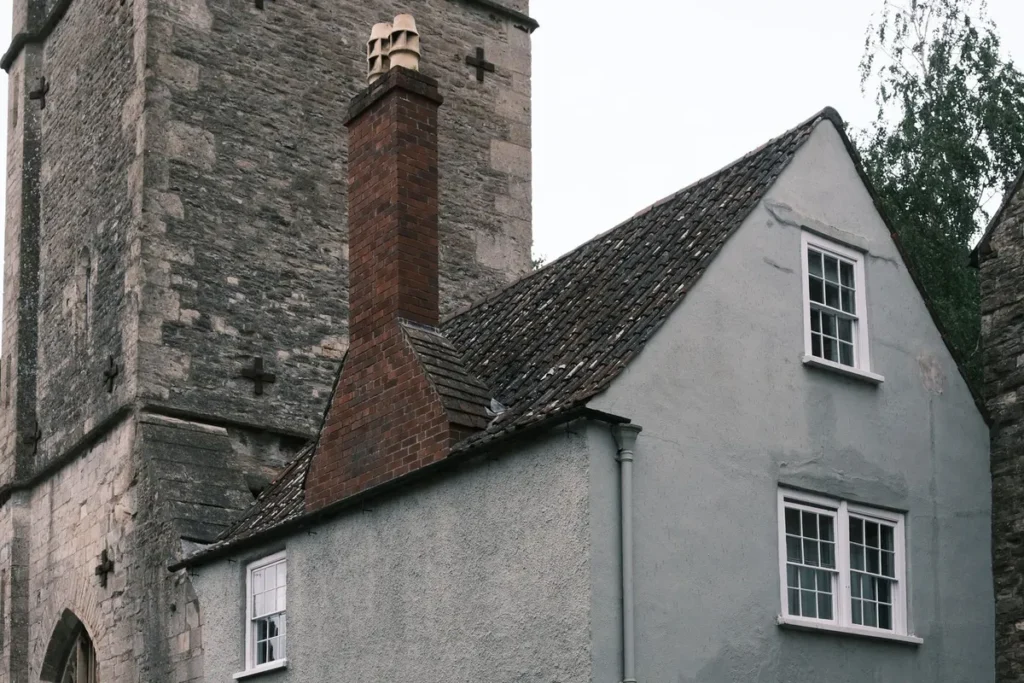
From the street, a sagging roof looks like a ridge that droops in the middle, a slope with a visible hollow, or rows of tiles and slates that wave instead of running straight. It is easiest to see standing across the road and looking straight at the roof, ideally on a bright, overcast day.
Other signs to look for include:
- Your ridge line dipping where your neighbours’ ridges stay straight (on a terrace, the line should run level across several houses)
- Tiles or slates lifting, slipping or cracking along the dip, because they no longer sit flat
- Damp patches or new cracks in top-floor ceilings
- Gutters that have started to overflow at one point because the eaves have dropped (our guide to gutters overflowing in heavy rain covers other causes)
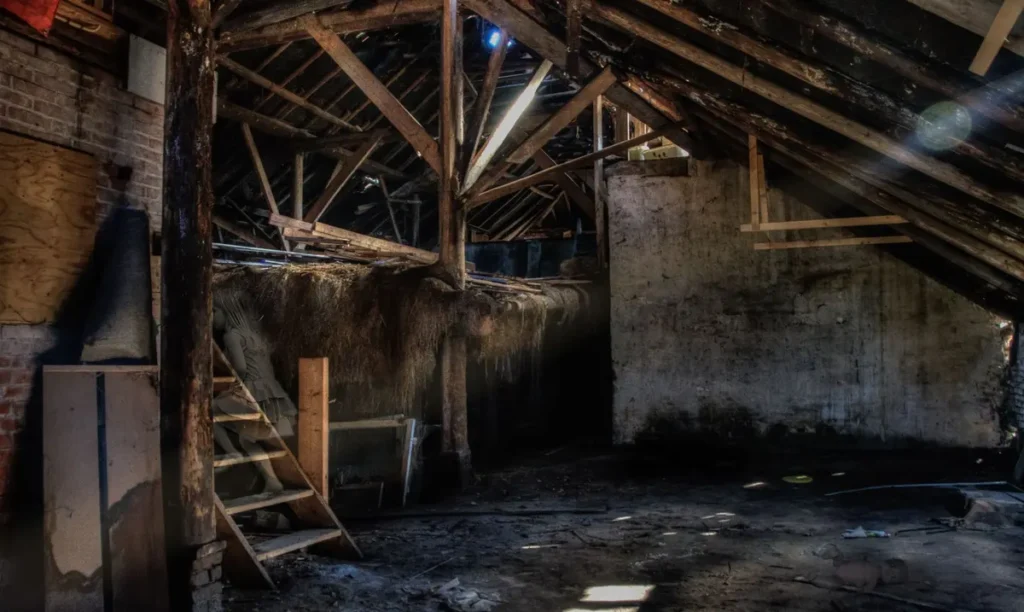
- In the loft: a bowed purlin (the large horizontal beam halfway up the slope), split rafters, or timber that feels soft when pressed with a screwdriver
Large, single-lap tiles show a sag more than small slates. Historic England notes that big interlocking tiles cope less well with any curve or sag in the roofline, so a dip that was hidden under slate can become obvious after a re-roof.
What Causes a Roof to Sag?
A roof sags when its timbers carry more load than they can, or when part of the frame has been weakened or removed. These are the most common causes:
| Cause | What usually happens | Typical sign |
|---|---|---|
| Heavier covering added | Slate replaced with concrete tiles without strengthening the frame | Whole slope slowly bellies over the years after a re-roof |
| Failed or undersized purlin | The beam that supports the middle of the rafters bends or its supports fail | A long belly across the middle of one slope |
| Cut or removed timbers | Struts, collars or ties taken out for loft storage, a water tank or a conversion | Sag appears months or years after loft work |
| Rot from a leak | Water from a slipped slate, failed flashing or blocked gutter rots rafter feet or the wall plate | Sharp, local dip with staining or soft timber below |
| Roof spread | Rafters push the tops of the walls outwards when nothing ties them together | Ridge drops while the eaves and walls bow out |
RICS describes overloading as a common defect, giving the example of lighter slate roofs being replaced with much heavier concrete tiles on a structure designed for slate. The same article notes that roof spread can happen when a roof has no lateral support. The Planning Portal also warns that removing or altering roof timbers could affect how the roof works and cause movement, which can crack walls and, in the worst cases, lead to collapse.
Why Do So Many London Terraces Have Sagging Roofs?
Many Victorian and Edwardian terraces across Balham, Clapham, Wandsworth, Streatham and Tooting have a purlin roof, which RICS notes is common on terrace houses, and many were originally covered in natural slate. Over a century or more, three things tend to happen to these roofs: they get re-covered in something heavier, the loft gets altered, and small leaks go unnoticed for years.
The weight difference is bigger than most people expect. Here is how some common coverings compare, using manufacturers’ own figures:
| Roof covering | Laid weight | Compared with natural slate |
|---|---|---|
| Natural slate, 500 x 250mm, 4 to 5mm thick (Cupa Pizarras) | About 35 kg/m² | Baseline |
| Marley Edgemere concrete interlocking slate, 75mm headlap (Marley) | 44 kg/m² | About 26% heavier |
| Marley Modern concrete interlocking tile, 75mm headlap (Marley) | 50 kg/m² | About 43% heavier |
Both concrete options are above the Planning Portal’s 15 per cent trigger. The Planning Portal’s re-roofing guidance says that when a new covering is significantly heavier or lighter, the roof structure may need modifying and/or strengthening, and you should check with a structural engineer or surveyor before work starts. Roofs that were re-covered decades ago, before anyone checked the timbers, are often the ones that sag today. Our comparison of clay tiles vs concrete tiles goes into weights in more detail if you are planning a re-roof.
How Can You Check a Sagging Roof Safely Yourself?
You can do a useful first check from the ground and from inside the loft, without going anywhere near the roof itself. Never climb onto the roof: our guide on working on a roof without scaffolding explains why even roofers plan access carefully.
- Photograph the roofline. Stand across the street, face the roof straight on and take a photo. Note the date and the exact spot you stood on.
- Compare with your neighbours. On a terrace or semi, see whether the dip stops at your party wall or runs along the whole row.
- Check the top floor. Look for new cracks at the top of walls, cracks in ceilings, and doors or windows that have started to stick.
- Look in the loft with a torch. Stand only on joists or boarding. Look for a bowed purlin, split or twisted rafters, struts that have been cut, water stains, and timber that feels soft.
- Check the eaves and gutters. From the ground, look for walls leaning out at the top and gutters dropping or overflowing in one spot.
- Repeat in three to six months. Take the same photo from the same spot. If nothing has changed and the timbers are dry and sound, the sag is probably historic.
This is as far as DIY should go. Strengthening a roof means working on the structure that holds everything up, so the repair itself is a job for a roofer, a carpenter or a structural engineer.
Who Should You Call First: a Roofer or a Structural Engineer?
Call a roofer first if the sag is local and there are signs of a leak, because the leak needs fixing and the damaged timber can usually be repaired at the same time. Call a structural engineer first if walls are cracking or bowing out, timbers have been cut, or the sag is clearly getting worse.
The HomeOwners Alliance lists a sagging roofline as something a structural engineer can inspect to identify causes and treatment options, with a structural engineer inspection typically costing £175 to £300 and a full report £500 to £2,000 in 2026. A good roofer will tell you when a problem goes beyond roofing and an engineer is needed, rather than guessing at a structural fix.
Worried about a dip in your roofline? JW Roofing Solutions will look at the roof and the loft, trace any leak to its source and tell you honestly whether it needs a repair, an engineer or nothing at all. Call +44 7467 800002 or get a free, no-obligation quote.
How Is a Sagging Roof Fixed?
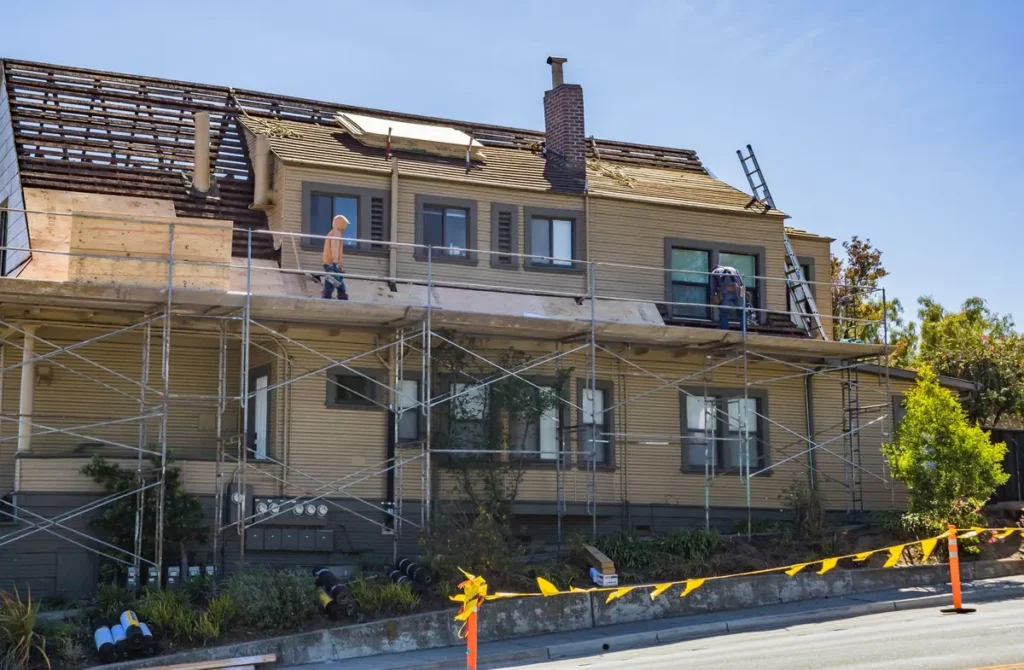
The fix depends on the cause, and most sagging roofs can be strengthened rather than rebuilt. Historic England says the priority is to keep the existing structure and that it’s rarely necessary to replace the rafters, while good joiners can repair rotten timbers. The usual options are:
- Fix the water first. Any leak from slipped slates, flashing or gutters is repaired so the timber stops getting wet.
- Splice or strengthen damaged rafters. Northern Ireland’s Department for Communities notes that wholesale replacement is rarely needed because new timber can be cheek-bolted to old.
- Support or add a purlin. A sagging purlin can be propped back to a load-bearing wall with new struts, or a new purlin added alongside.
- Reinstate removed struts, collars or ties. Where loft work took them out, an engineer designs a replacement that keeps the space usable.
- Pack out the line before re-covering. Historic England notes you may need to add packing if the purlins are sagging so new tiles sit in a straight line.
- Re-roof with structural work. Where rot is widespread or the covering is also worn out, stripping the roof and strengthening the frame at the same time is often better value.
Structural alterations need Building Regulations approval, as does re-covering with a material 15 per cent or more heavier than before, according to the Planning Portal. A like-for-like repair of a few timbers usually does not.
How Much Does It Cost to Fix a Sagging Roof in the UK?
Most sagging roof repairs cost between £1,500 and £6,000 in 2026, but a small local fix can be a few hundred pounds and a full rebuild much more. These are typical UK ranges from BestBuilders’ 2026 sagging roof repair cost guide and the HomeOwners Alliance; they are not JW Roofing Solutions’ prices.
| Job | Typical UK cost (2026) |
|---|---|
| Structural engineer inspection (HomeOwners Alliance) | £175 to £300 |
| Structural engineer report (HomeOwners Alliance) | £500 to £2,000 |
| Minor, local fix: re-bed ridge, replace battens, prop one rafter | £350 to £900 |
| Rafter or purlin strengthening: sistering, new purlin, ties | £1,500 to £4,500 |
| Structural repair with new timbers and part of the roof re-covered | £4,500 to £9,000 |
| Full re-roof where the structure is beyond repair | £9,000 to £18,000 or more |
BestBuilders puts the typical London range at £3,600 to £7,200, about 22 per cent above the UK average, and notes that catching it early, before rot spreads, is what keeps most homeowners in the repair band rather than paying for a full re-roof. Scaffolding, access on a terrace and whether the covering has to come off make the biggest difference to the final bill.
Should You Repair a Sagging Roof or Replace It?
Repair it if the cause is local and the slates or tiles still have life in them. Consider a re-roof if the covering is also near the end of its life, the timbers are rotten in several places, or the roof was overloaded with heavy tiles that are now failing too.
What we would usually suggest: get the cause confirmed first, fix any leak straight away, and strengthen from inside the loft where that is possible. If you were already thinking about a new roof in the next few years, it is often worth doing the structural work and the re-roof together so you only pay for scaffolding once. Our guides to roof repair vs replacement and roof replacement costs help you weigh it up, and our pitched re-roofing service covers slate and tile.
Does Home Insurance Cover a Sagging Roof?
Usually not. The Association of British Insurers says home insurance does not usually cover general wear and tear or damage due to lack of maintenance, and a roof that has slowly sagged over years normally falls into that category. Sudden damage from an insured event, such as a storm, is a different matter: our guide to storm damage roof repairs and insurance claims explains how insurers look at those. Always check your own policy wording.
Frequently Asked Questions
Is a sagging roof dangerous?
Usually not straight away, because most sagging develops slowly over many years. It becomes a concern when the dip is new or getting worse, timbers are cracked or rotten, or walls are cracking or bulging, and then it should be checked promptly by a roofer or structural engineer.
How much roof sag is acceptable?
There is no single figure for a house. Many old roofs bent a little early in their life and have been stable for decades, so the key questions are whether the sag is still moving and whether the timbers are sound. Photographs taken a few months apart are the simplest way to tell.
Can a sagging roof be fixed without removing the tiles?
Often, yes. Where the cause is a weak purlin, missing struts or a few bowed rafters, extra timber can usually be added from inside the loft. The covering only has to come off where rot has spread or the whole roof needs rebuilding.
Do I need Building Regulations approval to fix a sagging roof?
A like-for-like repair usually does not, but structural alterations do, and so does re-covering with a material that is 15 per cent or more heavier than the old one, according to the Planning Portal. Your roofer or engineer should tell you before work starts.
Does home insurance cover a sagging roof?
Usually not. The Association of British Insurers says standard home insurance does not normally cover general wear and tear or damage caused by a lack of maintenance, and a slow sag normally falls into that category. Sudden damage from a named event such as a storm is assessed differently.
How long does it take to fix a sagging roof?
BestBuilders’ 2026 guide puts a small, localised fix at half a day to a day, rafter or purlin strengthening at two to four days, and a structural repair with part of the roof re-covered at four days to a week.
Sagging Roof Repairs in SouthWest London
JW Roofing Solutions repairs and re-roofs pitched roofs across Balham, Clapham, Wandsworth, Streatham, Tooting and the rest of London. If your roofline has started to dip, we will look at the roof and the loft, trace any leak to its source, and tell you honestly whether a repair will do the job, whether you need a structural engineer, or whether it is old settlement you can safely leave. You will get a written, itemised quote with no obligation. Call +44 7467 800002, get in touch online or read more about our roof repairs.
Need help with your roof? JW Roofing Solutions provides sagging roof repairs in SouthWest London. Get a free, no-obligation quote.