

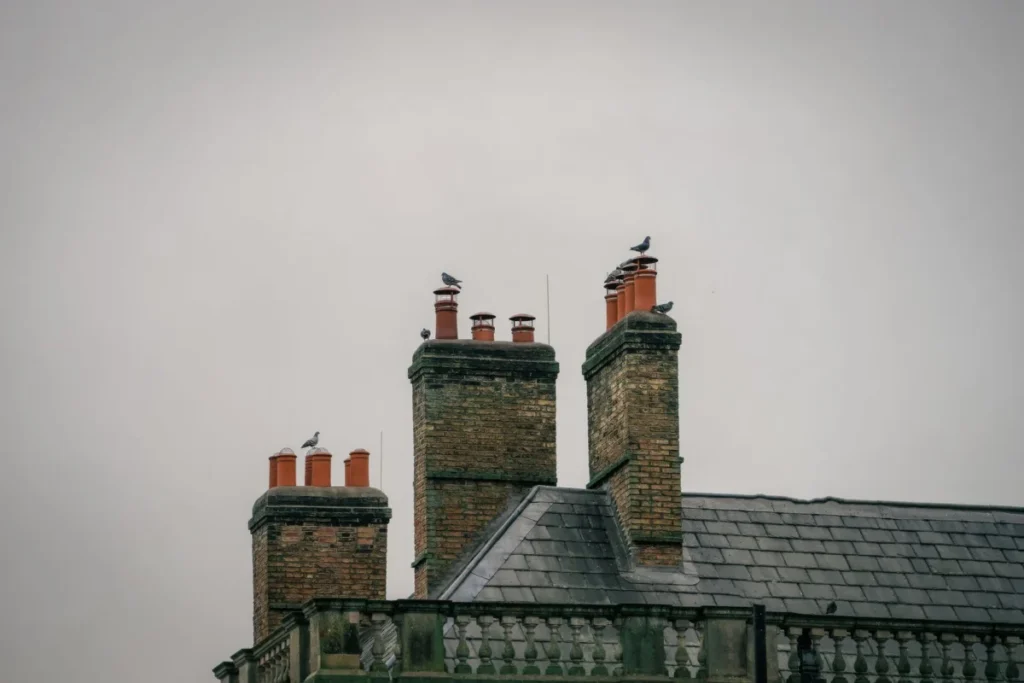
What is flaunching? Flaunching is the sloped layer of mortar on top of a chimney stack that holds the chimney pots in place and throws rain off the brickwork. It is also called benching or haunching. It cracks with age and frost, and once it fails, water gets into the stack and the pots work loose.
Key facts
- Flaunching is the mortar bed around the base of each chimney pot, shaped into a slope so rain runs off.
- It is usually a strong sand and cement mortar, but on old buildings the SPAB recommends a lime-based mix.
- Frost is the usual reason it breaks up, and it tends to decay faster than the pots it holds.
- It is not the same as flashing (the lead where the stack meets the roof) or pointing (the mortar between the bricks).
- Re-flaunching is a small job, but on a two-storey house the scaffolding often costs more than the flaunching itself.
Below: how flaunching differs from flashing and repointing, the signs it has failed, repair or replace, lime or cement, and 2026 costs. If you already know your chimney needs work, see our chimney repairs page.
What Is Flaunching on a Chimney?
Flaunching is the shaped mortar you can see at the very top of a chimney stack, wrapped around the base of the pots. The Collins English Dictionary defines it as a cement or mortar slope around a chimney top to throw off water, and Designing Buildings Wiki describes it as a mortared slope around a chimney pot that is sometimes called benching.
You will hear a few names for the same thing: flaunching, flaunchings, benching and haunching. On some chimneys the top is a cast concrete cap rather than hand-shaped mortar, and Designing Buildings notes that even cast flaunching can crack over time. The word chimney crown is sometimes used for a similar protective top, although terminology varies between regions and trades.
Flaunching or Haunching: Is There a Difference?
No. Flaunching, haunching and flanching all describe the same thing: the sloped mortar around the base of the chimney pots. Haunching is simply another name for it. East Ayrshire Council’s specification for re-haunching a chimney pot, for example, uses haunching for the mortar that secures the pot in place. Flanching is a common spelling of flaunching, and benching is another name noted by Designing Buildings Wiki.
So if a roofer quotes for chimney haunching or re-haunching the pots, it is the same job as re-flaunching, and the same signs, repairs and costs in this guide apply.
Cracked flaunching or a loose chimney pot in SouthWest London? JW Roofing Solutions re-flaunches chimneys, re-sets pots and repairs the lead work around the stack. See our chimney repairs service or call +44 7467 800002 for a written quote. If water is getting in behind the stack, the cause may be the chimney back gutter rather than the flaunching.
What Does Flaunching Do?
Flaunching has two jobs: it holds the chimney pots firmly in place, and it weathers the top of the stack so rain runs off instead of soaking into the brickwork. Building conservation specialist Russell Taylor describes it as the mortar that holds the pots and also acts as the weathering for the top of the stack.
- Holding the pots. It beds the pots so they cannot rock or lean in the wind.
- Shedding water. The slope carries rain away from the flues and the top course of bricks.
- Protecting the stack. The SPAB notes that mortar joints are most susceptible to weathering at the top of a stack, which is exactly the area flaunching covers.
How Long Does Flaunching Last?
Many UK roofers quote around 15 to 20 years for flaunching, and KN Roofing (November 2026) adds that harsh weather can shorten that. One contractor guide, Squote (April 2026), suggests renewing it every 10 to 15 years, so treat 15 to 20 years as the upper end rather than a promise. The clay pot usually outlasts the mortar: BookaBuilderUK (August 2026) says a good clay pot can last 50 years or more, and that the flaunching often needs attention first.
What Makes Flaunching Crack Early?
- Freeze and thaw. Rain gets into a hairline crack, freezes and widens it every winter, as Roof Repairs UK (February 2026) explains.
- Heat from the flue. A used fire or stove warms the pots and top of the stack, and the cooling afterwards stresses the mortar.
- A weak or badly compacted mix. Mortar that is too sandy or poorly packed crumbles early.
- Loose pots. A pot that moves cracks the mortar around its base.
- Poor shaping. Flaunching that is too flat lets water pond on top and break it down.
How Often Should You Check It?
Look at the top of the stack from the ground each spring and autumn, and after any storm. If you cannot see the top from the street or garden, Daniel James Construction (May 2021) notes that periodic drone surveys can monitor chimney stacks without the cost of scaffolding. Our drone roof survey photographs the flaunching close up, so you can see cracks before pots loosen.
Flaunching vs Flashing vs Repointing: What Is the Difference?
Flaunching is at the top of the chimney, flashing is at the bottom where the stack meets the roof, and pointing is the mortar between the bricks in between.
| Part | Where it is | Usual material | What it does | Common sign of failure |
|---|---|---|---|---|
| Flaunching | Top of the stack, around the pots | Sand and cement, or lime on older buildings | Holds the pots and sheds rain off the top | Cracks, missing chunks, loose or leaning pots |
| Flashing | Where the stack meets the roof slope | Lead sheet (sometimes a mortar fillet) | Seals the joint between chimney and roof | Lifted or split lead, damp at the ceiling near the chimney breast |
| Pointing | Joints between the bricks of the stack | Mortar, lime-based on old buildings | Keeps the brickwork solid and weathertight | Crumbling or open joints, plants growing out of the stack |
| Mortar fillet | Some stacks have these instead of lead | Lime or cement mortar | Weathers the stack-to-roof joint | Cracked or loose fillet |
This matters because the fix is different for each. A leak that seems to come from the chimney is often the flashing, which our guide to lead flashing repair covers, while crumbling joints mean repointing, covered in our chimney repair guide. Russell Taylor lists three routes for rain into a chimney: down the flue, around defective flashings, or through the wall of the stack itself. Cracked flaunching feeds water into the first and third.
Flaunching vs Chimney Pot vs Cowl: What Is the Difference?
People often use these words for the same patch of roof, but they are three different parts that fail in different ways.
| Part | What it is | What it does | Usual weak point |
|---|---|---|---|
| Flaunching | Sloped mortar bed around the base of the pot | Holds the pot and sheds rain off the stack | Cracks and crumbles with frost |
| Chimney pot | The clay or metal terminal on top of the flue | Lengthens the flue and finishes the stack | Cracks or loosens if its bedding fails |
| Cowl or cap | A cover fitted on top of the pot | Stops rain, birds or downdraught entering the flue | Wrong type for the flue, or damaged by wind |
A pot that looks fine may be sitting on failed mortar. As Thurnby Chimney Sweeps puts it in a May 2026 guide, the pot is the terminal, the stack is the brickwork below, and the flaunching is the mortar bedding that links them.
When Does a Chimney Need a Cowl?
Roof Repairs UK (February 2026) says a cowl can help when rain runs straight down the pot, particularly on unused fireplaces. Squote (April 2026) says a cowl is not mandatory but is recommended where a chimney is capped or birds are a problem. A disused flue should be capped but vented, never sealed airtight. A live flue should only get a restrictive cap on professional advice, as BookaBuilderUK warns. If you want a cowl, add it to the same visit as the re-flaunch.
How Can You Tell If Flaunching Is Cracked?
You can usually spot failed flaunching from the ground with binoculars, which is exactly what Historic England’s maintenance checklist suggests when safe access is not available. Try this quick check:
- Look at the pots first. Are any leaning, out of line with the others or out of position? Historic England lists pots out of position as a reason to arrange a close inspection.
- Look at the top of the stack. Dark cracks, gaps around a pot or missing lumps of mortar.
- Check for plants. The SPAB notes that weed growth may be a symptom of weathering at the top of a stack, and Bradford Council’s conservation guidance warns that roots can damage mortar and make the chimney or its pots unstable.
- Check the ground and gutters. Bits of mortar in the gutter or on a lower roof, or debris in the fireplace grate, are a common giveaway.
- Check inside. Damp on the chimney breast or a musty loft after rain can mean water is getting into the stack.
Bradford Council’s guide suggests surveying chimneys from the ground every six months, and up close every year where the chimney can be reached from roof level. If you can’t see the top of your stack from the street or garden, a drone roof survey can photograph the flaunching close up without anyone climbing onto the roof.
What Happens If Cracked Flaunching Is Left?
Left alone, cracked flaunching lets rain into the top of the stack and loosens the pots, and both problems get worse every winter. Russell Taylor explains that flaunching decays more readily than the pots, usually by frost action: water gets into a crack, freezes, expands and opens the crack a little further.
The result is damp on the chimney breast inside, pots that rock or lean and can fall in a storm, and wet top brickwork that weathers faster, so a small re-flaunch can turn into rebuilding the top few courses.
Insurance is unlikely to help with a slow failure. Checkatrade notes that insurance may cover chimney repairs if the damage is caused by an insured event such as a storm or fire, but normal wear and tear is usually not covered. Check your own policy wording.
Worried about the top of your chimney? JW Roofing Solutions repairs chimneys across SouthWest London, including flaunching, repointing and lead work. We trace leaks to their source and tell you honestly whether a repair will do. Call +44 7467 800002 or get a free, no-obligation quote.
Can Flaunching Be Repaired, or Does It Need Re-Flaunching?
Fine surface cracks can sometimes be repaired locally, but loose, crumbling or lifting flaunching should be taken off and replaced. Bradford Council’s guidance is clear that if flaunching is loose, cracked or crumbling, it should be carefully cleaned off and the pots re-set in new flaunching.
| What you can see | Likely fix | Why |
|---|---|---|
| One or two fine hairline cracks, flaunching still solid and pots firm | Local repair, then keep an eye on it | The bedding is still doing its job |
| Wide cracks, gaps around a pot, or sections lifting off the brickwork | Re-flaunch | Patching over loose mortar does not re-bed the pots |
| Any pot loose, leaning or rocking | Re-flaunch and re-set the pots | The pots need a new, solid bed |
| Flaunching gone and top bricks loose or crumbling | Rebuild the top courses, then re-flaunch | New mortar needs sound brickwork underneath |
| Cracked pot | Replace the pot, often with a matching or reclaimed one, then re-flaunch | Bradford Council notes many traditional styles of pot are still made |
What we’d do: if scaffolding or a tower is already going up for anything else on the roof, we would re-flaunch rather than patch any flaunching that is more than lightly crazed, because access is the expensive part. If the only problem is one hairline crack and the pots are firm, we would say so and leave it.
How Is a Chimney Re-Flaunched?
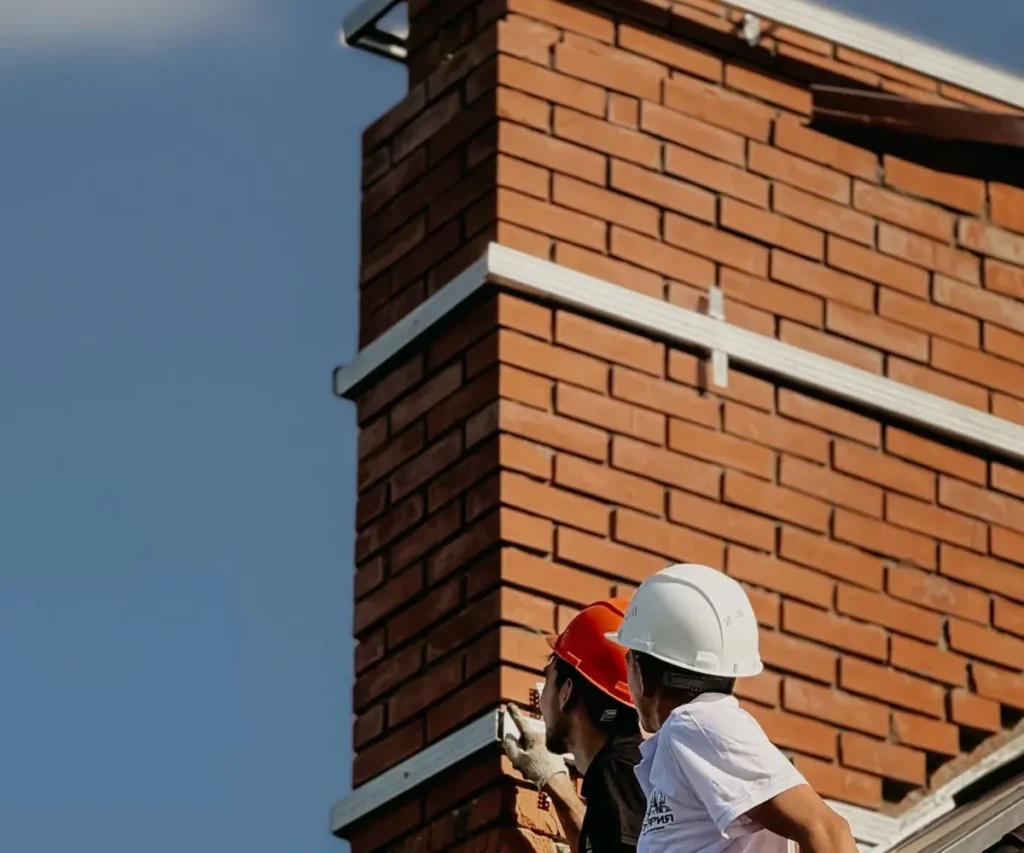
Re-flaunching means taking off the old mortar, checking the pots and the top of the stack, then forming a new sloped bed. A typical job runs like this:
- Set up safe access. On most houses that means a chimney scaffold or tower. Our guide to working on a roof without scaffolding explains when ladders are and are not acceptable.
- Remove the old flaunching. It is broken out carefully. Russell Taylor warns to take care not to damage the pots when cleaning off old hard cement flaunching.
- Check the pots and top bricks. Cracked pots are replaced, loose bricks are re-bedded, and any disused flue is dealt with.
- Re-set the pots. Each pot is bedded level and upright.
- Form the new flaunching. Mortar is built up around the pots and trowelled to a steady fall towards the edges so rain runs off.
- Protect it while it cures. Fresh mortar should be protected from rain until it has cured. Lime mortar also needs damping down, which conservation builder Terrence Lee calls crucial for durable lime mortar repairs.
While the access is up, have the pointing and flashing checked too, so you never pay for scaffolding twice.
What Mortar Mix Is Used for Flaunching?
There is no single correct mix. It depends on the age of the stack and what the pots and bricks are made of. These are the ratios published in the sources we read, by volume.
| Mix | Typical use | Source |
|---|---|---|
| 3 parts sharp sand to 1 part cement | The traditional modern flaunching mix on sound brick, finished with a weathered slope | Squote, April 2026 |
| About 1 part natural hydraulic lime (NHL 3.5) to 2.5 to 3 parts sharp sand | Older and heritage stacks, where lime moves with the brickwork | Squote, April 2026 |
| 1 part modified hydraulic lime binder (for example HL5) to 2 parts sharp sand | A council conservation specification for re-haunching pots | East Ayrshire Council, 2020 |
| 2 parts building sand, 1 part grit sand, 1 part cement, plus a frost proofer in cold weather | One tradesman’s mix for a cottage stack in York | Screw it!, January 2022 |
Squote makes one useful distinction: a strong sand and cement mix is acceptable for the flaunching cap itself, because it only has to shed water and bed the pots, but it should not be used to point the brickwork below, because a mortar harder than the brick can crack it.
How Thick and How Protected?
Squote says the new mortar should cover at least 50mm of the base of the pot. The East Ayrshire specification asks for the mortar to be shaped so water runs off rather than ponds, and protected from drying out or rain damage for the first 72 hours. Lime mortar is also less forgiving in cold weather: Squote says it should not be laid in frost or below about 5 degrees Celsius.
Can Flaunching Be Done in Winter?
Sometimes. Find a Chimney Sweep says winter repairs may be possible, but frost, low temperatures and wet surfaces affect mortar work, so the weather has to be assessed first. KN Roofing makes the practical point that booking before winter sets in avoids frozen conditions that make the job slower. If a hard frost is forecast, a good roofer will wait rather than lay mortar that may not set.
Are Cracks Ever Repaired Instead of Replaced?
Daniel James Construction says fine cracks can be filled with epoxy resin products fairly cheaply, but once cracks have spread, replacing the flaunching is often needed. The York tradesman at Screw it! goes further and says old and new mortar will separate in time, so patching over perished flaunching rarely lasts. If your flaunching is only lightly crazed and the pots are firm, a local repair may be enough. If it is loose or lifting, replace it.
Should Flaunching Be Lime or Cement?
On most older houses, a lime-based flaunching is the safer choice; a strong sand and cement mix is the traditional modern default. Both are used, and the right one depends on the age of the building and what the rest of the stack is built with.
- Cement. Designing Buildings Wiki says flaunching is often a 3:1 mix of strong sand and cement, and Bradford Council describes it as a traditional mortar with a slightly higher cement content.
- Lime. The SPAB advises that mortar used for renewing flaunching should usually be lime-based on old buildings.
- Reducing cracking. On one Georgian chimney, Terrence Lee Conservation used a strong natural hydraulic lime (NHL 5) and layered the flaunching over brick pieces to reduce the thickness of the mortar and the risk of the lime cracking.
- Extra protection. The SPAB adds that a protective lead capping over the flaunching may sometimes be justified.
If your house is listed, in a conservation area or built with soft lime mortar, ask your roofer which mix they will use and why.
How Much Does Re-Flaunching a Chimney Cost in 2026?
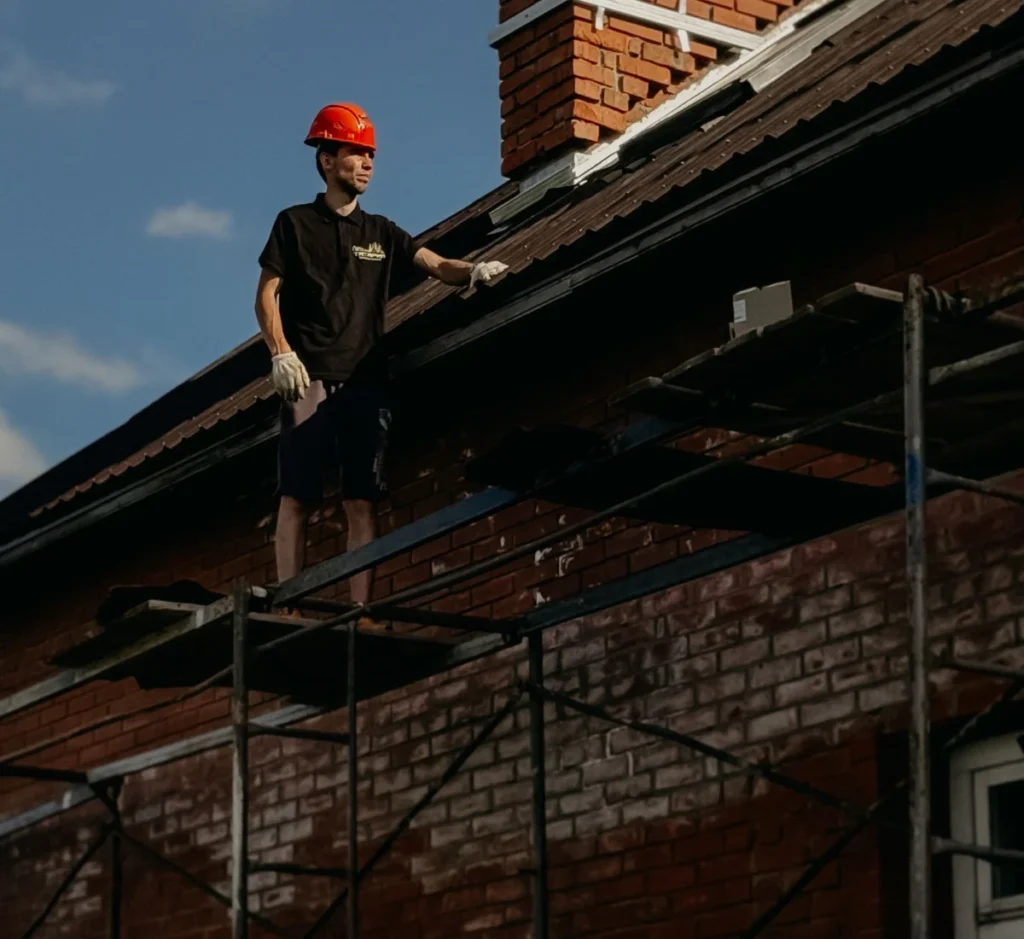
Re-flaunching typically costs £150 to £400 for the work itself, or around £500 to £800 all-in on a two-storey house once scaffolding is included, according to BestBuilders’ 2026 chimney repair cost guide. These are published UK averages, not our prices, and every chimney is quoted after we have seen it.
| Chimney job | Typical UK cost (2026) | Source |
|---|---|---|
| Re-flaunching (work only) | £150 to £400 | BestBuilders |
| Re-flaunching all-in, two-storey house with scaffold | £500 to £800 | BestBuilders |
| New chimney pot fitted and re-flaunched | £100 to £300 per pot | BestBuilders |
| Partial rebuild of the top courses, flaunching and pots reset | £600 to £1,500 | BestBuilders |
| Chimney repointing | £300 to £1,000 | Checkatrade |
| Chimney flashing repair | £250 to £1,000 | Checkatrade |
BestBuilders adds that London and the South East typically run 20 to 30 per cent above national figures, and that restricted access, such as a mid-terrace house, pushes the access cost up. That is why it pays to bundle chimney jobs into one visit. Checkatrade’s advice is to always check whether scaffolding is included in your quote.
How Much Does Flaunching Cost per Pot, and What Else Adds to the Bill?
The mortar is cheap. Access, pots and extras decide the final price. These are UK guide prices from published cost guides, not JW prices, and London tends to sit higher. Every chimney is quoted after it has been seen.
| Item | UK guide price | Source |
|---|---|---|
| Minor local flaunching repair | £250 to £600 | Roof Repairs UK, February 2026 |
| Replace flaunching on a typical chimney | £400 to £1,200 | Roof Repairs UK, February 2026 |
| Replace damaged flaunching around one pot | £100 to £300 | BookaBuilderUK, August 2026 |
| Re-bed a sound but loose pot and re-flaunch (access extra) | £120 to £250 | Squote, June 2026 |
| New clay pot, supply and fit, with flaunching | £200 to £500 | Squote, June 2026 |
| Cowl or bird guard, fitted | £40 to £120 each | Squote, June 2026 |
| Cap an unused pot with a vented cowl or cap | £80 to £250 | BookaBuilderUK, August 2026 |
| Small access tower (low stacks only) | £150 to £500 | Squote and BookaBuilderUK, 2026 |
| Scaffold to chimney level, typical two-storey house | £700 to £1,500 | Squote, June 2026 |
Price by Type of House
BookaBuilderUK (August 2026) says a basic job on a bungalow can quote from about £250 to £450. Replacing several large pots on a tall Victorian stack, with scaffold, flaunching and brickwork, can reach £1,500 to £3,000 or more. A single standard pot with straightforward access is put at £250 to £600, but once full scaffold is needed the same job commonly rises to £900 to £1,800. Roof Repairs UK gives a wider scaffold range of £450 to £2,000 or more, which shows how much it depends on the house and street.
Do You Always Need Scaffolding?
Not always, but safe access is essential. Roof Repairs UK says many roofers use scaffolding for chimney-top work, especially on two-storey houses, and Find a Chimney Sweep says access depends on stack height and roof layout. If scaffold is going up anyway, ask for pointing, flashing and pots to be checked at the same visit, since the access is usually the largest line on the quote. Our roof inspection can tell you what is needed before you book it.
Do the Pots Have to Come Off?
Not always. Chimney-Repairs.uk says some repairs can be done around the pots, but if the pots are loose or the flaunching has failed badly, they may need re-bedding for the repair to last.
Why Do London Chimneys Need Extra Attention?
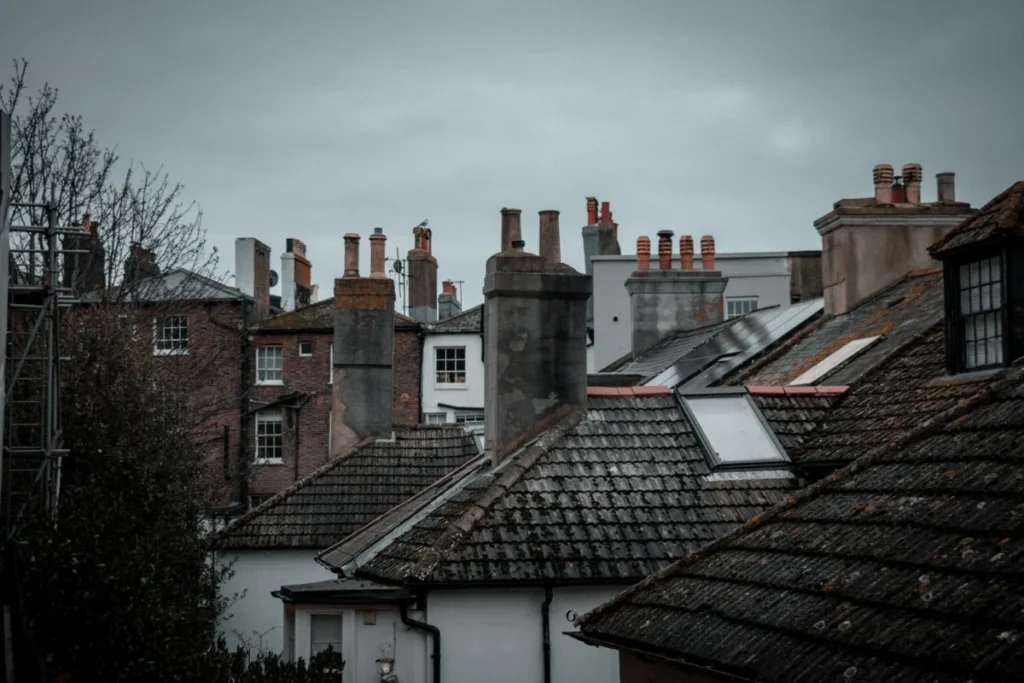
Victorian and Edwardian terraces across SouthWest London often have shared stacks carrying several pots, some of them on flues that are no longer used. A few things make flaunching on these houses worth a closer look:
- Shared stacks. In a terrace the stack often sits on the party wall and serves both houses. The Party Wall etc. Act 1996 explanatory booklet says that where a party structure is repaired because of defect or want of repair, the cost is shared in proportion to the use each owner makes of it. Talk to your neighbour before the work, and check the booklet on whether a formal notice is needed.
- Old repairs. Some stacks carry old, hard cement flaunching that has cracked. Because flaunching usually decays faster than the pots, a stack can have perfectly sound pots sitting in failed mortar.
- Pots matter in conservation areas. Bradford Council’s conservation guidance describes chimney stacks and pots as important features of the skyline and roofscape of conservation areas. If you are in one, keep and re-set the existing pots where you can.
- Disused flues. A pot that no longer serves a fireplace can be capped while the access is up. BestBuilders stresses it should be capped and vented, never sealed airtight.
Checklist Before You Book a Re-Flaunch in SouthWest London
On Victorian and Edwardian terraces in Balham, Clapham, Wandsworth, Streatham and Tooting, a chimney often serves two houses and carries several pots. Run through this list before you ask for quotes.
- Count the pots. Price is per pot as well as per job, and a shared stack can have four or more.
- Zoom in from the ground. Roof Repairs UK suggests using your phone zoom to look for cracks at the pot base and missing mortar at the top of the stack. Take photos of the whole stack and a close-up of the top, if that is safe.
- Note indoor signs. Damp on the chimney breast after rain, stains near the ceiling, a musty smell in the loft.
- Say which side of the house the chimney is on and whether there is side access. Chimney-Repairs.uk lists these as the details that help a roofer quote accurately.
- Check the stack is not shared. If it is, speak to your neighbour first, as covered above.
- Ask if scaffold is in the price, and whether the pointing, flashing and cowls will be checked while it is up.
- Ask what mortar will be used and why, especially on a listed or lime-built house.
- Ask about timing. Frost and rain delay mortar work, so the best window is before winter.
JW Roofing Solutions carries out chimney repairs and lead work across SouthWest London, and can check the flaunching, pointing and flashing in one visit. Get a free, no-obligation quote.
Can You Re-Flaunch a Chimney Yourself?
Anyone can check flaunching from the ground, but re-flaunching means working at the top of the stack. On a bungalow with a low stack and safe roof access, a competent DIYer can do it with the right mortar. On a two or three-storey London house, it needs proper access such as a scaffold or tower.
A roofer is the better choice if any pot is loose, if the top bricks are crumbling, if the stack is shared with a neighbour, or if you are not sure whether the problem is the flaunching or the flashing. A roof inspection will tell you before you pay for the wrong repair.
Is Cracked Flaunching Serious?
Hairline cracks are not an emergency, but they should not be left. Cracked flaunching lets water into the top of the stack, which can lead to leaks, damp and mould inside, and over time weakens the mortar and brickwork of the chimney, according to SAM Conveyancing’s survey guide. It becomes a safety issue when the pots are loose: the SPAB notes that pots become unstable when the surrounding flaunching deteriorates. Loose pots, chunks of mortar in the gutter or a damp patch on the chimney breast mean it is time to book a repair. If water is already coming through, our leaking roof repair cost guide shows typical chimney leak prices.
Buying a House With Damaged Chimney Flaunching
Damaged flaunching is rarely a reason on its own to walk away from a house, but it is worth checking properly. SAM Conveyancing gives repair or replacement costs of about £80 to £530 depending on the work, and suggests three steps:
- Find out how bad it is. Minor cracking is an easy fix; flaunching that is badly broken or missing may mean the stack has been neglected and needs a wider look.
- Check with your lender and insurer, as some have concerns about existing damage.
- Use a written roofer’s quote or survey to negotiate the price or ask the seller to repair it before completion.
A drone roof survey is a quick way to see the top of a stack without scaffolding before you commit.
Cracked flaunching is sometimes a sign that the whole stack is moving. If your chimney looks out of line from the street, our guide to a leaning chimney explains how much lean is acceptable, the warning signs and whether to repoint, rebuild or remove it.
Frequently Asked Questions
Is haunching the same as flaunching?
Yes. Haunching, flaunching and flanching are names for the same sloped mortar that holds the chimney pots and throws rain off the top of the stack. A quote for re-haunching is a quote for re-flaunching.
What is flaunching made of?
Flaunching is usually a strong sand and cement mortar, often around three parts sand to one part cement. On older buildings the SPAB recommends a lime-based mortar instead.
What is the difference between flaunching and flashing?
Flaunching is the sloped mortar at the top of the chimney that holds the pots. Flashing is the lead, or sometimes a mortar fillet, that seals the joint where the chimney meets the roof. Both can cause leaks, but they need different repairs.
How much does it cost to replace chimney flaunching?
Published 2026 UK averages put re-flaunching at about £150 to £400 for the work, or £500 to £800 all-in on a two-storey house once scaffolding is included. London prices tend to sit higher, and a written quote after an inspection is the only reliable figure.
How thick should chimney flaunching be?
There is no single figure: it needs to be thick enough to bed the pots firmly and form a steady slope away from them. Very thick mortar is more likely to crack, so some builders bed brick pieces underneath to reduce the thickness.
Does house insurance cover chimney flaunching?
Usually only if the damage was caused by an insured event such as a storm. Flaunching that has cracked slowly through age and frost is normally treated as wear and tear, so check your policy wording.
Is cracked flaunching an emergency?
A few hairline cracks are not an emergency, but they should be checked before winter. A loose, rocking or leaning pot is more urgent, because it can fall in high winds, so keep people clear of the area below and get it looked at quickly.
Is cracked flaunching serious?
Hairline cracks are not an emergency, but they let water into the top of the stack and can lead to leaks, damp and loose chimney pots. Loose pots or mortar falling into the gutter mean it needs repairing soon.
How long does chimney flaunching last?
Roofers commonly quote 15 to 20 years, and KN Roofing says harsh weather can shorten that. One contractor guide suggests renewing it every 10 to 15 years, so check it from the ground each spring and autumn and after storms rather than waiting for a leak.
Can chimney flaunching be repaired in winter?
Sometimes, but frost, low temperatures and wet surfaces affect mortar work, so the weather has to be checked first. Lime mortar should not be laid in frost or below about 5 degrees Celsius, so a good roofer will wait for a dry, frost-free spell.
Do you need a cowl on a chimney pot?
Not by law, but a cowl or vented cap can stop rain and birds getting into a disused or open flue. It should be vented, never sealed airtight, and a live flue should only be fitted with a cap on professional advice, so add it during the re-flaunch while access is in place.
Chimney Flaunching Repairs in SouthWest London
JW Roofing Solutions repairs chimneys across SouthWest London, from re-flaunching and re-setting pots to repointing and lead work. We will look at the whole stack, tell you whether the flaunching, the flashing or the pointing is the real problem, and give you a written, itemised quote with no obligation. We are fully insured and leave the site clean and tidy. Call +44 7467 800002, get in touch online or read more about our chimney repairs.
Need help with your roof? JW Roofing Solutions provides chimney flaunching and chimney repairs in SouthWest London. Get a free, no-obligation quote.