

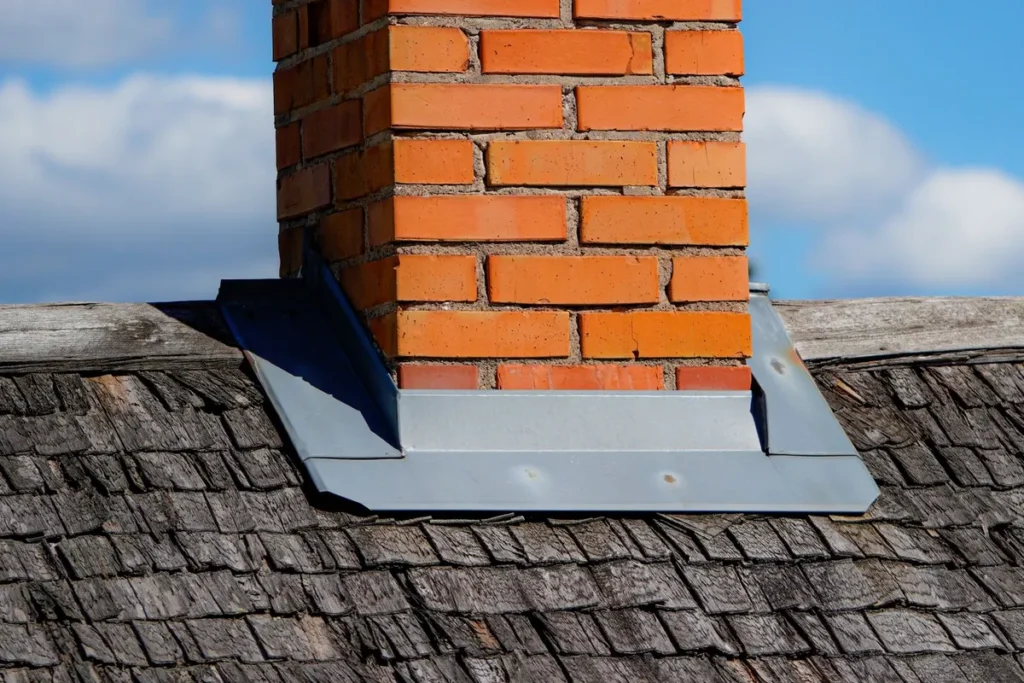
A chimney back gutter is the lead-lined channel built across the uphill side of a chimney stack, where the roof slope runs into the brickwork. It catches rainwater running down the roof and turns it around both sides of the stack. When it splits, clogs with leaves or loses its cover flashing, water gets in behind the chimney.
Key facts
- A chimney is weathered by a front apron, side flashings and a back gutter with cover flashings. When the chimney sits on the ridge, the back gutter is replaced by a saddle on each side (Calder Guide to Good Leadwork).
- Code 4 lead (1.80 mm thick) is the minimum for chimney flashings, and Code 5 (2.24 mm) is preferable for a back gutter that is bossed by hand rather than welded, according to the same guide.
- A typical domestic back gutter needs at least a 100 mm upstand against the chimney, a 150 mm clear gutter and about 225 mm of lead running up the roof slope, says technical roofing consultant John Mercer in Total Contractor.
- The SPAB notes that lead back gutters behind chimneys often leak where they are not cleared out or snow collects against them.
- Replacing the flashing on all four sides of a chimney costs around £450 to £600 plus VAT without scaffolding, or £800 to £1,200 with it (Checkatrade, September 2026).
The back gutter is one of the most common sources of a leak around a chimney, and one of the hardest to see from the ground. Our lead work team repairs and remakes back gutters, aprons and flashings across SouthWest London. This guide explains how a back gutter works, why it fails and what a fair repair looks like, so you know what to ask before you get a quote.
What Is a Chimney Back Gutter?
It is the part of the chimney flashing on the high side of the stack. Without it, all the rain running down the roof above the chimney would hit the brickwork and pour straight into the joint.
Total Contractor explains that the role of a back gutter, like any flashing where something interrupts the roof slope, is to capture and divert water around the chimney. The lead turns up the back of the stack as an upstand, runs across as a flat-bottomed gutter, then extends up the roof under the slates or tiles, supported by a timber gutter board and a tilting fillet. A separate cover flashing, tucked into a mortar joint, laps over the upstand so rain cannot run down behind it.
This is how the back gutter fits with the other parts of a chimney flashing:
| Part | Where it sits | What it does |
|---|---|---|
| Back gutter | Uphill side of the stack | Collects water from the roof above and sends it round both sides |
| Cover flashing | Chased into the brickwork above the back gutter | Laps the back gutter upstand by at least 75 mm so water cannot get behind it |
| Side flashings | Down each side of the stack | Seal the sloping joint between the roof covering and the brickwork, stepped up the mortar courses |
| Soakers | Under each slate or plain tile at the sides | Hidden L-shaped pieces that keep water away from the side joint (Code 3 lead is suitable) |
| Front apron | Downhill side of the stack | Laps over the tiles or slates below and sheds water clear of the chimney |
| Saddle | Each side of a chimney on the ridge | Takes the place of a back gutter where there is no roof slope above |
| DPC tray | Built into the brickwork | Stops water that soaks into the stack above the roof from running down inside it |
Does Every Chimney Have a Back Gutter?
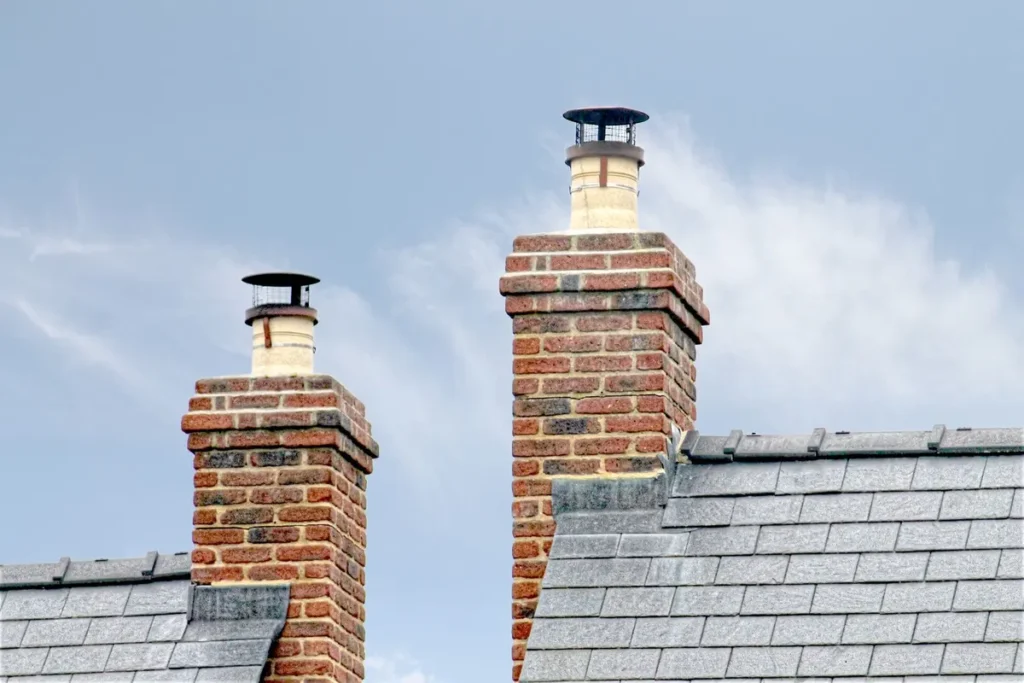
No. A back gutter is only needed where there is roof slope above the chimney. A stack sitting on the ridge has a lead saddle on each side instead, while a chimney that rises part-way down a slope needs a back gutter.
Mercer notes in Total Contractor that chimneys sitting entirely within the roof slope need side flashings, a top abutment flashing and a back gutter. Where a chimney sits against a gable wall, he suggests draining the back gutter into a hopper, or forming an upstand in the lead so water cannot spill over the gable.
On Victorian and Edwardian terraces in SouthWest London you can often see both types from the garden: main stacks on the party wall at the ridge, and smaller stacks rising through the slope of a rear addition. If you are not sure which you have, a photo from an upstairs back window or a drone roof survey will show it without anyone climbing on the roof.
How Is a Lead Back Gutter Made?
A lead back gutter is shaped from sheet lead, either by bossing (working the lead into shape by hand) or by lead welding the corners, and it is fitted before the cover flashing. A typical sequence looks like this:
- Prepare the roof. The slates or tiles above the stack are stripped back and a gutter board and tilting fillet are fixed, set so the tiles behind the gutter lie in the same plane as those either side.
- Size the lead. For a normal house, Total Contractor gives at least a 100 mm upstand, a 150 mm clear gutter and about 225 mm up the slope ending in a welt, with 225 mm extra at each end for the corners.
- Form the gutter. The corners are bossed or welded. The Calder guide sets Code 4 as the minimum, with Code 5 preferable if the back gutter is bossed.
- Set the outlets. The lead is dressed so water leaves each end onto the roof with at least 50 mm of clear width beside the chimney.
- Relay the roof covering over the part of the lead that runs up the slope.
- Fit the cover flashing. A chase is cut into a mortar joint and a cover flashing is fitted to lap the upstand by at least 75 mm, then wedged and pointed. The Calder guide notes that the Lead Sheet Association recommends sealant for pointing.
- Finish the lead with patination oil, as the Calder guide advises, to stop white staining as new lead weathers.
Size matters. The wider the stack, the more water the back gutter has to carry, so it needs to be deeper and wider. Mercer warns that large volumes of water should not be discharged straight back onto the roof, where they can overwhelm the tile laps and side flashings, and that internal outlets or open lead gutters to the eaves may be needed on wide stacks.
Why Is My Chimney Back Gutter Leaking?
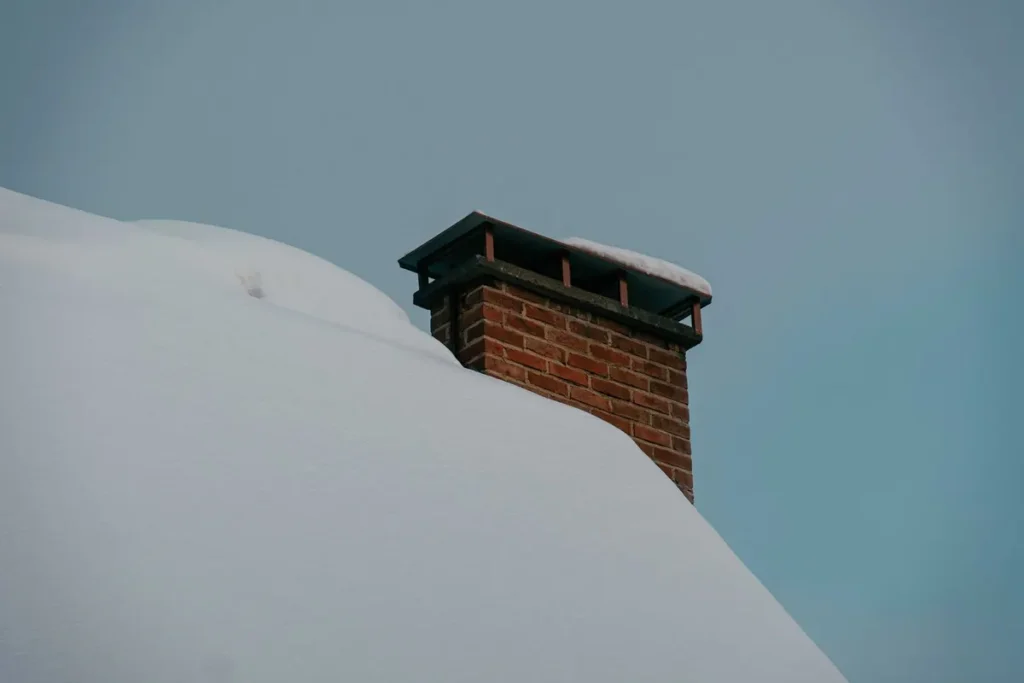
Most back gutter leaks come from blockages, snow or damaged lead. The gutter is a short, almost flat channel on a sloping roof, so anything that stops water flowing round the stack makes it back up and spill over the upstand.
- Leaves, moss and debris. The back gutter sits in the path of everything that washes down the roof. The SPAB names lack of clearing as a common cause of leaks.
- Snow. Snow drifts against the uphill face of a stack and fills the gutter. As it melts, water can rise above the upstand.
- Split or holed lead. Lead moves as it heats and cools, and old or thin lead eventually cracks at the corners and folds. The SPAB says split or holed flashings should be repaired or replaced.
- A loose cover flashing. If the cover flashing has slipped out of its mortar joint, rain runs down behind the upstand. Historic England’s maintenance checklist asks whether flashings are still fixed into the chimney and properly dressed down.
- A gutter too small for the stack. On wide chimneys, or below a large area of roof, an undersized gutter overflows in heavy rain even when it is clean.
- Old patch repairs. West Norfolk Borough Council’s guidance on historic buildings warns that bitumen fabrics and glass fibre are not compatible with traditional metal sheeting and degrade in sunlight, so taped or painted-over splits rarely last.
Is It the Back Gutter or Something Else?
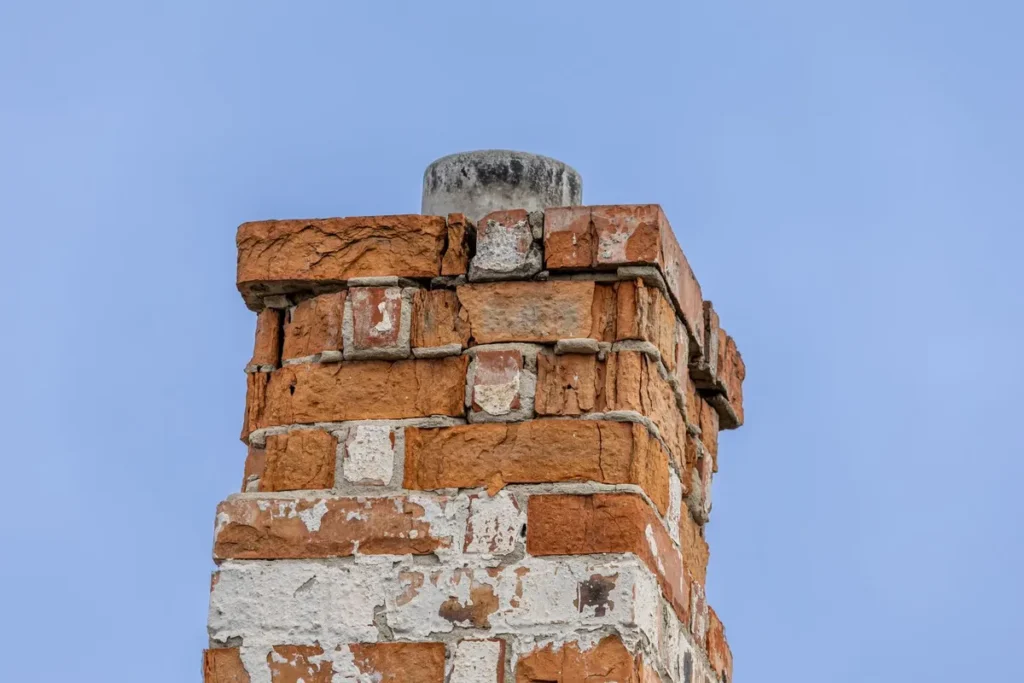
A damp patch on a chimney breast is not always the back gutter. Rain can also soak through porous bricks, cracked flaunching or the side flashings, and condensation in the loft can look like a leak. Where and when the damp appears is the best clue.
| What you see | Likely cause | What usually fixes it |
|---|---|---|
| Damp on the chimney breast or wet timbers behind the stack in the loft after heavy rain or snow melt | Blocked, split or undersized back gutter, or a loose cover flashing | Clear, repair or remake the back gutter |
| Damp on one side of the stack only | Side flashings or soakers | Re-dress or replace the stepped flashings |
| Damp after long wet spells even though the lead looks sound | Porous bricks or eroded mortar letting water soak down through the stack | Repointing, or a DPC tray and new flashings if the stack is rebuilt |
| Crumbling mortar round the chimney pots | Cracked flaunching | Repair or reflaunch the top of the stack |
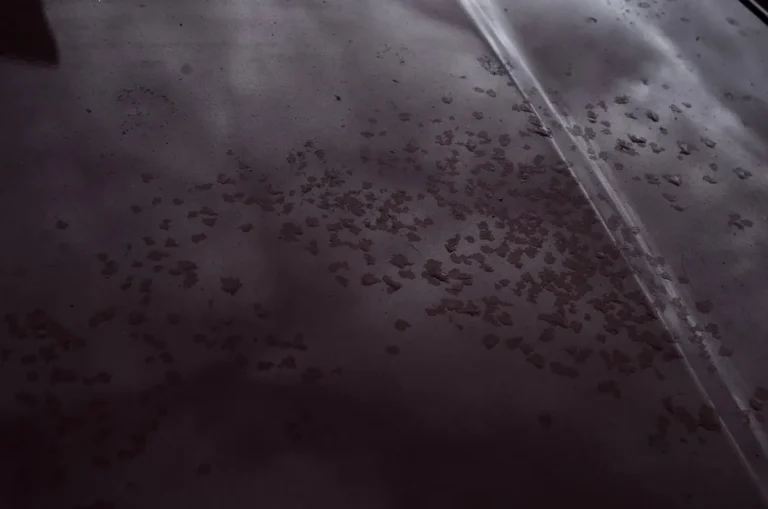
| Droplets spread across the roofing felt on cold mornings | Condensation, not a leak | Better loft ventilation rather than lead work |
Mercer points out that water seeping through the walls of a chimney can easily be mistaken for faulty roofing work, especially on stacks that once served open fires, and that a lead DPC tray set in the brickwork stops it running down below the roofline. If the problem is at the top of the stack, our guide to chimney flaunching explains the signs. If the felt is wet all over rather than in one spot, read about condensation on roofing felt.
Damp on your chimney breast? JW Roofing Solutions traces leaks to their source, so you only pay to fix the part that has actually failed. Call +44 7467 800002 or get a free quote.
Should a Back Gutter Be Repaired or Remade?
Small faults can usually be repaired. If the lead is thin, split in several places or the gutter is too small for the stack, remaking it in new lead is the lasting fix.
| Problem | Repair | Remake |
|---|---|---|
| Leaves or debris, lead in good condition | Clear the gutter and check both ends flow freely | Not needed |
| Cover flashing pulled out of its joint | Re-wedge and repoint the chase | Only if the lead is also damaged |
| One small split or hole | Lead-weld or patch in matching lead | If splits keep coming back |
| Several splits, thin or brittle lead | Short-term patch at best | New lead back gutter, usually with a new cover flashing |
| Overflows in heavy rain even when clean | Not a lasting fix | Larger gutter, or a deflector as the SPAB suggests for persistent problems |
| Bitumen or tape patches over old lead | Strip them off and assess the lead | Usually remade in lead |
If the lead is sound and the only problem is debris, a full re-lead is unnecessary, and a good roofer will tell you so. If the rest of the chimney flashings are also tired, it often makes sense to renew them together while access is in place. Our guide to lead flashing repair covers the side flashings and apron in more detail.
What you can do yourself is look. Historic England suggests using binoculars to check high-level areas such as chimneys from the ground, and you can check the loft for damp timbers behind the stack after heavy rain. Clearing or repairing a back gutter means working on the roof, so leave that to a roofer with safe access. Our guide to working on a roof without scaffolding explains the options.
How Much Does Chimney Back Gutter Repair Cost?
In the UK, a patch repair to chimney flashing costs around £250 without scaffolding, and replacing the flashing on all four sides of the stack, back gutter included, costs around £450 to £600 plus VAT. Access is the biggest variable. These are typical prices from Checkatrade’s chimney flashing cost guide, last updated in September 2026:
| Chimney flashing job | Typical UK cost (plus VAT) |
|---|---|
| Patch repair, no scaffolding | Around £250 |
| Patch repair, with scaffolding | £550–£650 |
| Replace all four sides, no scaffolding | £450–£600 |
| Replace all four sides, with scaffolding | £800–£1,200 |
| High-level chimney scaffolding | £500–£820 per week |
| Roofer day rate | £280–£360 |
These are national averages, not JW Roofing Solutions prices, and Checkatrade notes that labour rates tend to be higher in London and the South East. When you compare quotes, check that each one states the lead code, whether a new cover flashing is included and whether scaffolding is needed.
What If the Chimney Is Shared With Next Door?
On terraced and semi-detached houses the stack often sits on the party wall, so work on it can affect your neighbour too. Talk to them before work starts.
Section 2 of the Party Wall etc. Act 1996 covers work such as cutting into a party structure, and cutting into a neighbour’s wall to insert a flashing. Whether notice is needed depends on exactly what is being done, so if a shared stack needs cutting into, check with a party wall surveyor first.
How Do You Look After a Chimney Back Gutter?
Keep it clear and check it at the times it is most likely to fail: after leaf fall, after snow and in spring.
- Autumn: Historic England advises inspecting and clearing gutters and channels after heavy leaf fall, at least every autumn and preferably more often. London’s street trees make this especially worthwhile.
- After snow: look for snow banked against the uphill side of the stack, and check the loft once it melts.
- Spring: the SPAB maintenance calendar suggests inspecting lead flashings and mortar fillets at chimneys in April for holes, splits and erosion.
- Any time scaffolding is up for other roof work, ask for the back gutter to be checked and photographed.
For other leaks around stacks, valleys and slopes, see roof repairs in London, with 2026 London guide prices.
Frequently Asked Questions
What does a chimney back gutter do?
It collects rain running down the roof above a chimney and diverts it around both sides of the stack. Without one, water would run straight into the joint between the roof and the brickwork.
What lead code should a chimney back gutter be?
Code 4 lead (1.80 mm) is the minimum for chimney flashings. The Calder Guide to Good Leadwork says Code 5 (2.24 mm) is preferable when the back gutter is bossed rather than welded.
Why does my chimney only leak in heavy rain or snow?
That often points to the back gutter overflowing because it is blocked, too small for the stack or packed with snow. The SPAB notes that back gutters often leak where they are not cleared out or snow collects against them.
How much does it cost to replace a chimney back gutter?
Checkatrade puts a full chimney flashing replacement at around £450 to £600 plus VAT without scaffolding, and £800 to £1,200 with scaffolding. A patch repair starts at around £250.
Can a leaking back gutter be fixed with sealant or flashing tape?
It may buy a little time, but it is not a lasting repair. Splits in lead should be repaired or replaced in lead, and bitumen-based patches break down in sunlight.
Is a chimney back gutter the same as a box gutter?
No. A back gutter is a short channel behind a chimney on a pitched roof, while a box gutter is a longer lined gutter, often behind a parapet or between two roof slopes. Our guide to box gutters explains the difference.
Chimney Back Gutter Repairs in SouthWest London
JW Roofing Solutions repairs and remakes chimney back gutters, aprons and flashings across SouthWest London. We trace the leak to its source, tell you honestly whether a repair will do or the lead needs remaking, and give you a clear, written, itemised quote with no obligation. Call +44 7467 800002, get in touch online or read more about our lead work and chimney repairs.
Need help with your roof? JW Roofing Solutions provides chimney back gutter repairs and lead work in SouthWest London. Get a free, no-obligation quote.