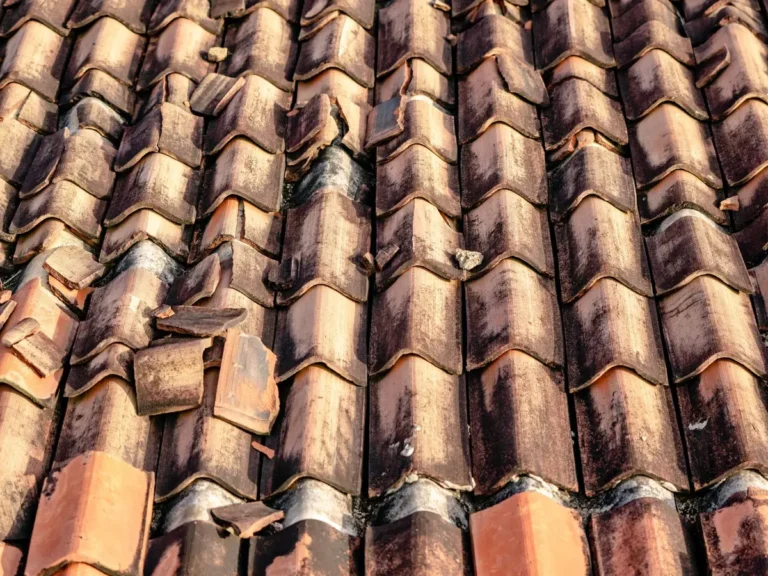


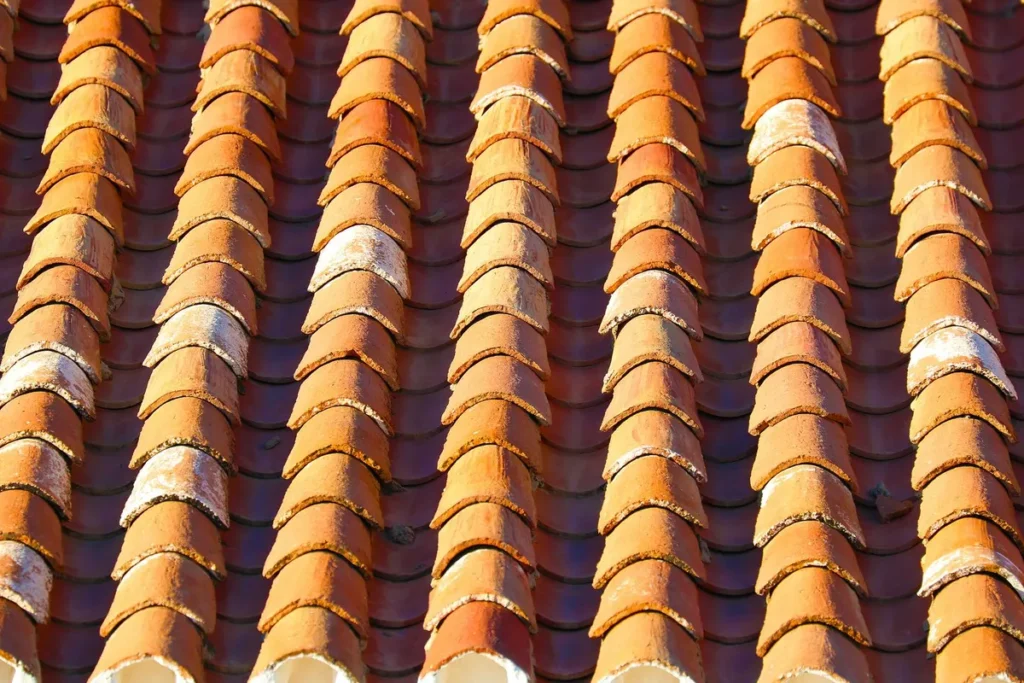
In the clay tiles vs concrete tiles choice, concrete is usually cheaper and quicker to lay, while clay keeps its colour for life and is often what planners expect on period homes. Both can last 60 years or more. Weight depends more on the tile format than the material, so check your roof structure before switching.
Key facts
- Checkatrade’s June 2026 guide puts supply and fit of clay tiles at £160–£275 per m² and plain concrete tiles at £120–£230 per m².
- Marley, which makes both, says clay and concrete tiles both come with 15-year product warranties and are generally expected to last 60 years or more.
- Concrete is not automatically heavier. Marley’s own data lists its Hawkins clay plain tile at 64 kg/m² against 50 kg/m² for its Modern concrete interlocking tile.
- The Planning Portal says you need Building Regulations approval if a new covering increases the weight of the roof covering by 15 per cent or more.
This guide compares the two side by side with real manufacturer figures, current UK prices and the planning rules that matter in SouthWest London. If you already know your roof needs replacing, our pitched re-roofing service covers both clay and concrete tiles.
Clay vs Concrete Roof Tiles: Side-by-Side Comparison
Concrete wins on upfront cost and low-pitch options; clay wins on colour that lasts and on fitting in with traditional and conservation-area roofs. On durability and weatherproofing they are much closer than most people think.
| Clay tiles | Concrete tiles | |
|---|---|---|
| What they are made of | Natural clay, shaped and fired in a kiln | Sand, cement and water, with a coloured surface finish |
| Supply and fit (Checkatrade, June 2026) | £160–£275 per m² | £120–£230 per m² (plain concrete tiles) |
| Tiles only (MyBuilder, 2026) | £40–£65 per m² | £20–£35 per m² |
| Laid weight, Marley examples | Plain tile 64 kg/m²; interlocking pantile 46.2 kg/m² | Modern interlocking 50 kg/m²; Mendip interlocking 46 kg/m² |
| Lowest pitch, Marley examples | 30° (Hawkins plain); 15° (Lincoln interlocking, 100mm headlap) | 17.5° (Modern, 100mm headlap); 15° (Mendip, 100mm headlap) |
| Expected lifespan | 60 years or more | 60 years or more (Marley); some councils expect less |
| Colour over time | Fired into the tile, weathers to a patina | Surface finish can fade; temporary white lime bloom is possible |
| Planning in conservation areas | Often preferred on period homes | Often refused where the original roof was slate or clay |
Weights and pitches are taken from Marley’s published data for the Hawkins clay plain tile, Lincoln clay interlocking pantile, Modern concrete tile and Mendip concrete tile. Other brands and headlaps give different figures, so always check the exact tile.
What Is the Difference Between Clay and Concrete Roof Tiles?
Clay tiles are fired clay, so their colour runs right through the tile. Concrete tiles are moulded from sand, cement and water, and their colour comes mainly from a surface finish.
Wienerberger, a clay tile maker, explains that concrete tiles were introduced in the UK around a century ago and became popular after the Second World War because they were quick and cheap to make when the country needed homes fast. Many were designed to copy traditional clay shapes, such as plain tiles, pantiles and Roman tiles. Build It magazine notes that concrete tiles are made from water, sand and cement with a paint-like surface colour, while clay’s natural colour is baked in and develops a patina as it weathers.
Both come in two broad formats, and this matters more than most guides admit:
- Plain tiles: small tiles (around 265mm x 165mm) laid double-lapped, about 60 to the square metre. Wienerberger notes that plain tiles are common in the south east.
- Interlocking tiles: larger single-lap tiles that lock together at the sides, around 10 to 16 to the square metre. They are quicker to lay and usually work at lower pitches.
Are Concrete Tiles Heavier Than Clay?
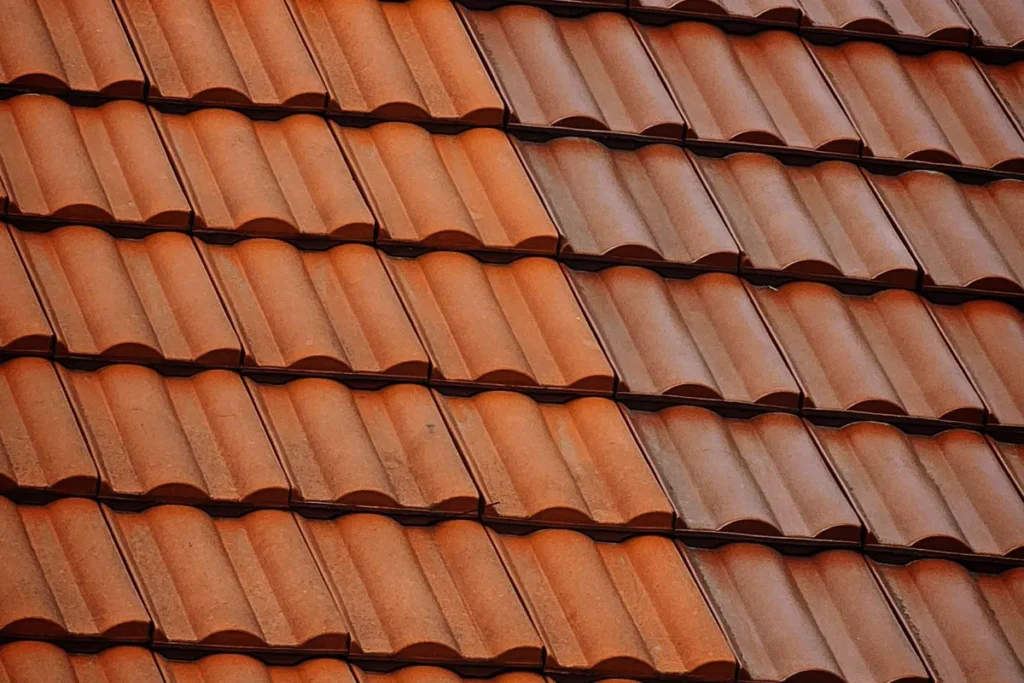
Not always. Many guides say concrete is much heavier, but in Marley’s range the heaviest of these four tiles is a clay plain tile. Format and headlap change the weight more than the material does.
Marley states that in its range, clay tiles tend to weigh more per square metre than concrete, depending on the product and how it is laid. Its published data backs that up:
| Marley tile | Material and format | Laid weight | Lowest pitch |
|---|---|---|---|
| Hawkins | Clay plain tile | 64 kg/m² | 30° |
| Modern | Concrete interlocking | 50 kg/m² (75mm headlap), 54 kg/m² (100mm) | 22.5° (75mm), 17.5° (100mm) |
| Lincoln | Clay interlocking pantile | 46.2 kg/m² (75mm), 50.2 kg/m² (100mm) | 22.5° (75mm), 15° (100mm) |
| Mendip | Concrete interlocking | 46 kg/m² (75mm), 49 kg/m² (100mm) | 17.5° (75mm), 15° (100mm) |
Pitches are for smooth-finish tiles; granular finishes need a steeper roof. The practical lesson is simple: compare the exact old and new tiles in kg/m², not “clay” against “concrete”. If your house has a shallow roof, a plain tile in either material may not be allowed at all, because plain tiles need a steeper pitch than most interlocking tiles.
Which Lasts Longer, Clay or Concrete Roof Tiles?
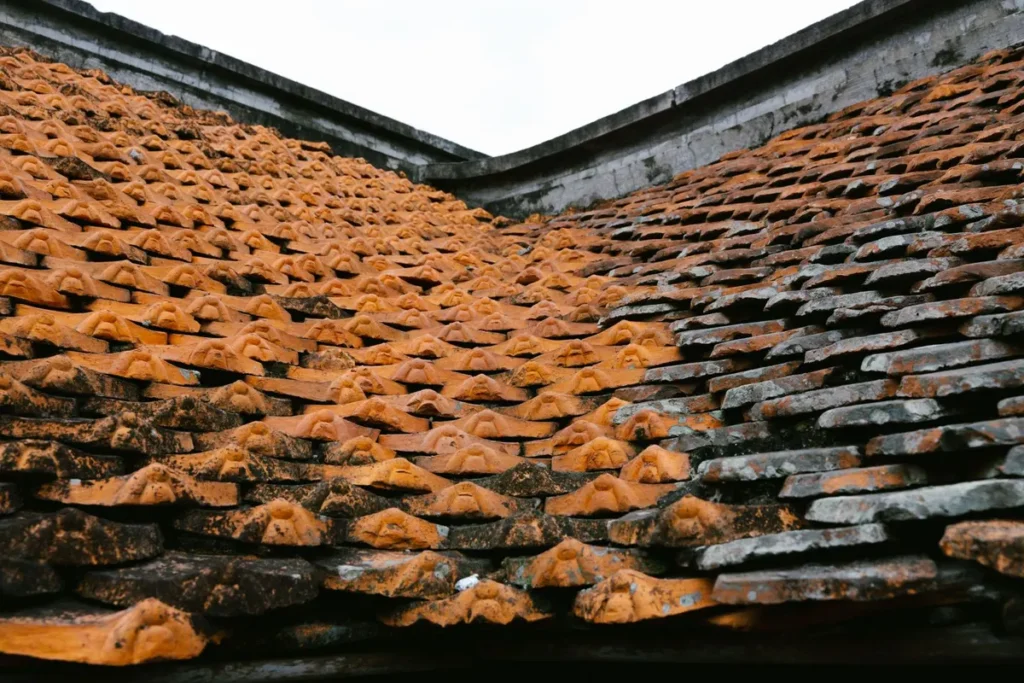
Both last a long time, and the rest of the roof usually fails first. Clay has the longer track record, but a well-made concrete tile on a sound roof is not a short-term choice.
Marley says that in long-term durability clay and concrete roof tiles are very similar, and that other parts of the roof normally need replacing long before the tiles. Wienerberger agrees that the two offer nearly identical performance in waterproofing and durability. Not everyone sees it that way: Horsham District Council’s re-roofing guidance says traditional slates or clay tiles on older buildings have a much longer lifespan than today’s manufactured concrete tiles.
In practice, nail sickness, rotten battens and old underlay are what usually force a re-roof, which is why our guide on how long a roof lasts looks at the whole roof, not just the tiles. Moss is a smaller difference: Build It notes that clay is more porous, so moss is more likely to grow on damp clay, although concrete gets moss and lichen too. If moss is blocking gutters, see our guide to moss removal from a roof.
Do Concrete Roof Tiles Fade?
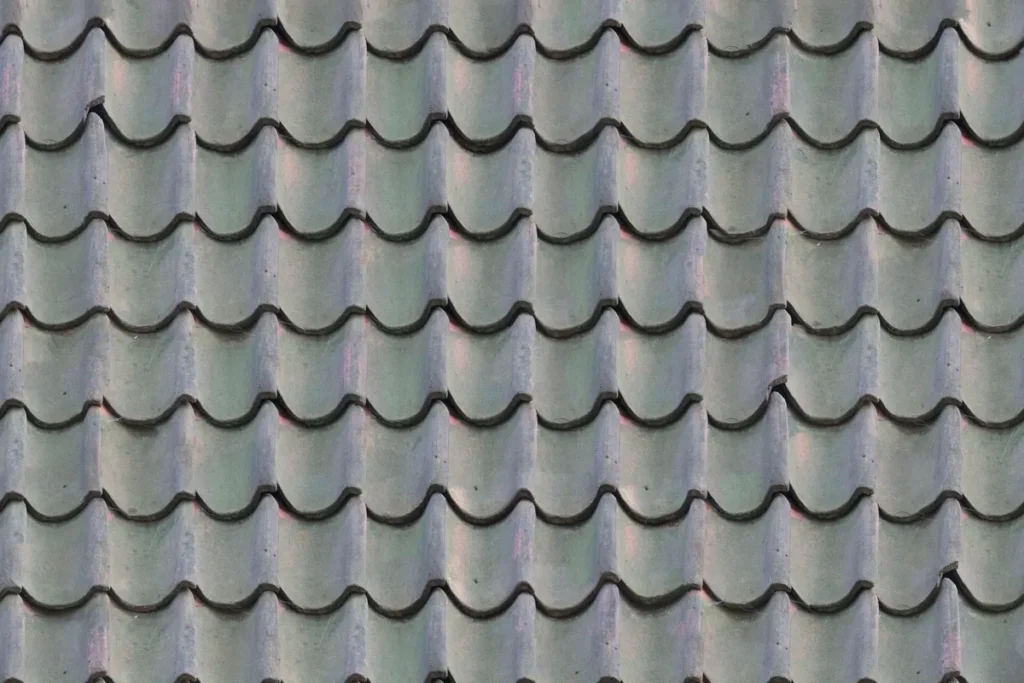
The surface colour of concrete tiles can fade over the years, while clay colour does not. Concrete can also show white patches soon after fitting, but that is usually temporary.
Wienerberger points out that the painted finish on concrete tiles can fade over time. The white haze some owners notice on a new concrete roof is efflorescence, or lime bloom. Marley explains that it is cosmetic only and does not affect strength, weatherproofing or lifespan, and that tiles which have been on a roof for a year or more without lime bloom are unlikely to get it later. If colour matters to you, for example because the roof is very visible from the street, clay is the safer choice.
How Much Do Clay and Concrete Roof Tiles Cost in 2026?
Clay costs more, both for the tiles and fitted. On a full re-roof, the gap is smaller than the tile prices suggest, because scaffolding, stripping, battens, underlay and labour are much the same for both.
| Cost item (UK, 2026) | Clay | Concrete | Source |
|---|---|---|---|
| Tiles only, per m² | £40–£65 | £20–£35 | MyBuilder, Aug 2026 |
| Supply and fit, per m² | £160–£275 | £120–£230 (plain concrete) | Checkatrade, June 2026 |
| Large interlocking concrete (e.g. Marley Modern), supply only | n/a | £38–£48 per m² | Checkatrade, June 2026 |
| Whole tiled roof, typical semi | £4,000–£8,000 for a clay or concrete tile roof | MyBuilder, 2026 | |
These are national guide figures from the sources linked, not JW Roofing Solutions prices. London labour, scaffold licences and access on terraced streets usually push costs up. Our roof replacement cost guide explains the other items that make up a re-roofing quote, and handmade clay tiles cost more again than machine-made ones.
Weighing up clay or concrete for your roof? JW Roofing Solutions will look at your roof, tell you honestly whether a repair will do or a re-roof makes sense, and give you a written, itemised quote for the options with no obligation. Call +44 7467 800002 or request a free quote.
Can You Replace Slate or Clay Tiles With Concrete Tiles?
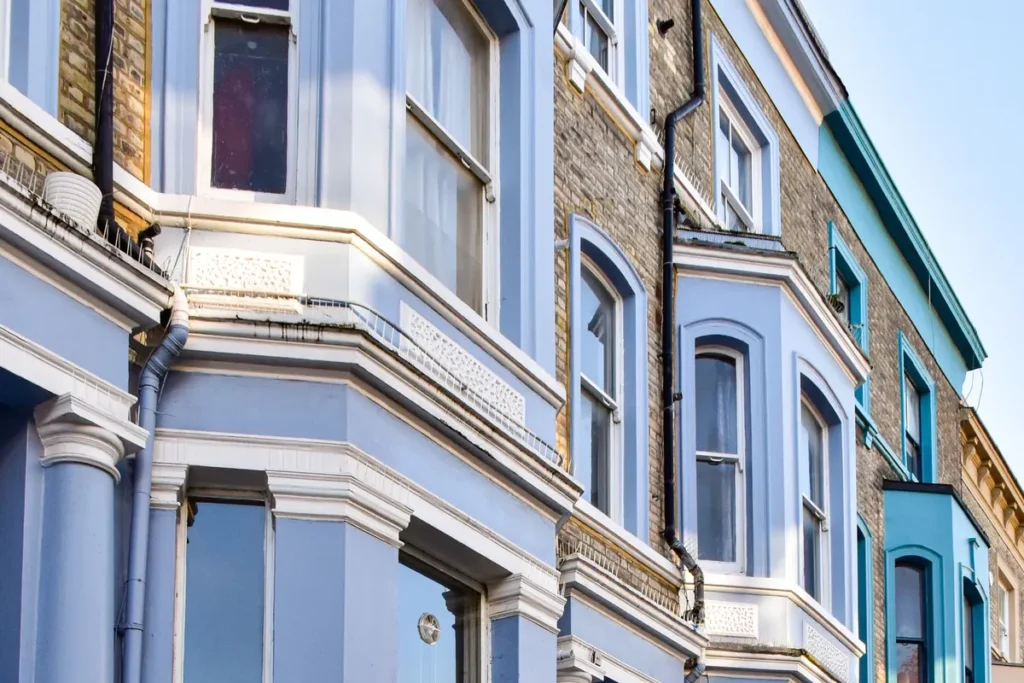
Sometimes, but it is not a free choice. A change of covering can need Building Regulations approval, and in many London conservation areas it needs planning permission that is unlikely to be granted.
Building Regulations. The Planning Portal says re-covering a roof normally does not need a building control application if less than 25 per cent of the building envelope and less than 50 per cent of the roof is affected. You do need approval if you go over those limits, make structural alterations, or use a new covering that increases the weight of the roof covering by 15 per cent or more. Its re-roofing page adds that changing material, for example slate to tiles, is likely to need approval, and that a much heavier or lighter covering may mean the roof structure needs strengthening, so a structural engineer or surveyor should check first.
Planning in conservation areas. Lambeth’s Hyde Farm Conservation Area statement says re-roofing in anything other than closely matching natural slate will not be granted planning permission, and that concrete, artificial slate and fibre cement tiles are not acceptable. In Wandsworth, the Article 4 Direction covering part of the Wandsworth Common Conservation Area means re-roofing in a different material needs planning permission. Wandsworth keeps a list of its conservation areas with Article 4 Directions, and every borough has its own rules, so check with your council before you choose.
Lambeth’s statement describes the main roof slopes on the Hyde Farm estate, on the Balham border, as grey natural slate, and notes that in places the slate has been lost to concrete tiles. If your house has already been re-covered in concrete, going back to the original material is often welcomed by planners; going the other way is where problems start.
Clay or Concrete: Which Is Better for Your House?
For most SouthWest London period homes, matching the original covering is the right answer, and that usually means slate or clay. For newer houses already roofed in concrete, a good concrete tile is a sensible, cheaper choice. This is the order we would work through:
- Find out what the roof was originally. Look at neighbouring houses in the same terrace and at old photos. Matching the street almost always looks better and causes fewer planning issues.
- Check whether you are in a conservation area or under an Article 4 Direction. If you are, ask the council before choosing a material, not after.
- Compare weights in kg/m². Ask your roofer for the laid weight of the old and new coverings. If the new one is 15 per cent or more heavier, Building Regulations approval and a structural check come into play.
- Check the roof pitch against the tile’s minimum pitch. Marley’s Hawkins clay plain tile needs at least 30°, while its interlocking tiles go down to 15° with a 100mm headlap.
- Think about how long you will stay. If you plan to move in a few years and concrete is acceptable, it keeps the upfront cost down. For a long-term home, clay’s lasting colour can be worth the extra.
- Get itemised quotes for both. Make sure each quote includes new battens, breathable underlay, ridges, valleys and leadwork, so you are comparing like with like.
One honest point: if only a few tiles are broken, you rarely need to choose at all. Matching replacements are usually the answer, and our guide to roof tile replacement costs covers that. Avoid mixing clay and concrete tiles on the same roof slope, because sizes, profiles and colours rarely line up.
If your house has a slate roof rather than tiles, see our guide to slate roof repair and slipped slates, with 2026 UK guide prices and London conservation area rules.
Frequently Asked Questions
Are clay tiles better than concrete tiles?
Clay keeps its colour for life and is usually the better match for period and conservation-area homes, but it costs more. Concrete is cheaper and works on lower pitches. Marley says both are expected to last 60 years or more, so the right choice depends on your house, the planning rules and your budget.
Which is cheaper, clay or concrete roof tiles?
Concrete. MyBuilder’s 2026 figures put concrete tiles at £20–£35 per m² against £40–£65 for clay, and Checkatrade’s June 2026 supply-and-fit ranges are £120–£230 per m² for plain concrete tiles and £160–£275 for clay. Labour, scaffolding and new battens and underlay cost much the same for both.
Are concrete roof tiles heavier than clay?
Not necessarily. In Marley’s published data, its Hawkins clay plain tile weighs 64 kg/m² while its Modern concrete interlocking tile weighs 50 kg/m². Plain tiles, in either material, are usually heavier per square metre than interlocking tiles, so compare the exact products.
Can I replace clay tiles with concrete tiles?
Often yes on an ordinary house, but check two things first. If the new covering is 15 per cent or more heavier, the Planning Portal says Building Regulations approval is needed, and in conservation areas or under an Article 4 Direction a change of material may need planning permission that councils such as Lambeth refuse for concrete.
Do clay tiles get more moss than concrete?
Slightly. Build It notes that clay is more porous, so moss is more likely to grow on damp clay, but concrete tiles also get moss and lichen. It is mainly a problem when it blocks gutters or lifts tiles.
What are the disadvantages of clay roof tiles?
They cost more than concrete, and Checkatrade notes they can break under pressure because they are brittle, so care is needed whenever anyone works on the roof. Clay plain tiles also need a fairly steep roof, around 30° or more for Marley’s Hawkins tile.
Can you mix clay and concrete tiles on the same roof?
It is best avoided on the same roof slope. Clay and concrete tiles differ in size, profile, thickness and colour, so they rarely lap or line up properly. If a few tiles need replacing, use matching tiles of the same material.
Clay and Concrete Re-Roofing in SouthWest London
If you are deciding between clay and concrete tiles, JW Roofing Solutions can help. We re-roof pitched roofs across SouthWest London with new battens, underlay, ridges, valleys and flashing, give you honest advice on which covering suits your house and whether a repair would do instead, and provide a written, itemised quote with no obligation. Our team has over 40 years of combined experience, we are fully insured, and we leave the site clean and tidy. Call +44 7467 800002, get in touch online or read more about our pitched re-roofing service.
Need help with your roof? JW Roofing Solutions provides clay and concrete tile re-roofing in SouthWest London. Get a free, no-obligation quote.