

Repointing ridge tiles means raking out the cracked mortar between and along the ridge tiles and filling the joints with fresh mortar. It is a quick, low-cost fix, but it only lasts if the tiles are still firmly bedded. If a ridge tile rocks when pressed or the mortar underneath crumbles, the tiles need lifting and re-bedding instead.
Key facts
- Repointing ridge tiles typically costs £200 to £300 per 10 metres of ridge in 2026, according to MyJobQuote’s ridge tile cost guide.
- Checkatrade says most homes need ridge repointing every 10 to 15 years, sooner on exposed roofs.
- Repointing only renews the outer mortar. If the bedding underneath has failed, new pointing simply falls out again.
- Since the 2014 revision of BS 5534, mortar-bedded ridge and hip tiles should also be mechanically fixed, because the strength of mortar alone can no longer be relied on (Marley).
- A dry ridge system replaces mortar with screws, clips and a ridge roll, so there is nothing left to repoint.
What Is the Difference Between Repointing and Re-Bedding Ridge Tiles?
Repointing replaces only the visible mortar in the joints and along the edges of the ridge. Re-bedding goes further: the ridge tiles are lifted off, the old mortar bed is cleaned away, and the tiles are laid again on fresh mortar.
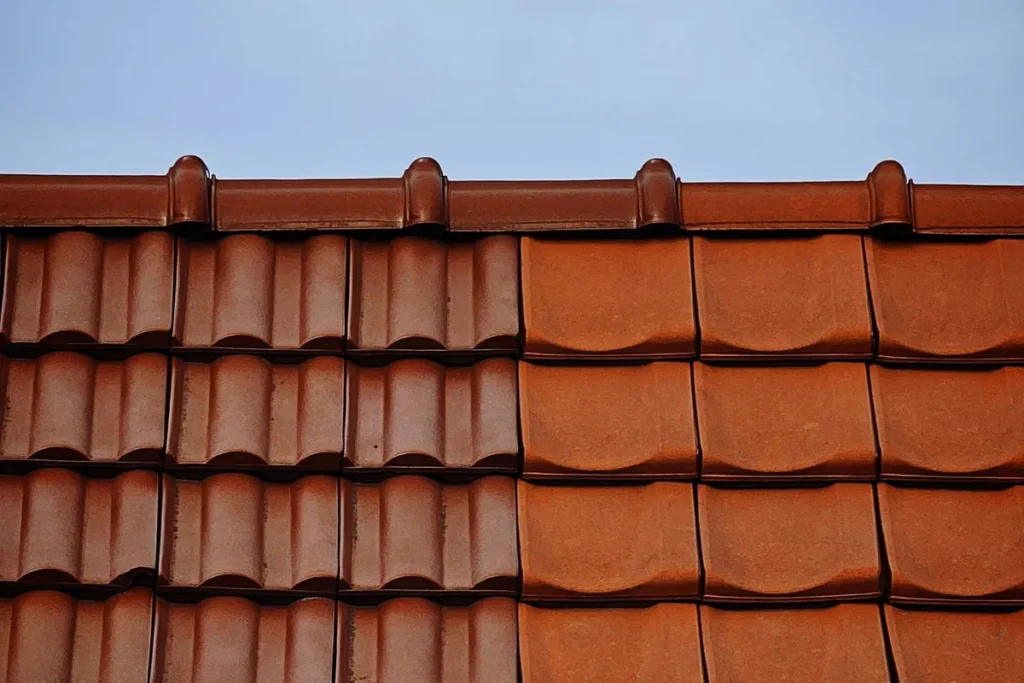
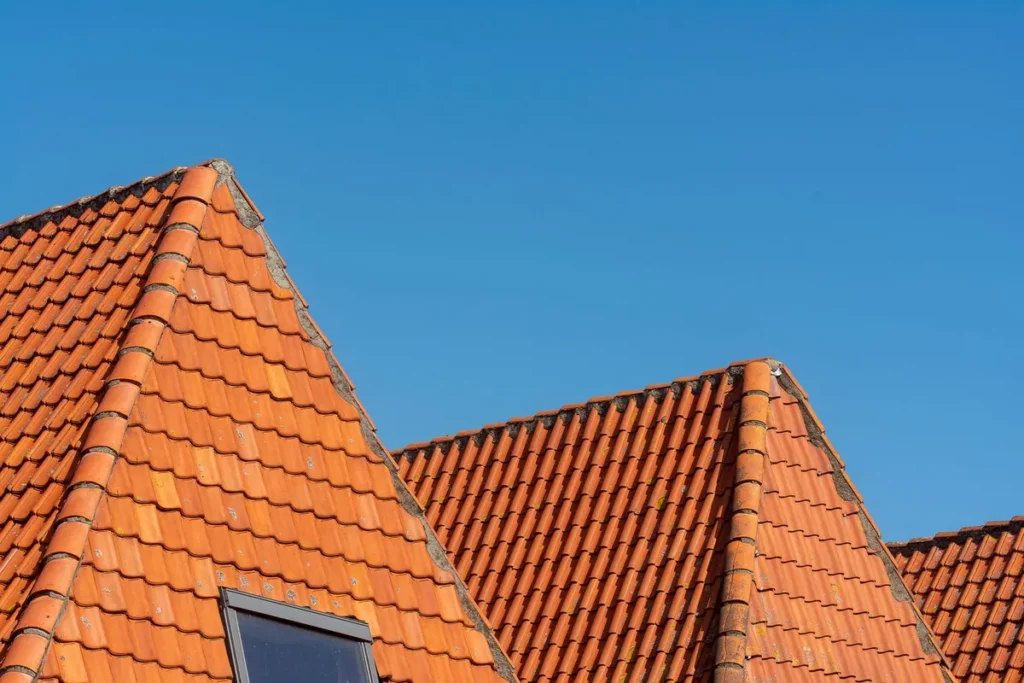
Ridge tiles sit along the apex of a pitched roof, where the two slopes meet. On most older UK roofs they are held by a bed of sand and cement mortar laid on the top course of tiles or slates, with the joints between them pointed. Over time that mortar cracks and loses its grip. When the cracks are only on the surface, repointing seals them. When the bed itself has let go, the tile is effectively sitting loose, and no amount of surface pointing will hold it.
According to MyJobQuote, a proper ridge repair normally includes lifting the tiles, removing the old mortar, re-bedding and mechanically fixing the tiles, then repointing for a clean finish. That is why a “repoint” quote and a “re-bed” quote for the same ridge can be very different prices.
How Do I Know if My Ridge Tiles Need Repointing or Re-Bedding?
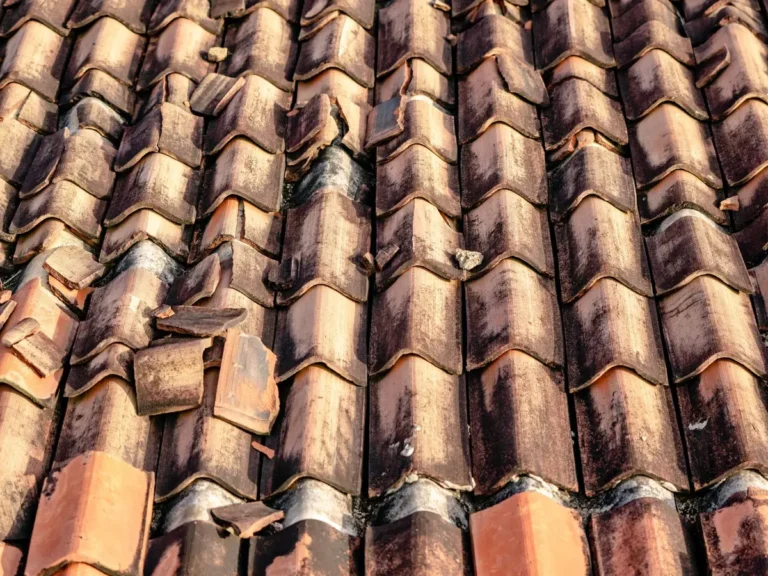
{{IMG1}}Look at the ridge from the ground with binoculars, or from an upstairs window across the street. Hairline cracks with straight, solid tiles usually mean repointing. Tiles that rock, gaps under the tiles or bits of mortar in the gutter usually mean re-bedding.
| What you can see | What it usually means | Likely fix |
|---|---|---|
| Hairline cracks in the joints, tiles sit straight | Surface weathering of the pointing | Repoint |
| Mortar missing from a few joints, tiles still solid | Pointing has failed, bed still holding | Repoint |
| A ridge tile rocks or lifts, mortar crumbles beneath it | The bed has lost its bond | Re-bed and mechanically fix |
| Chunks of mortar or tile in the gutter or garden | Bedding is breaking up | Re-bed soon (falling hazard) |
| Wavy ridge line, tiles out of line | Several tiles have moved | Re-bed the run or fit a dry ridge |
| Damp along the apex in the loft after wind-driven rain | Water getting in at the ridge | Inspection, usually re-bed |
| Ridge patched many times, mixed mortar colours | Repeated repointing is not lasting | Full re-bed or dry ridge |
Please do not climb up to test the tiles yourself. A roofer can check each tile by hand from proper access, or a drone roof survey can show the condition of the ridge close up without anyone going on the roof. After a storm, it is also worth reading our guide to storm damage on roofs, because loose ridge tiles are one of the first things wind finds.
Is Repointing Ridge Tiles Worth It, or a Waste of Money?
Repointing is worth it when the tiles are still firmly bedded and only the outer mortar has cracked. It is a waste of money when the bed underneath has failed, because the new pointing has nothing solid to hold on to.
One roofer quoted in MyJobQuote’s guide (October 2026) priced raking out and repointing a bungalow ridge at around £180, but warned that if the ridge tiles are not still bonded by the bedding, “the repointing will fall out very quickly”. The same roofer put removing the ridges, re-bedding and repointing at £360, which “would greatly outlast a repoint”.
So the honest answer depends on what is under the pointing. Before you accept a repointing quote, ask the roofer two questions: did they press each ridge tile to check it is solid, and can they send you photos of the ridge? If several tiles move, paying for a repoint now usually means paying for a re-bed later.
Repoint, Re-Bed or Dry Ridge: Which Is Best?
Repoint if the tiles are solid, re-bed with mechanical fixings if they are loose but you want the traditional mortar look, and choose a dry ridge if the whole ridge is failing or you want to stop doing mortar repairs altogether.
| Option | What is done | Best when | BS 5534 fixing | Typical 2026 cost |
|---|---|---|---|---|
| Repoint | Rake out cracked joints and refill with fresh mortar | Tiles solid, only surface cracks | No change to how the ridge is fixed | £200 to £300 per 10m (MyJobQuote) |
| Re-bed and mechanically fix | Lift tiles, clean off old mortar, bed on fresh mortar, screw or clip each tile | Tiles loose or mortar crumbling, traditional look wanted | Meets it when every tile is mechanically fixed | £500 to £700 for a full semi-detached ridge of 8m to 10m (MyJobQuote) |
| Dry ridge system | Mortar removed; ridge batten, roll, unions and screws fitted | Whole ridge failing, or no more mortar repairs wanted | Designed to meet it, using BS 8612 tested systems | Materials £400 to £500 plus labour £200 to £300 per 10m (Checkatrade) |
Marley’s technical team notes that dry-fix ridge systems can be guaranteed for 10 to 15 years, unlike mortar, which many roofers are only prepared to guarantee for two years. Dry ridge systems also add continuous ventilation at the ridge, which can help a loft that suffers from condensation on the roofing felt.
What Does BS 5534 Say About Mortar on Ridge Tiles?
{{IMG2}}BS 5534 is the British Standard code of practice for slating and tiling. Since its 2014 revision, mortar-bedded ridge and hip tiles should also be mechanically fixed, because the tensile strength of mortar on its own is no longer counted on to hold them in wind.
Marley explains that before 2014, mechanical fixings were only required in high-wind locations or for certain tiles, and mortar bedding on its own was widely accepted. The 2014 revision made it clear that all bedded tiles and fittings should include mechanical fixings, and the 2018 amendment linked the standard to BS 8612, the test specification for dry ridge, hip and verge systems. BS 5534 is a code of practice rather than a law, but Marley points out that it effectively becomes binding when it is written into a contract. You can read more on Marley’s BS 5534 page.
The reason is simple: mortar is where most roof problems start. Klober notes that around two thirds of roofing claims to the NHBC under its Buildmark warranty related to mortar fixing, and Marley says almost 70% of roof failures are thought to be mortar related. The NHBC Standards now ask for ridge and hip tiles to be mechanically fixed with self-sealing, non-ferrous fixings, with a nominal 10mm joint where they are wet bedded.
For mortar itself, Marley says BS 5534 recommends one part cement to three parts sand with plasticiser, using at least one part sharp sand to two parts soft sand, or a pre-mixed roof mortar.
What this means for you: a simple repoint does not bring an old ridge up to the current standard, and that is acceptable for routine maintenance. But if the ridge tiles are coming off anyway, ask for each one to be mechanically fixed when it goes back on. It costs little extra at that point and stops the same tiles working loose again.
How Long Does Mortar Last on Ridge Tiles?
Checkatrade puts it at 10 to 15 years before most ridges need repointing, and sooner on roofs exposed to strong winds or coastal weather. Marley adds that mortar is susceptible to cracking and falling out, which is how ridge tiles end up loose.
How long a repoint lasts depends on what it was applied to. Fresh pointing on a sound bed can give years of service. Fresh pointing pressed over a loose, crumbling bed often fails within a winter or two, which is why roofers who check the bed first tend to recommend re-bedding more often than you might expect.
How Is a Ridge Re-Bedded Properly?
A good re-bed follows the same basic steps on most tiled and slate roofs:
- Set up safe access. Usually a scaffold or tower on two-storey houses. HSE guidance says a roof ladder must not be anchored on the ridge capping, because it is liable to break away from the ridge; it should hook over the opposite slope.
- Lift the loose ridge tiles carefully so they can be reused, and set aside any that are cracked.
- Remove the old mortar from the tiles and from the top course below, so the new bed has a clean surface.
- Lay a fresh mortar bed using the correct mix, or lime mortar on a period roof where that is what the ridge was built with.
- Bed and mechanically fix each tile with screws, nails or clips, as MyJobQuote describes, so the ridge does not rely on mortar alone.
- Point the joints neatly and clear any mortar off the tiles and out of the gutters.
Not sure whether your ridge needs repointing or re-bedding? JW Roofing Solutions checks ridges across SouthWest London and will tell you honestly which repair your roof needs, with a written, itemised quote and no obligation. Call +44 7467 800002 or request a free quote.
Can You Repoint Ridge Tiles Yourself?
{{IMG3}}On a low roof, such as a porch or a single-storey extension with safe, secure access, a confident DIYer can repoint a few ridge joints. On a two-storey house or a London terrace, it is a job for a roofer with scaffolding.
The HSE is blunt about the risk: all work on roofs is highly dangerous, even if a job only takes a few minutes, and almost one in five deaths in construction work involve roof work. Its guidance says sloping roofs need scaffolding to stop people or materials falling from the edge, and that properly secured ladders and roof ladders are only for short tasks measured in minutes. Repointing a whole ridge takes hours, not minutes. There is also the problem the HSE points out above: the ridge you are repairing is the one part of the roof you cannot hook a ladder onto.
One useful detail if you are looking at a small roof: the NHBC Standards say small “baby” ridge tiles on low roofs such as porches and ground-floor bay windows may be bedded in mortar only, provided their own weight is enough to resist the wind loads. Our guide to working on a roof without scaffolding explains when ladders, towers or a full scaffold are the right choice.
Ridge Tiles on Period Homes: Lime Mortar and Matching Tiles
On older houses with clay ridge tiles, conservation guidance favours re-bedding in lime-based mortar and reusing the original ridge tiles wherever possible.
Babergh and Mid Suffolk’s conservation advice says any re-bedding of ridge tiles should be carried out with a lime-based mortar, which is more flexible than cement and so will not damage the clay, and that existing ridge tiles should be reused, with any replacements chosen to match. The same guidance notes that upturned “V” shaped ridge tiles in blue or red clay became common on 19th-century slate roofs, a look you will recognise on many Victorian streets. Historic England also advises homeowners to try to keep the existing roof ridges.
There is a trade-off to understand. Marley notes that on heritage properties a mortar-only ridge may be used to keep the traditional appearance, but that part of the work then falls outside BS 5534 and should be agreed with everyone involved, including insurers. On a period house in a conservation area, ask your roofer which approach suits the house before work starts. If your roof is slate, our guide to slipped slate repair covers the other common fault on older London roofs, and clay tiles vs concrete tiles explains the differences if you are matching or replacing tiles.
How Much Does Repointing Ridge Tiles Cost in 2026?
Repointing ridge tiles costs around £200 to £300 per 10 metres of ridge, while re-bedding a full ridge on a semi-detached house costs about £500 to £700, according to MyJobQuote (October 2026). These are national guide prices, not JW Roofing Solutions’ own prices.
| Ridge job | Typical UK cost (2026) | Source |
|---|---|---|
| Repointing ridge tiles (per 10m) | £200 to £300 | MyJobQuote |
| Small ridge tile repair (1 to 3 tiles) | £225 to £275 | MyJobQuote |
| Medium ridge tile repair (4 to 6 tiles) | £325 to £400 | MyJobQuote |
| Full ridge, terrace (5m to 7m) | £400 to £500 | MyJobQuote |
| Full ridge, semi-detached (8m to 10m) | £500 to £700 | MyJobQuote |
| Ridge tiles with ridge fixing system, materials (per 10m) | £400 to £500 | Checkatrade |
| Ridge tile labour (per 10m) | £200 to £300 | Checkatrade |
Access is the biggest variable. BestBuilders notes that scaffolding on a two-storey property adds £500 to £1,200 to a roof repair, so if a scaffold is going up, it makes sense to have the chimney flashing, gutters and any slipped tiles checked at the same time. For the cost of replacing ridge tiles and other tiles, see our full roof tile replacement cost guide, and if you want the whole roof looked at, our guide to roof inspection costs explains what a check involves.
If a tile is cracked rather than loose, our guide to a cracked roof tile explains when sealing is enough and when the tile should be replaced.
Frequently Asked Questions
How often should ridge tiles be repointed?
Checkatrade says most homes need ridge repointing every 10 to 15 years, and sooner on roofs exposed to strong winds or coastal weather. Have the ridge checked after any big storm, because loose ridge tiles can fall.
Is it better to repoint or re-bed ridge tiles?
Repoint only if the ridge tiles are still firmly bedded and just the outer mortar has cracked. If tiles rock or the mortar underneath crumbles, re-bed them: one roofer quoted on MyJobQuote put a repoint at about £180 against £360 to re-bed and repoint, adding that re-bedding would greatly outlast a repoint.
Can you repoint over old mortar?
Fresh mortar does not bond well to loose, crumbly mortar, so the joints should be raked out to sound material first. If the old bed is loose all the way through, the tiles need lifting and re-bedding rather than repointing.
Do ridge tiles have to be mechanically fixed?
Under BS 5534, the code of practice for slating and tiling, mortar-bedded ridge and hip tiles should also be mechanically fixed since the 2014 revision. Mortar-only ridges may still be used on some heritage roofs, but that work falls outside the standard and should be agreed first.
What mortar mix is used for ridge tiles?
Marley says BS 5534 recommends one part cement to three parts sand with plasticiser, using at least one part sharp sand to two parts soft sand, or a pre-mixed roof mortar. On older clay ridges, conservation guidance recommends a lime-based mortar, which is more flexible than cement.
Do I need scaffolding to repoint ridge tiles?
On most two-storey houses, yes. The HSE says sloping roofs need scaffolding to stop falls from the edge, with ladders and roof ladders only for tasks measured in minutes, and a roof ladder must never be anchored on the ridge capping.
How much does it cost to repoint ridge tiles?
MyJobQuote puts repointing ridge tiles at £200 to £300 per 10 metres in 2026, and a full ridge re-bed on a semi-detached house at £500 to £700. Scaffolding, if needed, is extra.
Ridge Tile Repointing and Re-Bedding in SouthWest London
JW Roofing Solutions repairs ridges as part of our roof repairs across SouthWest London, including Balham, Clapham, Wandsworth, Streatham and Tooting. We will check whether your ridge tiles are still firmly bedded, tell you honestly whether a repoint will do the job or a re-bed is the better value, and give you a written, itemised quote with no obligation. We leave the site clean and tidy when we finish. Call +44 7467 800002, get in touch online or read more about our roof repairs and pitched re-roofing.
Need help with your roof? JW Roofing Solutions provides ridge tile repointing and roof repairs in SouthWest London. Get a free, no-obligation quote.