


Emergency roof repair means stopping water getting in safely, then fixing the cause once the weather allows. If your roof is leaking now: keep clear of sagging ceilings, switch off electrics near the water, catch drips, photograph the damage and call a roofer. Do not go on the roof. UK guide call-outs run £150 to £300 (MyJobQuote, October 2026).
Roof leaking in SouthWest London? We carry out roof repairs from our base in Balham (SW12), including leaks, storm damage, slipped tiles and flat roof repairs. Call 07467 800002 or send us the details and we will tell you what can be done and when.
This guide walks you through exactly what to do in the first few hours, what a roofer will do on arrival, what an emergency roof repair typically costs in the UK, and how to avoid the leak coming back. It is written for homeowners and landlords in SouthWest London, where many Victorian and Edwardian roofs are now well over a century old.
What Counts as an Emergency Roof Repair?
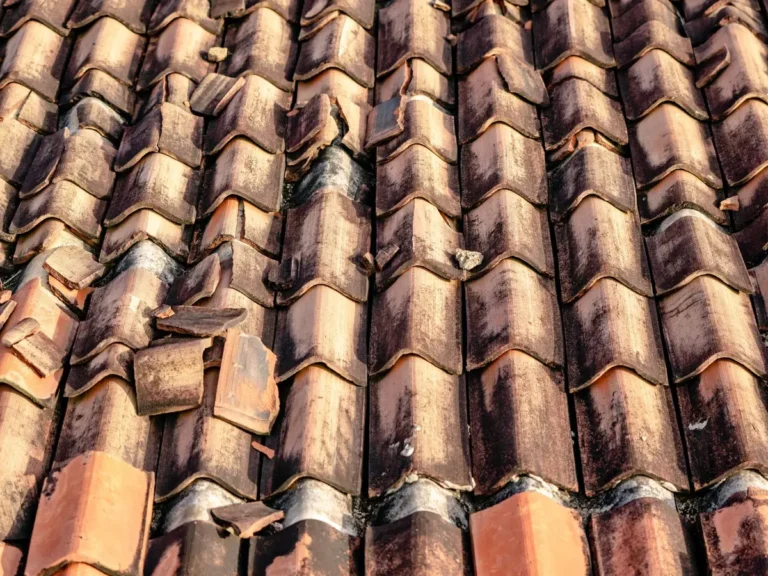
An emergency roof repair is any roof problem that is letting water into the property now, or is likely to within hours. The most common emergencies are tiles or slates blown off in a storm, water dripping through a ceiling, a flat roof that has split or blistered, flashing that has come away from a chimney or wall, and storm damage from falling branches.
Not every roof problem is an emergency. A single cracked tile with no water coming in, or a little moss, can usually wait for a planned repair. The test is simple: if water is getting in, or the damage will get worse with the next rain, treat it as urgent.

7 Steps to Take During a Roof Leak Emergency
These steps limit the damage to your home while you wait for a roofer. Work through them in order.
- Keep everyone safe. Keep people away from bulging or sagging ceilings, which can collapse when full of water.
- Switch off electrics near the leak. If water is near light fittings, sockets or a fuse box, turn off the power to that area at the consumer unit.
- Catch the water. Place buckets or bowls under drips and lay towels on the floor. If a ceiling is bulging, a small hole made with a screwdriver in the centre of the bulge can release the water in a controlled way into a bucket.
- Move belongings. Move furniture, electronics and rugs away from the leak, or cover them with plastic sheeting.
- Check the loft. If it is safe to get into the loft, look for wet insulation or daylight through the roof, and place a container under any drip you can find.
- Photograph everything. Take dated photos and videos of the damage inside and, from the ground, outside. Your insurer will want them.
- Call a roofer and your insurer. A roofer can make the roof watertight; your insurer can tell you what your policy covers before you agree to permanent work.
Roof leaking now? Call JW Roofing Solutions on +44 7467 800002 for straightforward advice, or request a free, no-obligation quote. We cover homes and businesses across SouthWest London.
Your First-Hour Checklist
Screenshot or print this list and work down it. It puts the 7 steps above into the order that protects people first, then your home, then your claim.
| When | Do this | Why it matters |
|---|---|---|
| First 10 minutes | Get everyone away from any bulging or sagging ceiling. Turn off power to the affected circuit at the consumer unit if water is near lights or sockets. | A ceiling holding water can come down, and water near wiring is the biggest immediate danger. |
| 10 to 20 minutes | Put buckets, bowls and towels under every drip. Move or cover furniture, electrics and rugs. | Limits damage to ceilings, floors and contents, which your insurer will expect you to try to do. |
| 20 to 30 minutes | Take dated photos and video inside, and of the roof from the ground or a window. Do not throw damaged items away yet. | The ABI storm FAQs (checked November 2026) ask for photos or video, and the Financial Ombudsman (checked November 2026) weighs photos and expert reports if a claim is disputed. |
| 30 to 45 minutes | Find your policy number and check whether you have home emergency cover, either on your home insurance or through a bank account. If you rent, tell your landlord or letting agent in writing. | Some home emergency policies only pay if you call them first. Tenants should report rather than repair (see the table below). |
| 45 to 60 minutes | Call your insurer or home emergency line, then a roofer. Use the phone checklist below so the roofer can judge what to bring. | The ABI says to speak to your insurer before temporary repairs and to keep an itemised invoice. |
How Do You Temporarily Cover a Damaged Roof?
A roofer covers a damaged roof temporarily by fixing a waterproof tarpaulin over the area, securing loose tiles and sealing the gap so no more water gets in. This make-safe is a short-term measure that holds until the weather allows a permanent repair, and it should be done by a roofer from proper access, not by a homeowner on a ladder.
- Waterproof tarpaulin fixed over the damaged section
- Loose or slipped tiles secured so they cannot fall
- Temporary patching or sealing of a flat roof or flashing
- Making the area safe for people below
What to Tell the Roofer on the Phone
A clear first call saves time, because the roofer can work out what access and materials are needed before they arrive. Have these details ready:
- Address and postcode, and whether parking is restricted (many SouthWest London streets are permit-only during the day).
- Type of property: terrace, semi or detached, how many storeys, and whether there is a rear extension or loft conversion.
- Type of roof where the water is coming in: pitched tile, slate, or a flat felt roof over an extension or bay.
- Where the water is showing: top-floor ceiling, near the chimney breast, around a roof window, or down a wall.
- When it started: during high winds, only in heavy rain, or after snow. Leaks that appear only in downpours point to different causes (see roof leaking in heavy rain).
- What you can see from the ground: missing or slipped tiles or slates, lifted lead flashing, a damaged chimney or a blocked gutter.
- Access: whether the back of the house can only be reached through the property, and whether a neighbour’s garden is needed.
- Photos: say whether you can send them by text or email.
Then ask the roofer four questions: what the call-out charge is, whether an out-of-hours surcharge applies, whether the cost of a temporary repair is taken off the permanent repair, and whether VAT is included. MyJobQuote’s October 2026 guide lists these among the items to check in any emergency quote. Ask too for a short written description of the damage and its likely cause for your insurer.
Call JW Roofing Solutions on 07467 800002 with the details above, or send them with photos. If we cannot answer straight away, follow the first-hour checklist, contact your insurer or home emergency line, and leave us a message with the details so we can call you back.
How Long Does an Emergency Roof Repair Take?
Temporary waterproofing usually takes 1 to 4 hours and a small leak repair 2 to 6 hours, while significant storm damage can take several days, based on MyJobQuote. Rain, high winds or ice can delay the permanent repair.
| Job | Typical time |
|---|---|
| Temporary waterproofing | 1 to 4 hours |
| Small leak repair | 2 to 6 hours |
| Flashing repair | Half a day to a full day |
| Flat roof patch repair | Half a day to a full day |
| Significant storm damage | Several days |
Why You Should Not Go on the Roof Yourself
Do not climb onto a roof to deal with a leak, even for a few minutes. The Health and Safety Executive states that all work on roofs is highly dangerous, even if a job only takes a few minutes, and almost one in five deaths in construction work involve roof work (HSE roof work guidance, page dated June 2026). The main causes are falls from edges and openings, and falls through fragile roofs and rooflights.
The same HSE guidance sets out what professionals are expected to use:
- Sloping roofs need scaffolding to stop people or materials falling from the edge, with edge protection at the eaves and, on terraced houses, to the rear as well as the front. Properly secured ladders and roof ladders are only for short tasks measured in minutes.
- Flat roofs need edge protection, such as a secure double guardrail and toeboard.
- Fragile surfaces: every roof should be treated as fragile until a competent person confirms it is not, and rooflights can be hard to see in some light or hidden by paint.
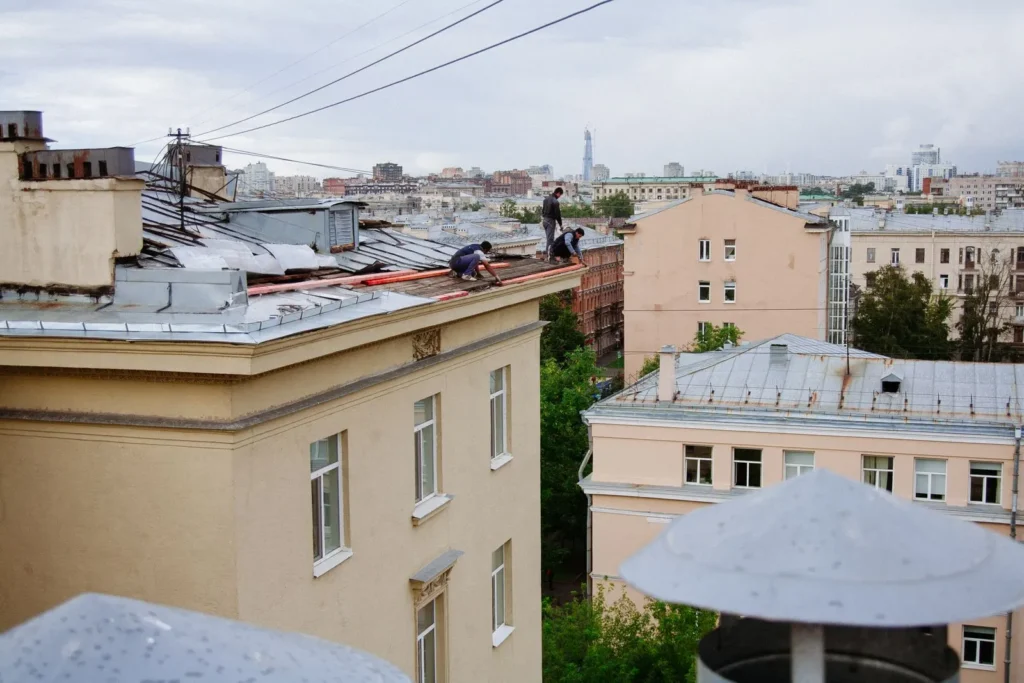
That last point matters on London terraces, where many rear extensions have a flat roof with a rooflight in it. Wet slate, moss, wind and darkness all add to the risk. Stay inside, check the loft only if it is safe to do so, and leave the outside of the roof to a roofer. Our guide to working on a roof without scaffolding explains the access options roofers use instead. For how weather affects what a roofer can do, see can roofers work in the rain and can roofers work in the wind.
What Does an Emergency Roof Repair Involve?
An emergency roof repair usually happens in two stages: a temporary repair to make the roof watertight, then a permanent repair once the cause is confirmed and the weather is suitable.
Temporary repairs
- Fitting tarpaulin or temporary sheeting over the damaged area, weighted or battened down so it cannot blow away
- Re-fixing or replacing slipped tiles and slates where possible
- Sealing split felt or lifted flashing as a short-term measure
- Clearing blocked gutters or outlets that are causing water to back up
Permanent repairs
Once the roof is safe and dry, the roofer will find the real cause of the leak and fix it properly. That might mean replacing broken tiles, re-dressing lead flashing, repairing a valley, or patching or replacing a flat roof. A good roofer will explain what failed and why, rather than just covering the symptom.
How Much Does an Emergency Roof Repair Cost in the UK?
An emergency roofer call-out typically costs £150 to £300 in 2026, and that pays for the visit, not the whole repair: a temporary make-safe costs £150 to £500 and storm damage £300 to £1,200 or more, according to MyJobQuote’s emergency roofer guide (updated 22 October 2026). These are UK guide prices, not JW prices.
| Emergency job | Typical UK cost (October 2026) |
|---|---|
| Emergency call-out | £150 to £300 |
| Minor emergency roof repair | £150 to £400 |
| Temporary roof repair (tarpaulin, make-safe) | £150 to £500 |
| Emergency roof leak repair | £220 to £550 |
| Missing or slipped tile repair | £150 to £350 |
| Damaged lead flashing | £250 to £700 |
| Leaking chimney | £300 to £800 |
| Emergency flat roof repair | £200 to £700 |
| Fallen or damaged ridge tiles | £200 to £500 |
| Storm damage roof repair | £300 to £1,200+ |
Source: MyJobQuote, October 2026. UK guide prices, not JW prices.
Daytime vs out-of-hours prices
Timing changes the bill more than most people expect. Evening, overnight, weekend and bank holiday visits all cost more than a weekday appointment, and the two published UK guides below put the difference in pounds.
| Cost item | Weekday, working hours | Evening, night, weekend or bank holiday |
|---|---|---|
| Call-out or attendance | £150 to £300 (MyJobQuote, Oct 2026; Get A Roofer, Dec 2025, excl. VAT) | £300 to £800+ (Get A Roofer, Dec 2025, excl. VAT) |
| Surcharge on top of the repair | None | £100 to £300+ (MyJobQuote, Oct 2026) |
| Roofer labour | £35 to £45 an hour, or £280 to £360 a day (MyJobQuote, Oct 2026) | Same rates plus an emergency attendance premium of £100 to £300+ (MyJobQuote, Oct 2026) |
| Temporary leak repair | £200 to £500 (Get A Roofer, Dec 2025, excl. VAT) | Plus the out-of-hours call-out or surcharge above |
UK guide prices, not JW prices. If water is not actively coming in, waiting for a weekday visit is usually the cheaper choice.
London prices and the extras that push the bill up
Get A Roofer’s regional table puts a typical emergency roofer bill in London and the South East at £300 to £900 or more (December 2025), the highest of any UK region, and MyJobQuote also notes that roofing rates are usually higher in London and parts of the South East. Access is the other big variable. MyJobQuote’s October 2026 figures put a small access tower at £150 to £350, a typical domestic roofing scaffold at around £1,000, a roof inspection at £100 to £300 and ceiling repairs after a leak at £150 to £1,000 or more.
Before you agree to work, check whether the quote includes the call-out, labour, materials, access equipment, waste removal, any out-of-hours surcharge and VAT, and whether the temporary repair is deducted from the permanent one. For the follow-up repair, see our guides to leaking roof repair costs and roof tile replacement costs.
Will Home Insurance Cover an Emergency Roof Repair?
Buildings insurance usually covers sudden storm damage, such as tiles blown off in high winds, but not wear and tear or a roof that has reached the end of its life. The Financial Ombudsman Service (checked November 2026) says home and buildings policies usually cover storm damage, and the dispute is normally over whether there was a storm and whether it caused the damage.
What insurers count as a storm
The Association of British Insurers storm FAQs (checked November 2026) describe a storm as violent weather with wind gusts of at least 55mph, rain of at least 25mm an hour, snow at least 30cm deep in 24 hours, or hail heavy enough to damage hard surfaces or break glass. Your own policy wording can set different tests, so check it.
Why storm claims get turned down
The ABI gives typical wear-and-tear examples: tiles loosening because nails or clips have corroded, cracked pointing around chimneys and ridges, and flat felt roofs sagging or splitting. It adds that flat felt roofs usually need maintenance or renewal every 10 to 15 years. When a storm claim is refused, the Financial Ombudsman asks three questions: was there a storm on that date, is the damage what a storm usually causes, and was the storm the main cause. The insurer has to show that an exclusion applies, and you can bring a complaint to the Ombudsman if your insurer has not resolved it within eight weeks or you are unhappy with its final response. The Ombudsman also expects insurers to check other sections, such as accidental damage cover, before saying no.
Before you book a temporary repair
- Contact your insurer as soon as you reasonably can and have your policy number ready (ABI).
- Only arrange emergency or temporary repairs if it is safe and you have spoken to your insurer first, then keep photos, video and an itemised invoice (ABI).
- After a big storm, when insurers are busy, the ABI suggests getting estimates from local trades while you wait for an assessment.
- Ask the roofer for a written note of the damage and likely cause, with photos. Expert reports and photos are what the Ombudsman finds most useful.
Home emergency cover: a tarpaulin, not a new roof
Home emergency cover is a separate add-on that pays for an urgent visit. As one example, the Allianz Online Home Emergency leaflet (2026) covers sudden roof leaks or tiles blown off in bad weather, says the help may be a temporary repair such as a tarpaulin, and pays up to £1,000 per emergency including call-out, parts, labour and VAT. It does not pay if you did not call the insurer first, if only dampness is present, if the repairer cannot find where water is getting in and there is no visible roof damage, or if you are a tenant or the property is let. The permanent repair goes through your buildings insurance, if the damage is covered, or you pay for it. Other policies differ, so read your own wording. Our storm damage roof guide covers the claim process in more detail.
Who to Call: Roofer, Insurer, Landlord or Home Emergency Cover
The right first call depends on who owns the roof and what cover you hold. Find your situation below.
| Your situation | Call first | Then | Watch out for |
|---|---|---|---|
| You own a house and have home emergency cover | Your home emergency helpline | Tell your buildings insurer, and book a roofer for the permanent repair | Some policies only pay if you call them before booking anyone (Allianz, 2026) |
| You own a house with buildings insurance only | Your insurer | A roofer for a make-safe once the insurer has been told | Keep photos and an itemised invoice for any temporary repair (ABI) |
| You rent from a private landlord | Your landlord or letting agent, in writing | Keep a record of when you reported it and what they said | Only carry out repairs if your tenancy says you can (GOV.UK) |
| You rent from a council or housing association | Your landlord’s repairs line | Ask for it to be logged as an emergency | Social landlords have 24 hours to fix an emergency hazard (Shelter) |
| You own or rent a flat in a converted house or block | Your landlord, freeholder or managing agent | Check your lease or tenancy for who repairs the roof | The freeholder may be responsible for the structure and exterior (Shelter) |
| You are the landlord | A roofer and your landlord or property insurer | Give your tenant notice before entering | Home emergency policies for your own home may exclude let properties (Allianz, 2026) |
Renting in London: Who Is Responsible for a Leaking Roof?
If you rent, the roof is your landlord’s responsibility. Shelter England (updated October 2025) lists the roof among the repairs private landlords, housing associations and councils must sort out, and says the landlord is responsible even if the tenancy agreement does not mention it. GOV.UK’s private renting guidance (checked November 2026) says landlords are always responsible for the structure and exterior, and that tenants should carry on paying rent while waiting for repairs.
If you are a tenant
- Report the leak straight away, in writing as well as by phone. Shelter (updated May 2026) warns that a landlord might hold you responsible for damage if you do not report a problem that gets worse.
- Keep copies of messages, dates of calls and visits, and photos of damage to your belongings.
- Repairs must be done in a reasonable time, which depends on how serious the problem is and who lives there. Shelter’s example is an emergency such as a broken boiler in winter, where a repair within 24 hours could be reasonable.
- If nothing happens, contact the environmental health team at your local council, which must act if the problem could harm you (GOV.UK).
If you live in a flat
Many SouthWest London homes are Victorian and Edwardian houses split into flats. Shelter notes that the freeholder may be responsible for the structure and exterior of the whole building, so a tenant should tell their landlord, who reports it to the freeholder. Leaseholders should check their lease and contact the freeholder or managing agent.
If you are the landlord
GOV.UK’s guidance for landlords (checked November 2026) says you are normally responsible for repairs to the structure, must usually give at least 24 hours’ notice to enter, and that immediate access may be possible in an emergency. If repairs are very disruptive, a tenant may be able to claim a rent reduction.
How to Prevent the Next Roof Emergency
Most roof emergencies start as small problems that were missed. Regular checks catch them early.
- Have the roof inspected every year or two and after severe storms
- Keep gutters, valleys and flat roof outlets clear, especially after autumn leaf fall
- Replace slipped or cracked tiles and slates as soon as you notice them
- Check lead flashing around chimneys and walls for lifting or cracks
- Deal with heavy moss before it lifts tiles or blocks gutters
Our roof maintenance service and drone roof surveys are designed to find these issues before they turn into an emergency roof repair.
Once the emergency is dealt with, a full roof inspection shows whether anything else is close to failing, so you are not calling a roofer out again a month later.
Frequently Asked Questions
What should I do first if my roof is leaking?
Keep people away from any sagging ceiling, switch off electrics near the leak, catch the water in buckets, move belongings, take photos, and call a roofer and your insurer.
Can a roof be repaired in the rain?
A temporary repair, such as fitting a tarpaulin, can often be done in light rain if it is safe. Permanent repairs usually need dry weather so materials bond properly.
How much is an emergency roof repair?
An emergency call-out typically costs £150 to £300, a temporary repair £150 to £500 and storm damage £300 to £1,200 or more in 2026. Out-of-hours visits add £100 to £300 or more, and London prices are usually at the top of each range.
Is an emergency roof repair covered by insurance?
Sudden damage, such as storm damage, is usually covered. Wear and tear and gradual deterioration usually are not. Check your policy and speak to your insurer before permanent work.
Should I go on the roof to fix a leak myself?
No. Roof work is one of the most dangerous jobs in construction, and wet or damaged roofs are especially risky. Leave the outside of the roof to a professional roofer.
How do you temporarily cover a damaged roof?
A roofer fixes a waterproof tarpaulin over the damaged area, secures loose tiles and seals the gap until a permanent repair can be made. It should be done from proper access by a roofer, not from a ladder by a homeowner.
How long does an emergency roof repair take?
Temporary waterproofing usually takes 1 to 4 hours and a small leak repair 2 to 6 hours. Significant storm damage can take several days.
Who pays for an emergency roof repair if I rent?
Your landlord. Shelter England says private landlords, housing associations and councils must repair the roof even if the tenancy agreement does not say so. Report the leak in writing straight away and keep records. Only carry out repairs yourself if your tenancy allows it, and contact your council’s environmental health team if the landlord does not act within a reasonable time.
Does home emergency cover pay for a new roof?
No. Home emergency cover pays for an urgent visit to stop water getting in, often a tarpaulin. The 2026 Allianz Online leaflet, for example, pays up to £1,000 per emergency and says you may have to arrange and pay for the permanent repair, or claim it on your buildings insurance if the damage is covered. Many policies also exclude tenants and let properties.
Can an emergency roofer fix the roof at night or in a storm?
Usually only as a temporary measure. MyJobQuote’s October 2026 guide says high winds, heavy rain, snow, ice and lightning can make roof access dangerous, so a roofer may inspect, make the area safe or fit temporary waterproofing, then return for the permanent repair in light, dry conditions. Out-of-hours visits also cost more than weekday ones.
How do insurers decide if roof damage was caused by a storm?
They check weather records for your area on the date, whether the damage looks like storm damage and whether the storm was the main cause, according to the Financial Ombudsman. The ABI describes a storm as including wind gusts of at least 55mph or rain of at least 25mm an hour. Worn roofs that a storm only exposed are usually excluded.
Need an Emergency Roof Repair in SouthWest London?
If water is coming through your ceiling or a storm has damaged your roof, JW Roofing Solutions can help. We give honest advice on whether a repair will last, a clear written quote with no obligation, and we leave the site clean and tidy. Call +44 7467 800002 or get a free quote online, and see our roof repairs page for more on how we work.
Need help with your roof? JW Roofing Solutions provides emergency roof repairs in SouthWest London. Get a free, no-obligation quote.