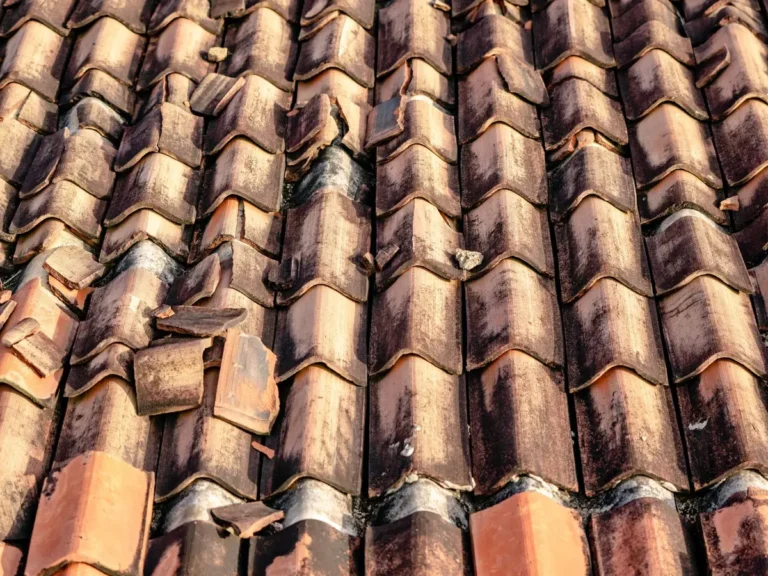


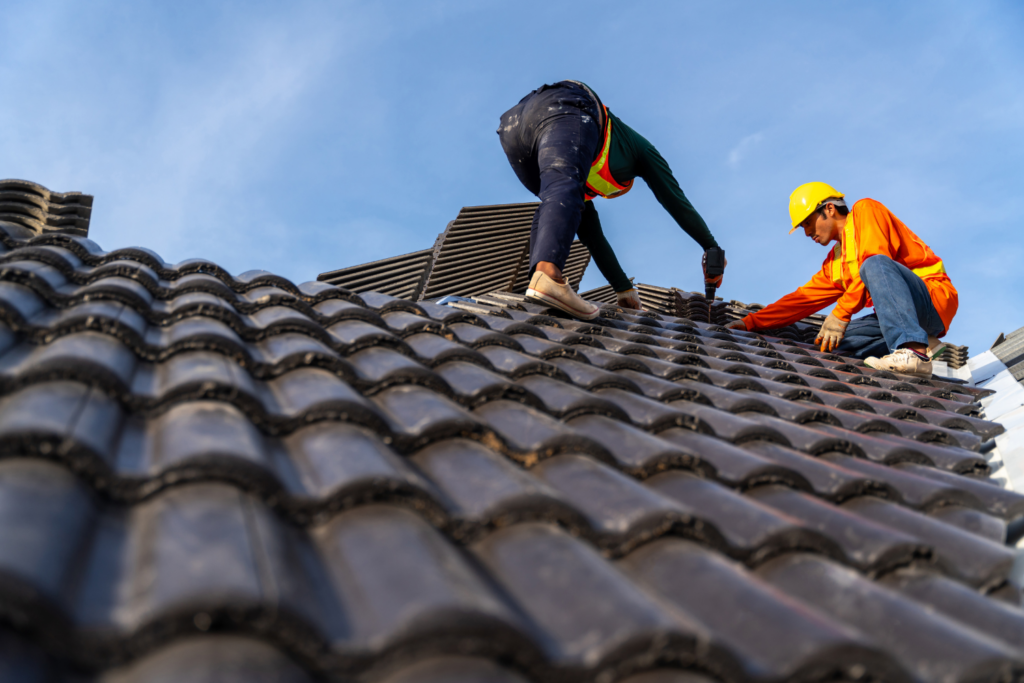
Yes, but only for emergency repairs, temporary covers, inspections and small jobs where nothing has to bond. Laying tiles, slates, felt or a flat roof stops once surfaces are wet, and the HSE says not to go on any roof in rain, ice, frost or strong winds. A good UK roofer will make a leaking roof watertight in the rain, then come back in dry weather for the permanent repair.
Why Rain Stops Most Roofing Work
Roofing surfaces become extremely slippery when wet, and falls from height are one of the most common causes of serious and fatal injuries in construction, making rain one of the biggest safety risks on a job. Beyond safety, trapped moisture beneath new materials can cause long-term wood rot in the decking, and torch-on felt, liquid roofing and sealants all need dry conditions to bond and cure correctly. The UK’s Health and Safety Executive advises against working on roofs in rainy, icy, or windy conditions specifically because the risk of slips and falls increases so sharply.
What Roofers Can Still Do in Wet Weather
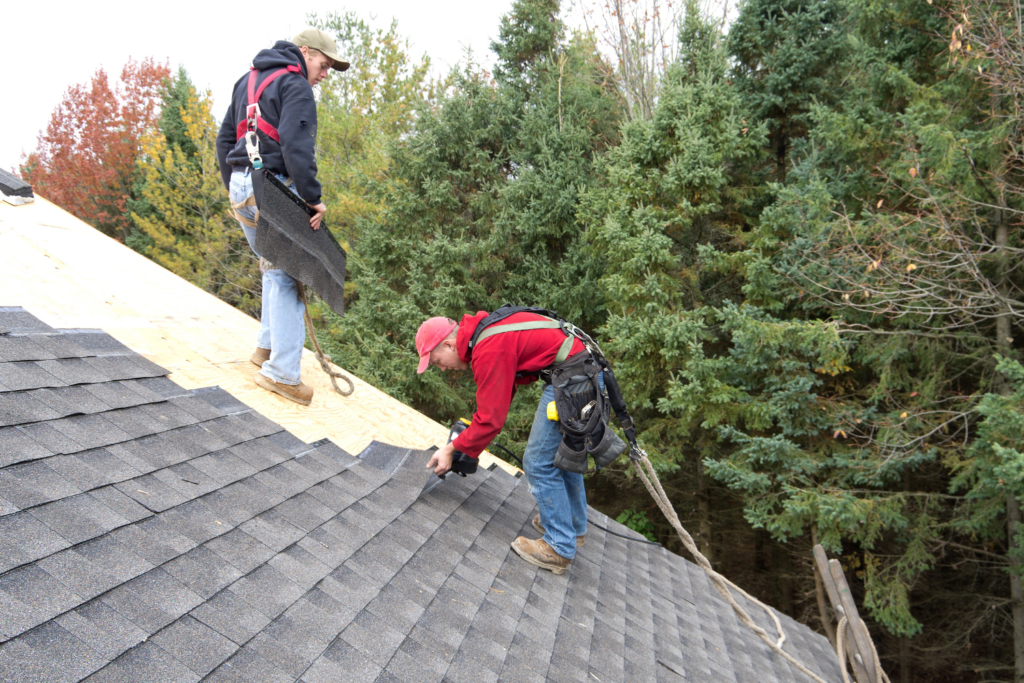
Not all rain halts every task, and experienced crews distinguish between conditions that are merely inconvenient and those that are genuinely dangerous.
- Emergency leak patching to stop active interior water damage
- Fitting temporary tarpaulins over exposed areas of the roof
- Roof inspections and drone surveys, which don’t require walking exposed wet surfaces
- Gutter cleaning and non-adhesive prep work in light drizzle only
- Minor repairs that don’t involve bonding new adhesive materials
Which Roofing Jobs Can Be Done in the Rain? Material by Material
Jobs held by nails, hooks, clips or battens can often carry on in light rain if the footing is safe, while anything that has to bond, cure or set needs a dry surface first. The table below sets out what each material needs, using the manufacturers’ own data sheets and HSE guidance rather than rules of thumb.
| Job or material | In light rain? | In steady rain? | What it needs | Source |
|---|---|---|---|---|
| Refixing a slipped slate or tile (hook or nail) | Often, if the footing is safe | No | A mechanical fix, so rain does not stop it bonding. The limit is slip risk: the roof should be checked before anyone goes up, and moss or lichen on a wet slope makes it worse. | HSE HSG33 (5th edition, 2020) |
| Breathable underlay on a pitched roof | Can be fixed if safe and calm | Sheet over it | Underlay is water resistant, not waterproof. Makers advise no more than about 3 months’ exposure and a tarpaulin in bad weather; tiles or slates should go on within 12 weeks. | A. Proctor Group, Ubbink (both checked November 2026) |
| Bedding ridge or hip tiles in mortar | No | No | Dry conditions and between 5°C and 25°C to cure. Rain on unset mortar can leave white staining, and frost damages it. | Marley (updated February 2026) |
| Dry-fix ridge system | Yes, if safe to be on the roof | Safety call only | No curing time, but the top edges of the tiles must be dry before a butyl-backed ridge roll is stuck down. | Marley (June 2023) |
| Torch-on felt (reinforced bitumen membrane) | No | No | A dry, clean deck, dry weather and a temperature above 5°C. Membranes should not be laid in frost, rain, snow or high winds, and part-finished areas are sealed with a night joint. | Sika Cromar (checked November 2026), Soprema (May 2025) |
| Liquid roofing (polyurethane coating) | Not onto a wet deck | No | Timber decks below 28% wood moisture equivalent and a surface at least 3°C above the dew point. Once applied, the example product is rain resistant after about 1 hour, but heavy rain can mark the coating while it is still liquid. | Sika Decothane Ultra data sheet (October 2025) |
| Lead flashing | Fixing can continue if the surface below is dry | No | Lead is held with clips and wedges, but patination oil must go on clean, fully dry lead and before any rain is expected, or white staining forms and runs onto tiles. | Adomast patination oil data sheet (February 2025) |
| Silicone lead sealant | No | No | Surfaces must be clean and dry, applied above 5°C. | Everbuild Lead Mate data sheet (March 2018) |
| Wet-surface roofing sealants (butyl or rubber based) | Yes | Yes, for emergency sealing | Made for damp and wet surfaces, and one maker states its butyl sealant can go on in heavy rain. Useful for sealing a lifted flashing or gutter joint until the permanent repair. | SikaSeal Roofline data sheet (April 2026), Geocel Roofers Seal data sheet (November 2024) |
Times and temperatures vary by product, so the data sheet for the exact material on your roof always wins. For the wind limits on the same jobs, see our task-by-task guide on whether roofers can work in the wind.
Is It Safe for Roofers to Use Scaffolding and Roof Ladders in the Rain?
Only when a competent person has checked the roof that day and decided the footing is still secure. The HSE’s roof work guidance, HSG33 (5th edition, 2020), says the Work at Height Regulations 2005 require weather to be considered when planning, that rain, ice or snow can make a secure footing as slippery as a skating rink, and that a roof should be inspected before work starts to see whether conditions have changed.
- Pitched roofs: HSG33 says falls are more likely on steep, slippery roofs and that moisture, moss and lichen all add to the risk. Full edge protection is expected on sloping roofs unless the job is very short and low risk.
- Roof ladders: fine for a quick slate refix in drizzle, but a roof ladder on wet, mossy slate is exactly where a careful roofer stops and comes back.
- Scaffolding: a scaffold with boarded platforms and guard rails gives a safer base in showers than working off the roof itself, and on bigger jobs a temporary scaffold roof can keep both the crew and the house dry.
If you are weighing up access for a small repair, our guide to working on a roof without scaffolding explains when a roof ladder is enough.
Can You Repair a Roof in the Rain?
You can carry out the part of the repair that stops water getting in, but not the permanent fix. As Kent roofer Premier Roofing puts it, sheeting a damaged slope, covering a hole, refixing something that has lifted and clearing a blocked outlet can all be done wet, and doing them the same day is often the difference between a repair and a ruined ceiling.
What has to wait is anything that must bond or cure: bedding mortar on a ridge, sealants, adhesives, membranes and new felt. Laid on a wet surface, they fail within weeks or trap moisture against the timber underneath. Rain does have one advantage: it is the easiest time to trace where water is actually getting in, because you can see the fault while it happens. Our emergency roof repair guide covers temporary fixes, and leaking roof repair cost explains what the permanent repair usually costs.
Can You Tar or Torch-On a Flat Roof in the Rain?
No. Torch-on felt, hot bitumen and liquid roofing all need a dry deck, because water trapped under or between the layers stops them bonding properly and is then sealed into the roof. Sika’s guidance for its Cromar torch-on membranes (checked November 2026) is to apply only in dry weather above 5°C and not in wet, icy or very windy conditions, and Soprema (May 2025) says reinforced bitumen membranes should not be laid in frost, rain, snow or high winds.
Drying a wet deck with a gas torch is not the answer either. The NFRC’s Safe2Torch campaign, referenced in the FIX-R torch-on installation guide (May 2026), exists to cut roof fires caused by torches, including torches used to dry out roofs. On a flat roof that is already leaking, the honest fix in the rain is a temporary cover or a wet-surface sealant on the failed joint, followed by a proper flat roof repair on a dry day. Our flat roofing work uses torch-on felt and liquid roofing, and both are only laid on a dry, checked deck.
Can You Felt a Roof in the Rain?
It depends which felt you mean. Flat roof felt that is torched or glued down cannot be laid in the rain, and even simple shed felt comes with the instruction to avoid installing in wet or very cold weather and to fix it to a sound, clean, dry surface (IKO technical data sheet, May 2024).
The breathable underlay on a pitched roof is different, because it is held down by battens rather than glue. It is designed to give temporary weather protection while the roof is open, but it is water resistant rather than waterproof, so the A. Proctor Group advises a tarpaulin over exposed underlay in bad weather, especially on occupied homes. Wind is the bigger limit when fitting it: HSG33 warns that a roll of membrane can become mobile in high winds.
Can Roofers Work in Light Rain?
Light rain is the grey area. Inspections, drone surveys, clearing gutters and fitting temporary covers can usually go ahead with slip-resistant footwear and proper edge protection, because nothing has to bond. Anything that has to stick or seal, such as torch-on felt, liquid roofing and sealants, waits for a dry surface. The legal starting point is the Work at Height Regulations 2005: work should not be carried out if the weather could endanger the people doing it, a point roof tile maker Marley also makes in its winter safety guidance.
How Long After Rain Can Roofers Start Work?
There is no fixed number of hours: work restarts when the surface is safe to stand on and dry enough for the material being used. That can be the same morning for a slate refix on a sunny slope, and several days for a flat roof deck that soaked up water.
- Slates and tiles: once the roof has been inspected and the footing is secure, as HSG33 requires. North-facing and shaded slopes with moss stay slippery longest.
- Mortar work: only on a dry day between 5°C and 25°C, according to Marley (February 2026), and fresh mortar needs protecting from frost and bad weather while it sets (FP McCann, checked November 2026).
- Liquid roofing: when a timber deck reads below 28% wood moisture equivalent on a moisture meter and the surface is at least 3°C above the dew point, the limits in the Decothane Ultra data sheet (October 2025).
- Torch-on felt: when the deck is dry and clean and the temperature is above 5°C. If the old deck has stayed wet for days, the timber is checked for rot before anything goes over it.
Do Roofers Work in Winter in the UK?
Yes, roofing carries on through a UK winter, but conditions are checked every day. Frost and ice are a harder stop than drizzle: Marley’s guidance, quoting the HSE, warns that “rain, ice or snow can turn a secure footing into a skating rink” and says work should not be carried out on roofs if conditions are icy. Shaded slopes can stay icy even when the sun is out, so a crew may start on the sunny side of the roof or wait until it has thawed.
Rain Getting In? Common Wet-Weather Roof Problems
If rain is showing up inside rather than stopping a job, the cause is usually easy to narrow down. Water on the loft felt after cold nights is often condensation on roofing felt rather than a leak. Drips around a roof window point to a leaking Velux window, and water pouring down the walls in a downpour usually means a gutter overflowing in heavy rain. For an active leak, our emergency roof repair guide explains what can be done straight away, and our roof repairs team covers SouthWest London.
While you wait for a roofer, stay off the roof and do what you can at ground level. Premier Roofing’s advice, which we agree with:
- Put a bucket under the drip and move furniture and electrics out of the way.
- Turn off the power to that part of the house if water is near a light fitting or socket.
- Take photos inside and of anything visibly displaced outside, in case you need to make a storm damage insurance claim.
- Check from the ground whether a gutter is overflowing: many leaks reported in heavy rain turn out to be gutters or loft condensation rather than a hole in the roof.
Based in Balham (SW12), we cover SouthWest London. Call 07467 800002 and we will make the roof safe and quote for the permanent repair.
Weather Conditions and Work Status
| Condition | Can Work? | Why |
|---|---|---|
| Light drizzle | Sometimes | Non-adhesive tasks only, with non-slip footwear and fall protection |
| Moderate rain | No | Slip risk and adhesive failure make installation unsafe |
| Heavy rain | No | Extreme fall risk; materials cannot bond |
| Thunderstorm | Never | Life-threatening lightning exposure |
| High winds (mean 23 mph, gusts 35 mph) | No | NFRC stop point for slating and tiling; see our roofing wind limits |
| Frost or ice | No | Icy roofs are a stop; shaded slopes can stay icy all day |
What Happens If It Rains During a Re-Roof?
If rain starts during a job, the crew’s first move is to cover any exposed areas of the roof with tarpaulins to keep water out, then pause work entirely until surfaces dry. Once conditions clear, roofers inspect the affected area for water damage before resuming installation, since underlayment and decking that absorbed moisture can compromise the new roof’s lifespan. This is one of the reasons scheduling with an experienced professional roofing team matters, since proper weather protocols protect both the crew and your property.
On a pitched re-roof, the open slope is covered with sheeting that is fixed or weighted down so the wind cannot lift it, rather than simply draped over the battens. MyBuilder describes the same order: an immediate pause, exposed areas covered with waterproof sheeting, then work resumes once surfaces are dry and have been checked for water getting in.
Who Pays If Rain Damages Your House During a Re-Roof?
If water gets in because the roof was left open or badly covered, the cost normally falls on the roofer. Under section 49 of the Consumer Rights Act 2015 (checked November 2026), every contract for a service includes a term that the trader must carry out the work with reasonable care and skill, and leaving a stripped roof without a secure cover before forecast rain is hard to defend as reasonable care.
Insurance is where the gaps appear. Insurer Hiscox (checked November 2026) points out that home insurers may limit cover once building work starts, and that a contractor’s own policy can have exclusions, with damage from an open roof among the things a homeowner may find is not covered. Before a re-roof starts:
- Ask the roofer for proof of insurance and what it covers. Our guide to checking whether your roofer is licensed and insured lists what to ask.
- Tell your home insurer about the work before it begins and ask whether cover changes while the roof is open.
- Agree in writing how much roof will be stripped each day and how it will be covered at night and before rain.
- If water does get in, photograph it, note the time, tell the roofer straight away and keep receipts for any emergency work.
JW Roofing Solutions is fully insured, and we are happy to show our cover before any work starts.
Can a Roof Be Replaced in Winter?
Yes, a roof can be replaced in a UK winter, but rain and frost days add time and the job has to be run in small, coverable sections. These are the things that make a winter re-roof work:
- Strip only what can be covered that day. Underlay and battens go on before the crew leaves, with sheeting fixed over anything still open.
- Consider a temporary roof. HSG33 notes that a temporary roof over an occupied building protects the house and gives the crew shelter from the worst of the weather.
- Do not leave underlay exposed for long. Ubbink advises fitting the final covering as soon as practicable and within 12 weeks, in line with STA Advice Note 18.
- Choose dry-fix over mortar where you can. Mortar ridges need dry days between 5°C and 25°C, while dry-fix ridges can go on in most conditions that are safe for the roofer, according to Marley (February 2026). Mortar on its own is no longer accepted under BS 5534 for fixing ridge and hip tiles.
If the roof can be kept watertight with repairs, it often makes sense to repair now and replace in spring. If it is leaking in several places, starting in winter with good cover is usually better than months of buckets. Our roof replacement cost guide explains how scaffold time affects the price, and how often a roof needs replacing helps you judge whether repair or replacement is due.
Should You Delay a Roofing Job If Rain Is Forecast?
It depends on the job. MyBuilder’s advice is that minor repairs and inspections may go ahead, while full installations are usually postponed, and that roofing is best done on dry, calm days at around 10 to 25°C. In a UK winter that means planning around the forecast, and flat roofs in torch-on felt or liquid roofing are only laid on a dry deck.
How to Check the Met Office Forecast for Rain Before Roofing Work
Look at the hourly chance of precipitation, not the daily symbol. On the Met Office forecast (guide checked November 2026), a 70% chance means a 7 in 10 chance of rain at some point in that period, and the hourly figure is the chance of at least 0.1mm falling in that hour. The weather symbol shows whether it is likely to be light or heavy, which matters because drizzle and a downpour stop different jobs.
| Planned job | What the forecast needs to show |
|---|---|
| Inspection or temporary cover | No heavy rain, thunder or strong gusts in the working window |
| Slate or tile refix from a roof ladder | A dry or drizzly spell long enough to finish, with no frost on the roof |
| Mortar ridge or flashing pointing | A dry day between 5°C and 25°C, with no frost the following night |
| Liquid roofing coat | A dry deck, above the product’s minimum temperature, and a dry spell after application while the coating becomes rain resistant |
| Torch-on felt | A dry day above 5°C on a deck that is already dry |
| Stripping part of a re-roof | Low rain risk for the whole day, so the opened area can be covered before rain arrives |
For SouthWest London, the long-term pattern explains why winter jobs need flexible booking. The 1991 to 2020 WMO climate normals for London St James’s Park (checked November 2026) show:
| Month | Days with 1mm or more of rain | Nights below 0°C |
|---|---|---|
| October | 11.0 | 0.1 |
| November | 10.8 | 1.1 |
| December | 11.3 | 4.9 |
| January | 11.3 | 4.4 |
| February | 9.6 | 3.8 |
| May (for comparison) | 7.9 | 0.0 |
In other words, even in the wettest months most days in central London stay below 1mm of rain, so there are usually dry windows for repairs if the roofer can move a booking by a day or two. Many homes in Balham, Clapham, Wandsworth, Streatham and Tooting are terraces with a pitched slate or tile main roof and a flat roof on the rear extension, and those two roofs often need different weather. From our base in Balham (SW12), we plan each job around the forecast and will tell you when a day is called off and why. Call 07467 800002 or ask for a quote.
Does Rain Void a Roofing Warranty?
Installing roofing materials in unsuitable wet conditions can affect manufacturer warranties, since most sealants, adhesives and felt systems are only rated to perform when applied within specified moisture and temperature ranges. This is why checking that your contractor is properly insured and qualified matters just as much as checking their weather policy, since reputable roofers follow manufacturer guidelines to keep your warranty valid. If you’re unsure whether wet-weather work has affected an existing roof, a professional roof inspection can catch issues early before they become costly repairs.

If your roof is already leaking during a downpour, our guide to a roof leaking in heavy rain explains what to do tonight and what a roofer will check once it is dry.
Frequently Asked Questions
Can roofers work in light rain?
Yes, for inspections, gutter clearing, temporary covers and repairs that need no adhesive. Laying felt, tiles, slates or liquid roofing waits until the surface is dry.
Can you repair a roof in the rain?
Only the emergency part: sheeting, covering holes, refixing lifted tiles and clearing blocked outlets. Mortar, sealants, felt and membranes need a dry surface, so the permanent repair waits for dry weather.
Should I delay my roofing job if rain is forecast?
Inspections and small repairs can often go ahead, but full installations are usually rescheduled. Roofing is best done on dry, calm days, so winter jobs are planned around the forecast.
Do roofers work in winter in the UK?
Yes, but not on icy or frosty roofs. The HSE advises against going on any roof in rain, ice, frost or strong winds, so winter jobs are planned around dry, calm days.
Can a flat roof be laid in light rain?
No. Torch-on felt and liquid roofing systems need dry surfaces to bond correctly, and laying them in any rain, even light drizzle, risks poor adhesion and a shorter lifespan.
Is it safe for roofers to work after rain has stopped?
Only once the roof surface has fully dried, since residual moisture on tiles, slates, felt or decking still creates slip hazards and prevents adhesives from curing properly.
Can emergency roof repairs happen during a storm?
Only tarping and temporary leak containment are done during active storms, and only when lightning is absent and rainfall is light enough for safe footing.
Does working in rain void a roof warranty?
It can, since most manufacturers specify installation conditions, and installing outside those parameters may void material warranties even if the visible workmanship looks fine.
Can you tar a roof in the rain?
No. Torch-on felt, hot bitumen and liquid roofing all need a dry deck, because water trapped under the membrane stops it bonding properly. If a flat roof is leaking in the rain, the roofer will fit a temporary cover or seal the failed joint with a wet-surface sealant, then lay the permanent repair on a dry day.
Can ridge tiles be bedded in mortar when it is raining?
No. Mortar needs dry conditions and mild temperatures to cure, and rain or frost on unset mortar weakens it and can stain the roof. Dry-fix ridge systems are mechanically fixed, so they can go on in most weather that is safe to work in.
What happens if it rains on a new liquid roof?
Most liquid roofing becomes rain resistant soon after it is applied, but heavy rain can mark or damage the coating while it is still liquid. That is why roofers only coat a dry deck and pick a dry spell long enough for the coating to set.
Who pays if rain gets into my house during a re-roof?
If the roof was left open or poorly covered, the roofer is normally responsible, because the Consumer Rights Act 2015 requires services to be carried out with reasonable care and skill. Check the roofer's insurance and tell your home insurer before work starts, as cover can change while the roof is open.
Can a roof be replaced in winter in the UK?
Yes, as long as the roofer strips and covers the roof in small sections, sheets anything left open overnight and avoids mortar work on cold or wet days. Expect the job to take longer than in summer, because rain, frost and wind days stop work on the open roof.
Get a Professional Assessment Before the Next Storm
If your roof has been exposed to recent wet weather or you’re planning a repair or replacement, JW Roofing Solutions can carry out a thorough inspection and advise on the safest, most durable approach for your property. Contact JW Roofing Solutions for a free, no-obligation estimate from a team with over 40 years of combined roofing experience.
Need help with your roof? JW Roofing Solutions provides roofing services in SouthWest London. Get a free, no-obligation quote.