

Is it illegal to work on a roof without scaffolding? No, not automatically. The Work at Height Regulations 2005 require anyone working at height for a business to prevent falls, and HSE guidance says sloping roofs need scaffolding or edge protection. Short jobs measured in minutes can be done from secured ladders and proper roof ladders.
Key facts
- No UK law names scaffolding as compulsory for every roof job. The law requires the safest practical way of preventing a fall.
- The Regulations apply to employers, self-employed tradespeople and anyone who controls other people’s work at height. A homeowner doing their own DIY is not covered, but the risk is the same.
- HSE’s rule of thumb: if a task means staying on a leaning ladder for more than 30 minutes at a time, use other equipment.
- On terraced houses, HSE expects edge protection at the rear as well as the front.
- Health and safety fines are unlimited, not “up to £3,000” as some websites still say.
This guide explains what the law actually says, which roof jobs need scaffolding and which do not, what it costs in London, and the questions to ask before anyone climbs onto your roof. If you already know you need work doing, our roof repairs page explains how we approach it.
What Does the Law Actually Say About Working on Roofs?
The law says roof work must be planned so that nobody can fall, using the safest option that is reasonably practicable. It does not say “always use scaffolding”.
Regulation 6 of the Work at Height Regulations 2005 sets a clear order of priorities that every roofer has to follow:
- Avoid working at height if the job can be done safely another way, for example from the ground or from inside the loft.
- Prevent a fall by working from an existing safe place, or by providing equipment that stops a fall happening, such as scaffolding with guardrails.
- Minimise the distance and consequences of a fall where the risk cannot be removed, for example with safety nets or fall arrest harnesses, plus extra training and instruction.
Regulation 4 adds that the work must be properly planned, appropriately supervised and only carried out when the weather does not put people at risk. That is why a careful roofer will reschedule in high winds, as we explain in can roofers work in the wind?
HSE is blunt about why this matters: almost one in five deaths in construction work involve roof work, and many of those killed were not specialist roofers but people repairing or cleaning roofs.
Do Roofers Need Scaffolding for Every Job?
No. Roofers need scaffolding, or equal edge protection, for most work on a sloping roof, but quick jobs measured in minutes can be done from ladders.
HSE’s roof work guidance says sloping roofs require scaffolding to stop people or materials falling from the edge, and that edge protection must be fitted at the eaves. Where work is of short duration, properly secured access ladders and proper roof ladders may be used instead. Flat roofs can be protected with a secure double guardrail and toeboard around the edge.
Ladders are not banned. HSE’s ladder guidance says they can be used when the risk is low and the job is short, and that as a guide, staying up a leaning ladder for more than 30 minutes at a time calls for alternative equipment. HSE also stresses that short duration is not the deciding factor on its own: the risk has to be considered first.
Fragile surfaces change everything. HSE says falls through fragile surfaces account for 22% of fall from height deaths in construction, that every roof should be treated as fragile until a competent person confirms otherwise, and that slates, tiles, rooflights and old fibre-cement sheets can all be fragile. Precautions are needed no matter how short the job.
Which Roof Jobs Need Scaffolding, a Tower, a Ladder or a Drone?
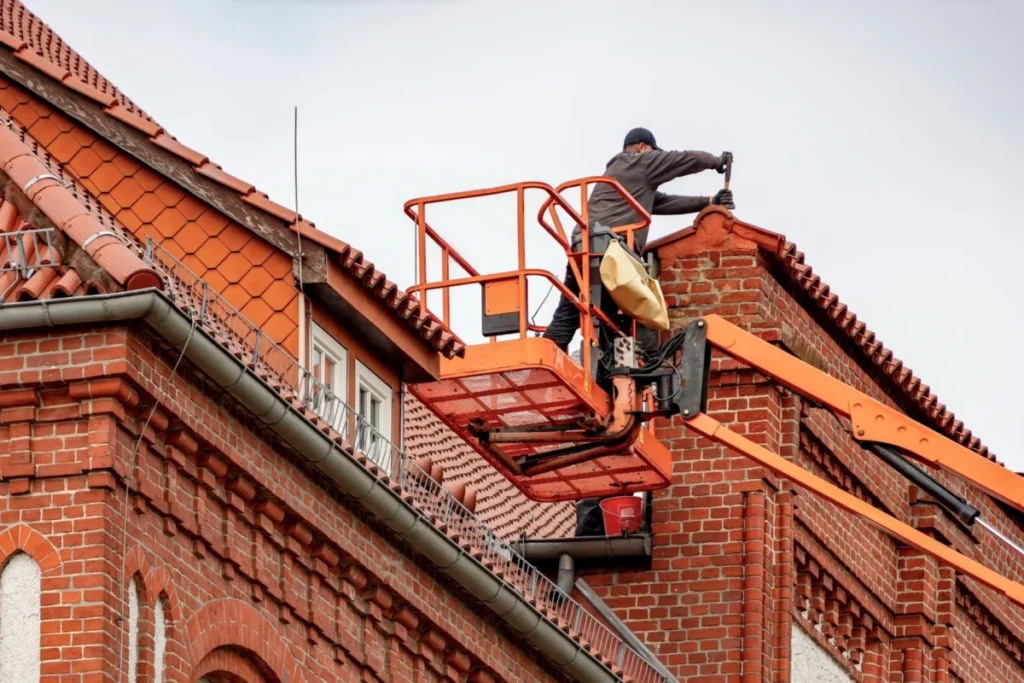
The right access depends on the job, the height, how long it takes and what is below. This table shows what a careful roofer would usually expect for common jobs on a two-storey London house. A proper risk assessment on the day always decides.
| Job | Usual access | Why |
|---|---|---|
| Roof inspection or survey | Drone, or from the ground and loft | Nobody needs to go up at all, which is the first step in the law’s hierarchy |
| Refixing one or two slipped slates or tiles low on the roof | Secured ladder plus roof ladder | Short task measured in minutes, if the roof is sound and the weather is fine |
| Clearing a gutter on a single-storey extension | Ladder or small tower | Low height, light work, short duration |
| Replacing gutters across the front of a house | Mobile tower or scaffold | Takes hours and needs both hands at the eaves |
| Ridge re-bedding or repointing | Scaffold with edge protection | Work at the top of a slope for hours, with mortar and tiles to handle |
| Chimney repointing or flaunching | Chimney scaffold | Heavy, long work at the highest point of the roof |
| Full re-roof | Full scaffold, front and rear | Days or weeks of work, materials stacked on the roof, falling debris |
| Flat roof repair | Guardrails or existing parapet walls, ladder or tower for access | Edges must be protected even though the roof is flat |
| Work near rooflights or old sheet roofs | Staging, covers, nets or a cherry picker from below | Fragile surfaces need precautions however short the job |
A cherry picker (a mobile elevating work platform) is a useful middle option where there is room to park it. HSE suggests working from below the surface on a mobile elevating work platform to avoid standing on fragile roofs. On narrow London streets, though, it often needs a parking bay suspension and its own highway licence: Lambeth’s highway licence form covers cherry pickers and mobile towers as well as scaffolds.
Why Do London Terraced Houses Usually Need Scaffolding?
Because terraces have exposed edges at both the front and back, little room for towers or cherry pickers, and a pavement directly below.
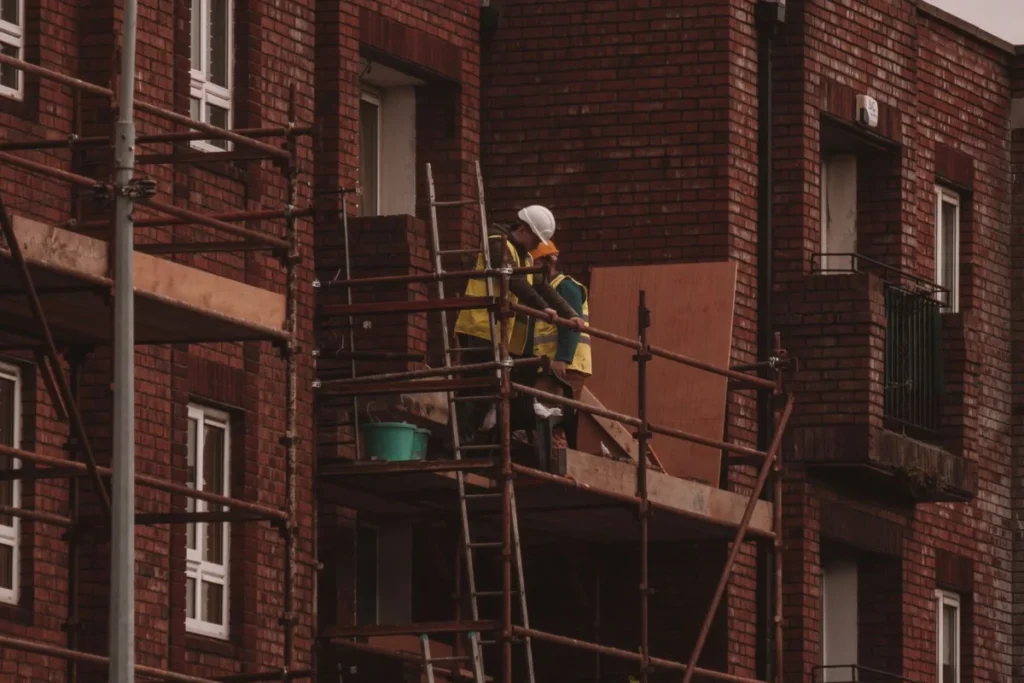
HSE specifically says that edge protection must be fitted on terraced properties to the rear as well as the front. On a typical Victorian or Edwardian terrace in Balham, Clapham or Wandsworth, that often means scaffolding both elevations for anything more than a quick repair.
Two London-specific points catch homeowners out:
- A scaffold licence is needed on the pavement. Wandsworth Council says you need a scaffold licence to put scaffolding on a public highway, applied for at least five working days in advance, for a minimum of 28 days. For 2026/27 its fee for a single or double frontage scaffold is £221.50 per 28 days plus a £53.50 inspection fee. The scaffolding firm normally applies.
- Rear scaffolds may need a neighbour’s garden. Your neighbour can say no, but under the Access to Neighbouring Land Act 1992 a court can grant an access order for work reasonably necessary to preserve your property that cannot reasonably be done without going onto their land. Asking early and agreeing terms in writing is far quicker.
How Much Does Scaffolding Add to a Roof Repair?
Usually several hundred pounds to over a thousand, and you are normally paying for weeks of hire even if the repair takes a day.
These are typical UK figures from MyBuilder’s 2026 scaffolding cost guide. They are not JW Roofing Solutions prices, and London tends to sit at the upper end.
| Access type | Typical UK cost (2026) |
|---|---|
| Scaffold tower (per day) | £80 to £150 |
| Chimney scaffold (high-level access) | £400 to £900 |
| Standard two-storey house setup | £850 to £1,200 |
| Full wrap, two-storey terraced or semi-detached | £1,500 to £2,600 |
| Temporary roof cover on top of the scaffold | £3,750 to £6,000 |
MyBuilder notes that most operators set a minimum hire period of four to eight weeks. That is why it pays to bundle jobs: if the scaffold is up for a chimney repair, it is the cheapest moment to have the ridge, flashing and gutters checked too. Our leaking roof repair cost guide shows how access fits into the overall price.
Not sure if your job needs scaffolding? JW Roofing Solutions gives written, itemised, no-obligation quotes, so you can see exactly what access costs before anything goes up. Call +44 7467 800002 or request a free quote.
Can a Drone Roof Survey Replace Scaffolding?

For finding out what is wrong, yes. For fixing it, no. A drone cannot refix a slate, but it can tell you whether you need scaffolding at all.
Looking at a roof is still work at height if someone climbs up to do it. A drone keeps everyone on the ground, which is exactly what the first step of Regulation 6 asks for. Close-up photos and video of the slopes, valleys, chimney and flashing show whether a problem is a quick ladder job or needs scaffolding, before you pay for any. Our drone roof survey is designed for exactly this, and our roof survey cost guide compares the options.
Is It Legal for Me to Go on My Own Roof?
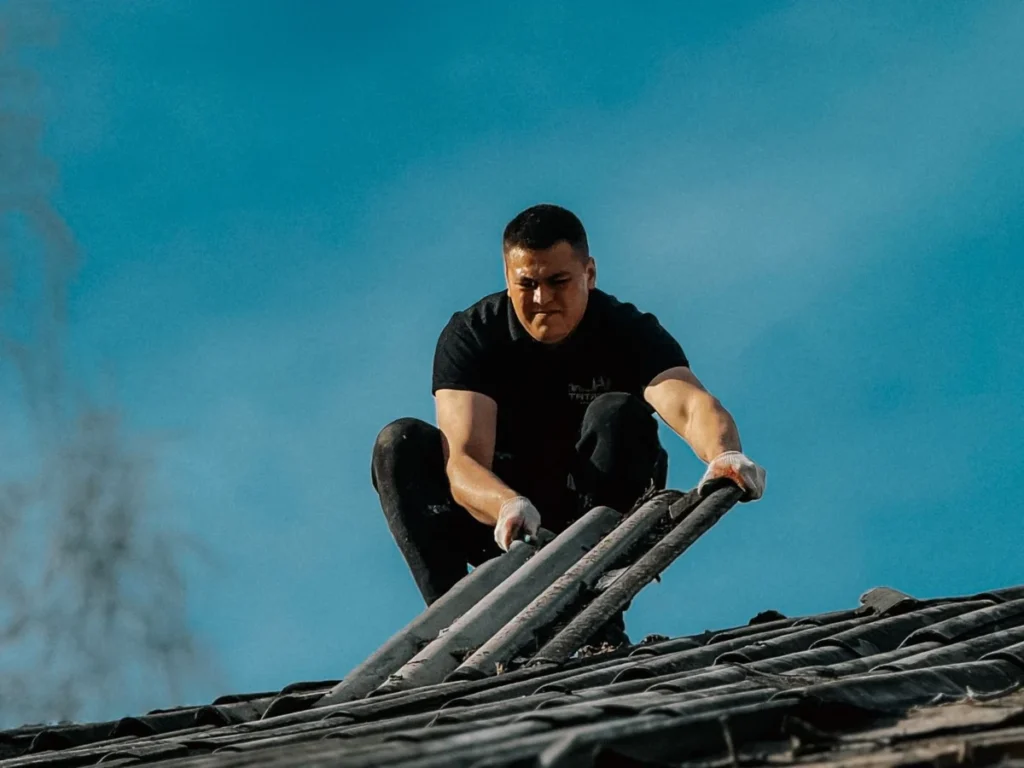
Yes. The Work at Height Regulations apply to work, not to a homeowner doing their own DIY, so it is not illegal. It is still one of the riskiest things you can do at home.
Regulation 3 applies the duties to employers, to self-employed people carrying out work, and to anyone controlling other people’s work. HSE’s work at height law page says this includes building owners and facilities managers who contract others to work at height. Being exempt from the rules does not make a fall any softer, though.
To be fair, some jobs are fine to do yourself: clearing a single-storey gutter from a sound, footed ladder on a still day, or checking your roof from the ground with binoculars and from inside the loft with a torch. Anything that means standing on the roof slope, working above first-floor level or going near a rooflight is the point to call a roofer.
Flat roofs bring their own risks, from fragile surfaces to unprotected edges. Our guide on whether you can walk on a flat roof explains what to check before anyone steps onto one.
What Happens If a Roofer Works Without Proper Fall Protection?
They can be prosecuted, and the penalties are far higher than many websites suggest.
A breach of health and safety regulations can lead to imprisonment for up to two years, a fine, or both under Schedule 3A of the Health and Safety at Work etc. Act 1974. Since 12 March 2015, magistrates have been able to impose unlimited fines, and the Sentencing Council’s definitive guideline gives an offence range of £50 up to £10 million. The “£3,000 per offence” figure you may see quoted elsewhere is out of date.
Am I Liable If a Roofer Falls Off My Roof?
For work on your own home, the main legal safety duties sit with the roofer, not you. That is a good reason to check their insurance before work starts.
Under the Construction (Design and Management) Regulations 2015, HSE explains that the client duties of a domestic client normally pass to the contractor on a single-contractor job, or to the principal contractor where several trades are involved. Landlords and businesses are commercial clients and keep those duties in full. Liability after an accident is a legal question for a solicitor, so the practical protection is hiring a roofer who is properly insured. Our guide on checking a roofer’s insurance shows what to ask for.
Questions to Ask Your Roofer About Access
A good roofer will answer these without hesitation:
- What access will you use, and why is that right for this job?
- Is scaffolding included in the quote, or priced separately, and for how many weeks?
- Who applies for the scaffold licence and any parking bay suspension?
- Will you need to go onto a neighbour’s land, and who will ask them?
- If you plan to use ladders, how long will anyone be on the roof, and how will the eaves be protected?
- Can I see your public liability insurance?
- While the scaffold is up, what else is worth checking?
If a roofer offers to re-roof or rebuild a chimney from a ladder to save you the scaffold, walk away. For more on choosing someone, read how to hire a roofer.
Before you agree a price for any roof job, check what access is included. Our guide to how to hire a roofer covers the questions to ask, why roofer insurance matters explains the cover to look for, and our leaking roof repair cost guide shows when scaffolding adds to the bill.
Frequently Asked Questions
Is it illegal to work on a roof without scaffolding in the UK?
No, not in itself. The Work at Height Regulations 2005 require anyone working at height for a business to prevent falls in the safest practical way, which for most sloping roof work means scaffolding or edge protection, but short low-risk jobs can be done from secured ladders and roof ladders.
Can a roofer use a ladder instead of scaffolding?
Yes, for low-risk jobs of short duration, such as refixing a slipped slate. HSE suggests using other equipment if a task means staying on a leaning ladder for more than 30 minutes at a time, and a proper roof ladder should be used on the slope.
Do I need scaffolding to replace a few roof tiles?
Often not, if the tiles are within reach, the roof is sound and the job takes minutes rather than hours. Tiles near the ridge, on a three-storey house or next to a fragile rooflight usually need scaffolding or a tower.
Can my neighbour refuse scaffolding on their land?
Yes, a neighbour can refuse permission. If the work is reasonably necessary to preserve your property and cannot reasonably be done without entering their land, you can apply to court for an access order under the Access to Neighbouring Land Act 1992, but agreeing terms in writing is usually quicker.
Do I need a licence for scaffolding in London?
You need a council licence if the scaffold stands on the pavement or road. In Wandsworth, for example, it must be applied for at least five working days ahead, lasts a minimum of 28 days, and costs £221.50 per 28 days plus a £53.50 inspection fee for 2026/27.
Am I liable if a roofer falls off my roof?
For work on your own home, HSE explains that the client safety duties under CDM 2015 normally pass to the contractor. Liability after an accident is a legal question, so the practical safeguard is to hire a roofer with proper public liability insurance.
Safe Roof Repairs in SouthWest London
JW Roofing Solutions is a fully insured roofing company working across SouthWest London. We trace leaks to their source, give honest advice on whether a repair or a bigger job is needed, and provide clear, written quotes with no obligation, with access costs shown so there are no surprises. Call +44 7467 800002, get in touch online, read about our roof repairs or book a drone roof survey to see what your roof needs without any scaffolding.
Need help with your roof? JW Roofing Solutions provides drone roof surveys and roof repairs in SouthWest London. Get a free, no-obligation quote.