

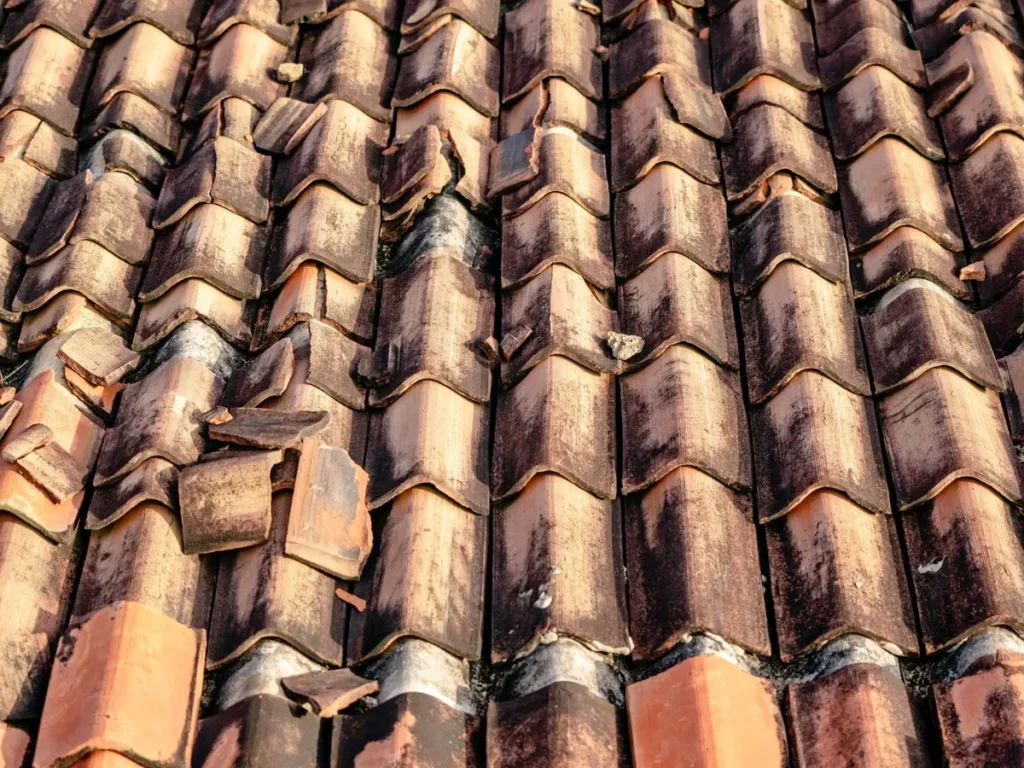
A cracked roof tile should be replaced, not sealed. Marley, a major UK tile manufacturer, says sealant and patches only delay the proper repair. One crack is rarely an emergency, but it can let rain and wind reach the underlay and battens, so book a repair within days, not months.
Key facts
- The lasting fix is to remove the cracked tile and fit a sound, matching tile that is mechanically fixed with nails, screws or clips, as the Roof Tile Association recommends.
- The Roof Tile Association’s care and repair guide says broken tiles should not be “covered over superficially with any other material or coating”.
- Replacing up to five tiles costs about £170 on average where access is easy, and about £500 where scaffold and hard-to-find tiles are needed (Checkatrade, October 2026).
- The HSE says all roofs should be treated as fragile until a competent person confirms otherwise, and lists slates and tiles as likely to be fragile. Do not walk on the roof to look.
- On an older roof, Marley notes that cracked tiles can be a sign that bigger repairs or a re-roof are due.
Most cracked tiles are a quick, routine job for a roofer, and our roof repairs team deals with them across SouthWest London. This guide explains how urgent your crack is, what caused it, why sealant is only a stopgap, how a tile is replaced, what it costs in 2026, and when one cracked tile points to a bigger problem.
Is a Cracked Roof Tile an Emergency?
Usually not, but it should not wait for months. Even minor damage to a tile can let rainwater and wind into the roof structure, so the crack is worth fixing before the next run of wet, windy weather. Use the table below to judge how quickly to act.
| What you can see | How urgent | What to do |
|---|---|---|
| A fine hairline crack, tile still in line, no damp inside | Low to medium | Photograph it, check the loft after rain and book a repair in the next few weeks |
| A crack right through the tile, but it is still in place | Medium | Book a replacement before the next spell of bad weather |
| A corner or chunk missing, with a gap or the underlay showing | High | Book a repair within days; water can now reach the underlay and battens |
| Pieces of tile in the gutter or on the ground, or a loose tile | High, with a falling-tile risk | Keep people away from the area below and call a roofer |
| A damp patch on the ceiling or wet timber in the loft | High: water is already getting in | Catch the drips, move belongings and book a repair now |
| Several cracked tiles in the same area | Medium to high | Ask for the whole slope to be checked, as the fixings, battens or the age of the tiles may be the real cause |
If water is coming through a ceiling during a downpour, our guide to a roof leaking in heavy rain covers what to do tonight and how roofers trace the leak.
What Causes Roof Tiles to Crack?
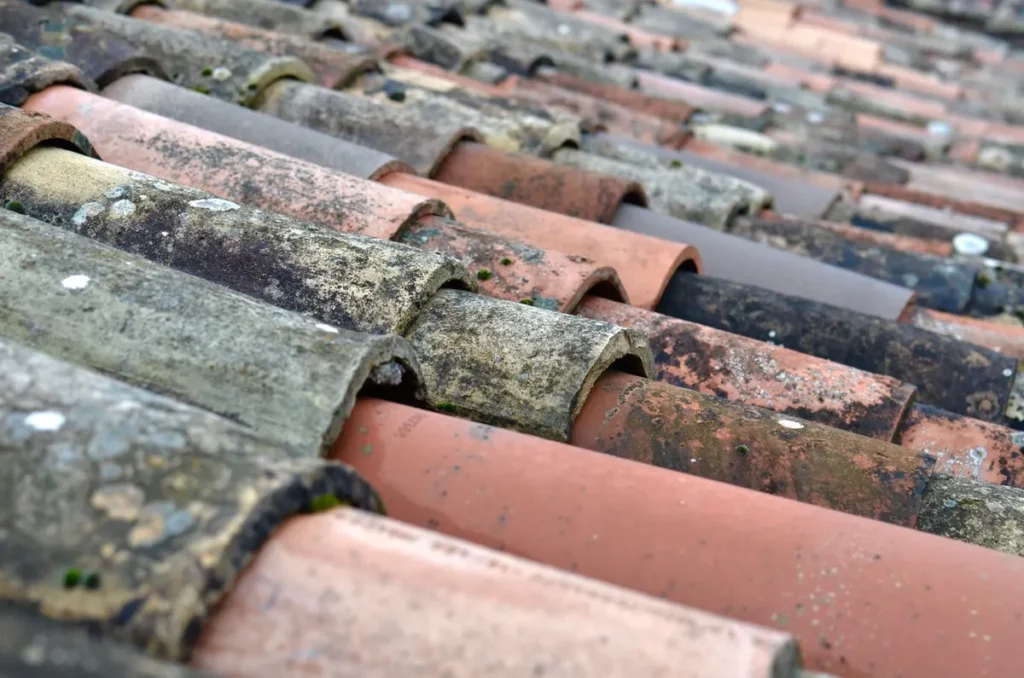
Most cracks come from impact, people walking on the roof, poor installation or old age. Marley lists the most common causes as:
- Falling objects: branches and debris blown onto the roof in storms, and occasionally unusually large hailstones.
- Foot traffic: clay and concrete tiles are robust, but most are not designed to be walked on once installed, and any applied weight can crack them.
- Poor installation: a roof that was not laid and fixed correctly is more vulnerable in extreme weather, and tiles can be damaged during the work itself.
- Time: all tiles eventually show wear, and cracked tiles on an older roof can mean the covering is nearing the end of its life.
Two less obvious causes are worth knowing. The Roof Tile Association warns that window cleaners and aerial installers should not go onto a roof without proper access equipment, and that ladders should not rest against tiles without packing to protect them. Marley also advises against pressure washing concrete tiles, because high-pressure jets can crack them and drive water into the roof. If moss is the reason someone wants to clean your roof, our guide to roof moss removal cost explains the safer options.
How Can You Check a Cracked Roof Tile Safely?
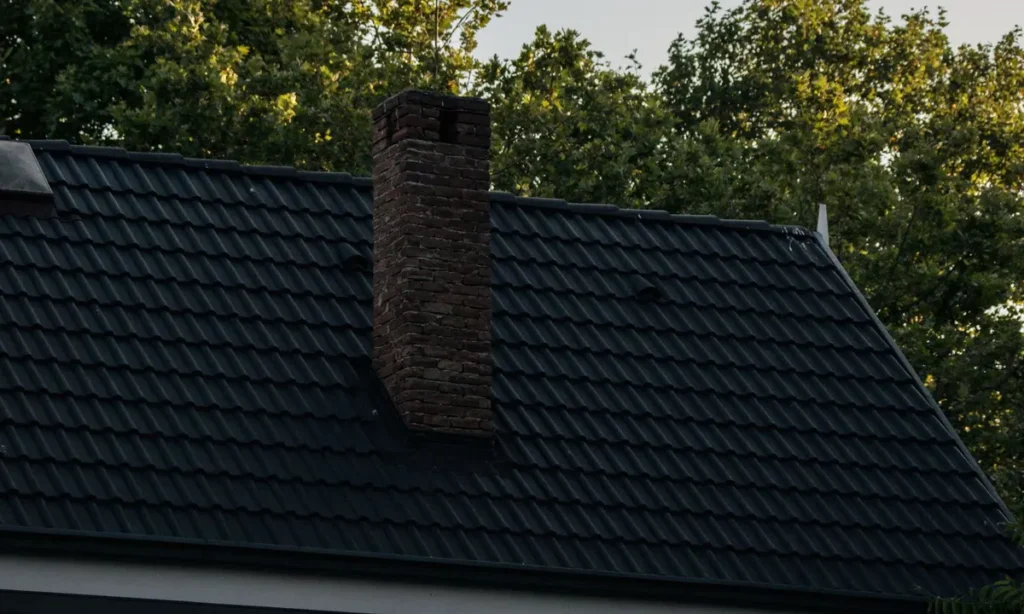
Check from the ground and from inside the loft, never from the roof itself. The HSE says slates and tiles are likely to be fragile and will not reliably take a person’s weight. Work through these six steps:
- From the garden, pavement or an upstairs window, look at the roof with binoculars or your phone’s zoom. Compare the cracked tile with its neighbours: is it still in line, or is the lower edge lifted or a piece missing?
- Look in the gutters, on lower roofs and on the ground below for pieces of tile.
- On a dry day, go into the loft with a torch. Look for daylight through the roof covering, torn or wet felt, dark or soft battens, and stained insulation under the cracked area.
- After the next spell of rain, check the loft and the top-floor ceilings again for fresh damp.
- Take dated photos from outside and inside. They help a roofer quote accurately, and the Financial Ombudsman says it usually looks at expert reports and photos when an insurance claim is disputed.
- Stay off the roof and do not lean a ladder against the tiles. If the crack is hard to see, a drone roof survey can show the whole roof without anyone climbing on it.
Can You Repair a Cracked Roof Tile With Sealant?
Only as a short-term stopgap. Some guides online suggest filling the crack with roofing sealant or covering it with flashing tape, but the manufacturers and the trade body disagree. Marley’s training and technical support manager says temporary fixes like patches and sealant “only delay necessary repairs” and often lead to worse problems, and Marley adds that adhesive or patch repairs are unlikely to last.
| Sealant or flashing tape over the crack | Replacing the cracked tile | |
|---|---|---|
| How long it lasts | A short-term stopgap only | As long as the surrounding roof, when the tile is correctly fixed |
| What it fixes | Covers the visible crack | Removes the damaged tile and lets the roofer check the underlay and batten underneath |
| Risks | Can hide damage, and the tile still has to be replaced later | Neighbouring tiles can crack if they are lifted carelessly, which is why a roofer usually does it |
| Guidance | The Roof Tile Association says broken tiles should not be covered over with other materials or coatings | The Roof Tile Association’s recommended repair |
| When it makes sense | To get through a storm until a roofer can visit | For any cracked tile you want fixed properly |
Our honest view: if a roofer offers to seal a crack “for now”, ask what the permanent repair is and what it will cost. A single replacement tile is usually a small part of the bill, because most of the cost is getting safely to the roof.
How Does a Roofer Replace a Cracked Roof Tile?
The roofer lifts the tiles around the cracked one, removes it and any nails, then fits a matching tile and fixes it mechanically. The Roof Tile Association’s repair method and the HSE’s rules on access set out the steps:
- Set up safe access. The HSE says sloping roofs need scaffolding, but for short tasks measured in minutes, such as replacing a few broken tiles, properly secured ladders and roof ladders may be used. The roof ladder must be anchored over the ridge with a proper hook, not on the ridge tiles themselves. Our guide to working on a roof without scaffolding explains when each option is right.
- Lift the surrounding tiles. The tiles above and beside the cracked one are eased up with a trowel and supported, so they do not crack in turn.
- Remove the cracked tile. If it is nailed, the nails are cut or drawn with a slater’s rip. On interlocking concrete tiles, Marley notes that several tiles often have to come out to reach the nails or clips.
- Check what is underneath. With the tile out, the roofer can see whether the underlay is torn or the batten is rotten, and repair them before the new tile goes in.
- Fit and fix a matching tile. The replacement should be mechanically fixed with nails, screws or clips as the manufacturer recommends. Under BS 5534, the code of practice for slating and tiling, interlocking tiles must be at least once mechanically fixed, and plain tiles need two fixings on every tile in at least every fifth course.
- Check and tidy. The tiles above are lowered back into line, and broken pieces are cleared from the gutter and the ground.
Can I Replace a Cracked Roof Tile Myself?
Sometimes, on a low roof you can reach safely, but for most main roofs a roofer is the better choice. If the cracked tile is on a single-storey extension, porch or bay that you can reach from a secure, footed or tied ladder, and you have a matching tile, a confident DIYer can follow the steps above. The HSE’s guide is that if a job would mean staying up a leaning ladder for more than 30 minutes at a time, other equipment should be used.
Call a roofer instead if the tile is on a two-storey roof, the roof is wet or icy, you would need to stand on the tiles, or the tiles are old and brittle. Marley’s technical team warns that it is easy to crack several more tiles while removing one, and recommends a professional for most cracked tile repairs. Check what your roof is made of too: the HSE lists maintenance on asbestos cement roof tiles as asbestos work that needs proper controls, so leave old fibre cement slates to someone trained.
Not sure whether your crack needs a repair now? Send us a few photos through our contact page and we will tell you honestly whether it can wait, and give you a written, itemised quote with no obligation if it cannot.
How Do You Find a Matching Replacement Tile?
Start with the back of an existing tile, where the maker’s name is usually printed. Marley advises replacing a cracked tile with a like-for-like product from the same manufacturer, so the interlocks work as they should, and normally the manufacturer’s name is on the back of the tile.
- Still made: a current tile from the same range is the simplest fix, although a new tile may look brighter than weathered ones for a while.
- Discontinued: a reclaimed tile of the same profile is the usual answer, and BestBuilders notes that matching older, discontinued tiles is the main thing that pushes a small repair job higher.
- Front of a period house: Marley suggests taking a sound tile from the back of the roof to repair the front, and putting the new or salvaged tile at the back where a slight colour difference matters less.
- Conservation areas: the Roof Tile Association notes that conservation officers like to see sound tiles salvaged and reused, with any shortfall made up with tiles matching the type, size, thickness, colour and texture.
On a Victorian or Edwardian terrace in Balham, Clapham or Tooting, the roof may have been re-covered decades after the house was built, so the tile up there is not always the one you would expect. If your roof is slate rather than tile, our guide to slipped slate repair covers the different fixing method, and clay tiles vs concrete tiles explains how to tell the two apart.
How Much Does It Cost to Replace a Cracked Roof Tile?
Published UK guides put a small cracked tile repair at about £170 on average where access is easy, rising to around £500 when scaffold is needed. The tile itself is cheap; the call-out, labour and access make up most of the price. These are published UK guide prices, not JW Roofing Solutions’ own prices:
| Job | Typical 2026 cost | Source |
|---|---|---|
| Up to 5 tiles, easy access, tiles easy to find | £170 on average | Checkatrade (Oct 2026) |
| Up to 5 tiles, roof ladder and cement bedding needed | £225 on average | Checkatrade (Oct 2026) |
| Up to 5 tiles, scaffold needed and hard-to-find tiles | £500 on average | Checkatrade (Oct 2026) |
| A few slipped or broken tiles, including call-out | £170 to £450 | BestBuilders (Jul 2026) |
| Slipped or cracked tiles, minor repair | £150 to £700 | Less.co.uk (Nov 2026) |
| The tile itself | £1 to £4 for concrete, £2 to £8 for clay | BestBuilders (Jul 2026) |
BestBuilders puts a typical minimum call-out at £120 to £220, which is why fixing three cracked tiles in one visit costs little more than fixing one. Ask for a written, itemised quote that shows whether access equipment, VAT and any batten or underlay repairs are included. Our guide to roof tile replacement cost goes into more detail on larger areas and tile prices.
When Is a Cracked Tile a Sign of a Bigger Problem?
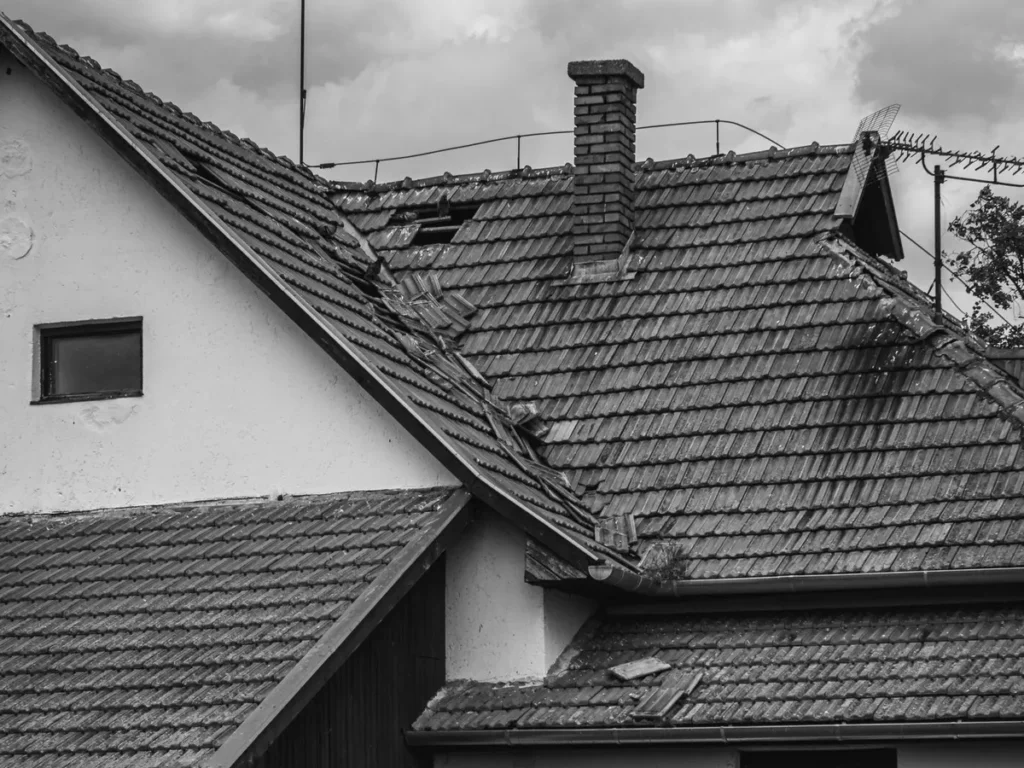
When cracked or slipping tiles keep appearing across the roof, rather than one tile hit by a branch. Marley warns that cracked tiles on an older roof can be a sign that more substantial repairs, or a full re-roof, are needed. Signs that a repair may no longer be the best value include:
- Cracked or slipped tiles on more than one slope, or a new one after every storm
- Tiles that crumble or flake when touched, or break when neighbouring tiles are lifted
- Rotten battens or perished underlay found under more than one repaired area
- A roof line that dips between rafters, which our guide to a sagging roof explains
BestBuilders puts a partial re-tile of one pitch at £1,500 to £4,000 and a full re-tile of an average semi at £5,500 to £12,000. For repairs, the Planning Portal says you will not normally need a building control application if less than 25 per cent of the building envelope and less than 50 per cent of the roof is affected, but you will need approval for structural alterations or a new covering that adds 15 per cent or more to the weight. Our guides to roof repair vs replacement and the 25% rule in roofing help with that decision.
Will Home Insurance Pay for a Cracked Roof Tile?
Only if a one-off event such as a storm caused the crack. Many buildings policies exclude wear and tear and gradual deterioration, and the Financial Ombudsman asks three questions when a storm claim is disputed: were there storm conditions around the date, is the damage typical of a storm, and was the storm the main cause. Many insurers use the ABI definition of a storm, which includes wind gusts of at least 48 knots (55mph). If an insurer relies on an exclusion, the Ombudsman says the insurer has to show that it applies. Our guide to storm damage to roofs explains how to document a claim.
A cracked tile is often found alongside other small faults. If the mortar along the ridge is also crumbling, our guide to repointing ridge tiles explains the options.
Frequently Asked Questions
Can a cracked roof tile be repaired without replacing it?
Not in a way that lasts. Sealant, adhesive or flashing tape can keep water out for a short time, but Marley and the Roof Tile Association both say the proper repair is to replace the tile with a sound, matching one that is mechanically fixed.
How much does it cost to replace a cracked roof tile?
Checkatrade puts the average at about £170 for up to five tiles where access is easy, rising to about £500 where scaffold and hard-to-find tiles are needed (October 2026). Most of the cost is the call-out and access, not the tile.
Is a cracked roof tile an emergency?
A single hairline crack is rarely an emergency, but it should be fixed within weeks. A tile with a piece missing, a loose tile or damp inside the house needs a repair within days.
Can I replace a cracked roof tile myself?
On a low roof you can reach safely from a secured ladder, a confident DIYer can lift the tiles around it, swap the tile and fix it. On a two-storey roof, or if you would need to stand on the tiles, a roofer with proper access equipment is the safer choice.
Why do roof tiles crack?
The most common causes are falling objects such as branches, people walking on the roof, poor installation and age. Pressure washing and ladders resting directly on the tiles can also crack them.
Do I need building regulations approval to replace roof tiles?
Not usually for repairs. The Planning Portal says no building control application is normally needed if less than 25 per cent of the building envelope and less than 50 per cent of the roof is affected, unless you make structural changes or use a covering that is 15 per cent or more heavier.
Will home insurance cover a cracked roof tile?
It may if a storm or another one-off event caused the crack, but most policies exclude wear and tear. Take dated photos as soon as you spot the damage, because insurers and the Financial Ombudsman look at the evidence of what caused it.
Cracked Roof Tile Repair in SouthWest London
JW Roofing Solutions replaces cracked and broken roof tiles across SouthWest London, including Balham, Clapham, Wandsworth, Streatham and Tooting. We trace leaks to their source, check the underlay and battens while the tile is out, and tell you honestly whether a repair will do the job. You get a clear, written, itemised quote with no obligation, our team is fully insured, and we leave the site clean and tidy. Call +44 7467 800002, get in touch online or read more about our roof repairs.
Need help with your roof? JW Roofing Solutions provides cracked roof tile repairs and roof repairs in SouthWest London. Get a free, no-obligation quote.