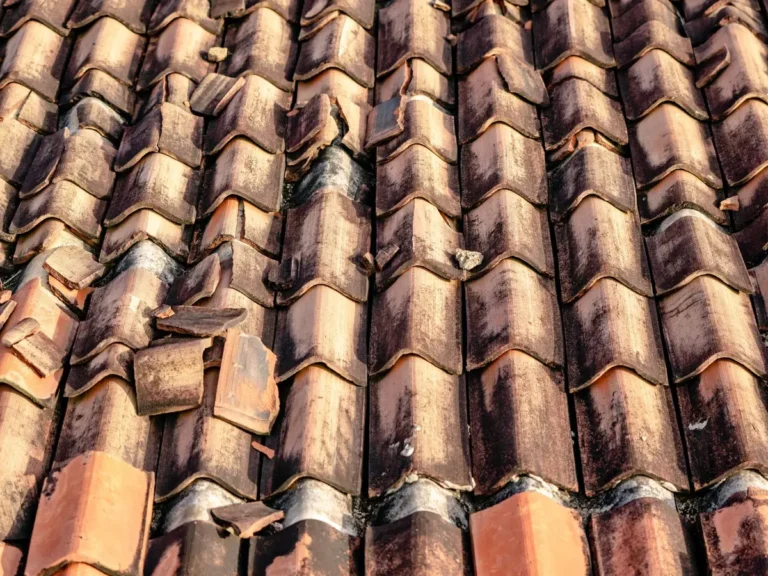



A roof leaking in heavy rain but not in light rain usually has a small defect that only lets water in when there is a lot of it: a blocked valley or gutter that overflows, a cracked or slipped tile, lifted lead flashing, or wind pushing rain sideways under the tiles. Note when it drips and from where, contain the water safely, and get the outside of the roof checked once the rain stops.
Heavy rain is a real test for a roof. The Met Office classes rain falling at 4 mm per hour or more as heavy, and at that rate valleys, gutters and flashings carry far more water than they do in a drizzle. A detail that copes for months can fail in a single downpour, which is why so many leaks seem to come and go.
Key facts
- Most heavy-rain leaks come from capacity problems (valleys, gutters, outlets) or wind-driven rain, not from the middle of the roof slope.
- The drip inside is rarely directly below the hole: Checkatrade notes water can travel along timbers and membranes before it shows.
- The HSE says not to go on any roof in rain, ice, frost or strong winds, so permanent repairs wait for a dry day.
- A typical UK roof leak repair costs £220 to £550, with an average of about £375, according to MyJobQuote’s 2026 cost guide.
- Damp that appears on cold, still mornings whether or not it rained is usually condensation, not a leak.
If you would rather have someone trace it for you, our roof repairs service covers leaks across SouthWest London, and we trace leaks to their source.
Why Does My Roof Only Leak in Heavy Rain?
Because a heavy downpour does two things light rain does not: it delivers more water than some parts of the roof can drain, and it often arrives with wind that drives water sideways. A small weakness that stays dry in a shower can then let water through.
These are the most common causes we see on pitched and flat roofs:
| Cause | Why it only shows in heavy rain | Where the water usually appears | Typical fix |
|---|---|---|---|
| Blocked or undersized gutter or downpipe | Water backs up and spills over the back of the gutter or under the roof edge | Top of an outside wall, around a window head or a bay roof | Clear the gutter and downpipe; realign or upsize if it keeps overflowing |
| Valley full of leaves or with split lead | The channel overflows when it carries water from two slopes at once | Ceiling below where two roof slopes meet | Clear and reline the valley; renew failed lead or mortar |
| Slipped, cracked or missing tile or slate | Light rain runs past the gap; heavy rain floods the underlay below it | A patch on the ceiling some way downslope of the gap | Replace or refix the tile or slate |
| Lifted or cracked flashing at a chimney or wall | Water running down the wall in volume gets behind the flashing | Chimney breast, top of a party wall or loft brickwork | Refix or renew the lead and repoint the joint |
| Wind-driven rain at verges, ridges and abutments | Rain blown horizontally is pushed up under laps and past the verge | Only on one side of the house, when the wind blows from that direction | Repair the verge, ridge or abutment on that elevation |
| Flat roof outlet, upstand or ponding | Standing water rises above a weak joint or upstand | Ceiling below the flat roof, often near an edge | Clear outlets, repair the upstand or seam, correct the falls |
| Torn or perished underlay | Fine in light rain if the tiles shed it; heavy or driven rain gets past the tiles and through the tear | Drips along a rafter in the loft | Lift tiles locally and patch, or re-felt if widespread |
| Roof window flashing or blocked channels | The flashing kit overflows when the water above it is heavy | Around the top corners of the window | Clear the channels; renew the flashing or seals |
Gutters are the cheapest item on that list to put right, so rule them out first. Our guides on gutters overflowing in heavy rain and how to unblock a downpipe show what to check from the ground.
When Does It Leak? Use the Timing to Find the Cause
The pattern of the leak tells you more than the stain does. Keep a short note each time it happens: the date, how hard it was raining, which way the wind was blowing and how long after the rain started the drip appeared.
| What you notice | Most likely cause | What to check first |
|---|---|---|
| Drips start within minutes of a downpour | A direct opening: missing or cracked tile, hole in flat roof covering | Look for gaps or debris on the roof from the garden or a window |
| Drips start after an hour or more of heavy rain | Volume: a valley, gutter or outlet reaching capacity and overflowing | Gutters, valleys and flat roof outlets for leaves and silt |
| Only when the wind blows from one direction | Wind-driven rain at a verge, ridge or wall junction on that side | The verge, ridge and flashings on the windward elevation |
| Stain on the chimney breast after rain | Chimney flashing, back gutter or flaunching | Lead around the stack and the mortar at the top |
| Wet patch on cold, still mornings, dry or wet weather | Condensation in the loft, not a leak | Loft ventilation and insulation at the eaves |
| Ceiling patch below a flat roof after days of rain | Ponding or a failed joint or upstand | Standing water and the edges of the flat roof |
If the last two rows sound familiar, read our guides to condensation on roofing felt and ponding on a flat roof before booking any roof work, because the fix is different.
What Should I Do When My Roof Is Leaking in Heavy Rain?
Deal with the inside of the house first and leave the roof until the weather clears. These steps limit the damage and give a roofer what they need to find the leak quickly:
- Catch the water. Put a bucket or bowl under the drip with a towel in the bottom to stop splashing, and move furniture, rugs and electronics out of the way.
- Keep electrics safe. If water is near a light fitting, switch that circuit off at the consumer unit if you can do so safely, and use a torch.
- Watch the ceiling. If the plaster bulges, do not stand underneath it. Checkatrade advises waiting for a professional if you are unsure.
- Look in the loft if it is safe. With a torch, follow the wet timber or underlay upwards to the highest damp point, and photograph it.
- Note the conditions. Time, rain intensity and wind direction help narrow down the cause, as in the table above.
- Stay off the roof. The HSE says not to consider going on any roof in rain or slippery conditions, and notes that winds above 23 mph affect a person’s balance.
- Book an inspection for the first dry spell. Send the photos and your notes when you ask for a quote.
If water is pouring in or the ceiling looks close to giving way, treat it as urgent. Our guide to emergency roof repair explains temporary covers and what to expect.
How Do I Find Where the Water Is Getting In?
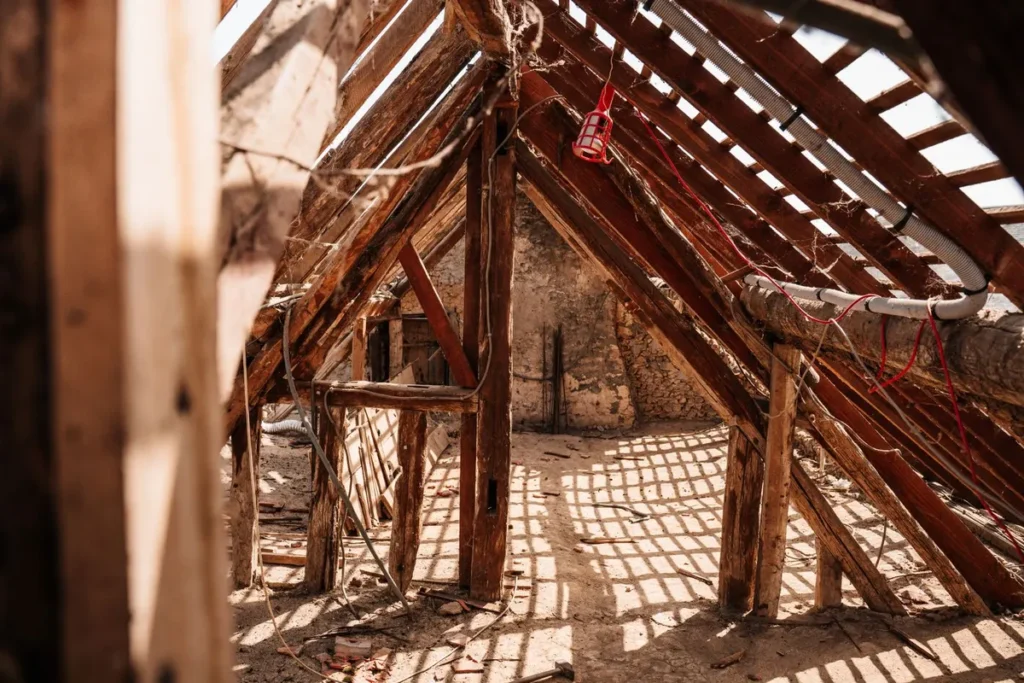
Start in the loft and work upwards, because the stain on the ceiling marks where the water drops, not where it enters. Water runs down the underlay or along a rafter and falls where the felt sags or a batten catches it, often well downslope of the actual hole.
- Look for daylight showing through the roof, a dark line down the underlay or a wet rafter.
- Check around the chimney breast, the top of party walls and any roof window frames.
- Lift wet insulation away from the timber so it can dry, and note anything that has rotted.
- Outside, check from the ground or an upstairs window for slipped tiles, debris in the valleys and gutters, and lifted lead.
On a tall or awkward roof, a drone survey lets a roofer see the valleys, ridge and chimney tops without scaffolding. Our drone roof survey page explains how it works, and our guide to roof work without scaffolding covers when a ladder is acceptable.
Why Do Period Roofs in SouthWest London Leak in Heavy Rain?

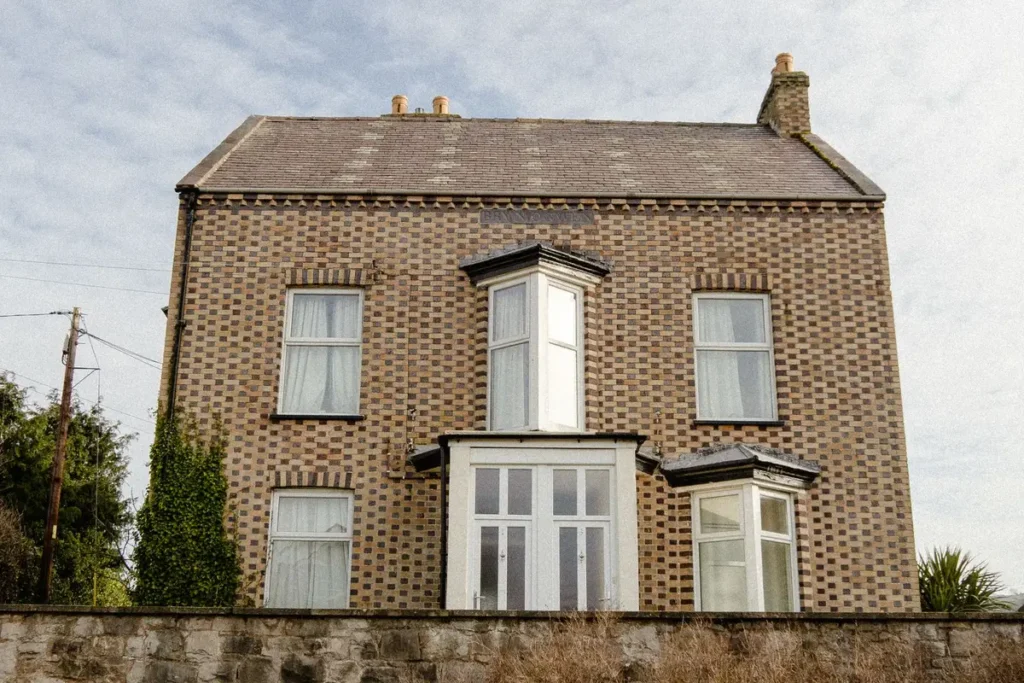
Victorian and Edwardian terraces and semis across Balham, Clapham, Wandsworth, Streatham and Tooting have several features that work hard in a downpour. Most of them are hidden from the street, so they are easy to forget until something drips.
- Valley and box gutters behind parapets. These collect water from two slopes and often drain through a single outlet, so a few leaves can make them overflow. See what a box gutter is and our guide to butterfly roofs.
- Chimney stacks on party walls. The lead back gutter behind the stack and the stepped flashings are common entry points. Read about the chimney back gutter and lead flashing repair.
- Old natural slate. Nails corrode over the decades and slates slip, leaving gaps that only show in heavy rain. Our slipped slate repair guide explains the fix.
- Flat roofs over rear extensions and dormers. Poor falls lead to ponding, and outlets block with leaves from street trees.
Not sure where your leak is coming from? We trace leaks to their source and give a written, itemised quote with no obligation. If a small repair will do the job, we will say so. Request a free quote or call +44 7467 800002.
Can a Roof Be Repaired While It Is Raining?
Only temporarily. A roofer may be able to make a roof safe from below or with a cover when it is safe to do so, but tiles, lead and flat roof coverings need dry conditions to be fixed properly, and the HSE advises against going on roofs in rain. Our guide to whether roofers can work in the rain explains what can and cannot be done.
Be wary of anyone offering to seal the roof from the loft side. Sealant or tape applied under the tiles sits below the layer the water is running on, so it rarely stops a leak for long and can hide the real defect.
How Much Does It Cost to Fix a Roof That Leaks in Heavy Rain?
Most heavy-rain leaks are small, local repairs. MyJobQuote’s September 2026 guide puts the average UK roof leak repair at £375, with these typical prices for labour and basic materials:
| Repair | Typical UK cost (2026) |
|---|---|
| Replacing broken tiles | £150 to £300 |
| Fixing broken flashing | £200 to £500 |
| Patching flat roof holes | £200 to £600 |
| Ridge tile fixes | £250 to £600 |
| Chimney problems | £300 to £800 |
| Valley repairs | £400 to £800 |
| Gutter cleaning or minor repairs | £80 to £200 |
| Emergency storm work | £300 to £1,200+ |
These are UK guide prices from MyJobQuote, not our own prices. The same guide says London and the South East typically cost 20 to 30% more than the North, scaffolding usually adds £300 to £800, and internal repairs such as replastering are extra. Our guide to leaking roof repair cost goes into more detail.
Will Home Insurance Cover a Roof Leak in Heavy Rain?
Sometimes, but usually only if a storm caused sudden damage. The Financial Ombudsman Service says rain by itself can count as a storm when there are high volumes in a short period or the rain is extreme, but claims are unlikely to succeed if the storm only highlighted a problem that was already there. As an example, one policy reviewed by the Ombudsman defined torrential rain as more than 25 mm per hour.
Wear and tear and gradual deterioration are common exclusions, so an old felt roof or a long-blocked valley is often not covered. Take dated photos, keep your notes on when it leaked, and get a written report on the cause. Our guide to storm damage and roof insurance claims explains the tests insurers use.
Can I Fix a Heavy-Rain Leak Myself?
Some causes are safe to deal with from the ground, and it is worth trying those first:
- Clearing a ground-floor gutter or downpipe you can reach safely from a stable ladder on firm ground.
- Clearing leaves from a flat roof outlet you can reach from a window without stepping onto the roof.
- Moving loft insulation and improving ventilation if the problem turns out to be condensation.
A roofer is the better choice for anything on the roof itself: slipped or cracked tiles, valleys, lead flashing, ridges, chimney stacks and flat roof coverings. These jobs need safe access, the right materials and dry weather, and a repair in the wrong place can leave the real defect leaking into your timbers.
Storms bring wind as well as rain. Before a repair is booked, see when it is too windy to work on a roof: slating stops at 23 mph mean or 35 mph gusts.
Where heavy rain is getting in through cracked or missing tiles, our roof tile replacement cost guide shows 2026 guide prices per tile and per m².
Frequently Asked Questions
Why does my roof only leak in heavy rain?
Usually because a valley, gutter or outlet overflows when it carries a lot of water, or because wind drives rain sideways under tiles, verges or flashings. Light rain runs off before it reaches the weak point.
Is it normal for a roof to leak in heavy rain?
No. A well-maintained roof should stay dry even in a downpour, so a leak in heavy rain points to a defect such as a cracked tile, loose flashing or a blocked valley that needs checking.
Can a roofer fix a leak while it is raining?
Only as a temporary measure. The HSE advises against going on any roof in rain or slippery conditions, so permanent repairs to tiles, lead or flat roofs are done once it is dry.
How much does it cost to fix a roof that leaks in heavy rain?
Most small leak repairs in the UK cost £220 to £550, with an average of about £375, according to MyJobQuote’s 2026 guide. Valleys, chimneys and scaffolding cost more, and London prices are typically higher.
Will my home insurance cover a leak in heavy rain?
It may if a storm caused sudden damage. The Financial Ombudsman Service accepts that extreme rain can be a storm, but wear and tear and gradual damage are usually excluded.
How can I tell a leak from condensation?
A leak follows the weather: it appears during or soon after heavy rain and runs from one point. Condensation follows the temperature: it is spread across the underside of the felt and worst on cold, still mornings.
Roof Leak Repairs in SouthWest London
JW Roofing Solutions finds and fixes roof leaks across SouthWest London, from slipped slates and blocked valleys to chimney flashings and flat roofs. Our team has over 40 years of combined experience, we are fully insured, and we leave the site clean and tidy. Call +44 7467 800002, get in touch online or read more about our roof repairs.
Need help with your roof? JW Roofing Solutions provides roof leak repairs in SouthWest London. Get a free, no-obligation quote.